

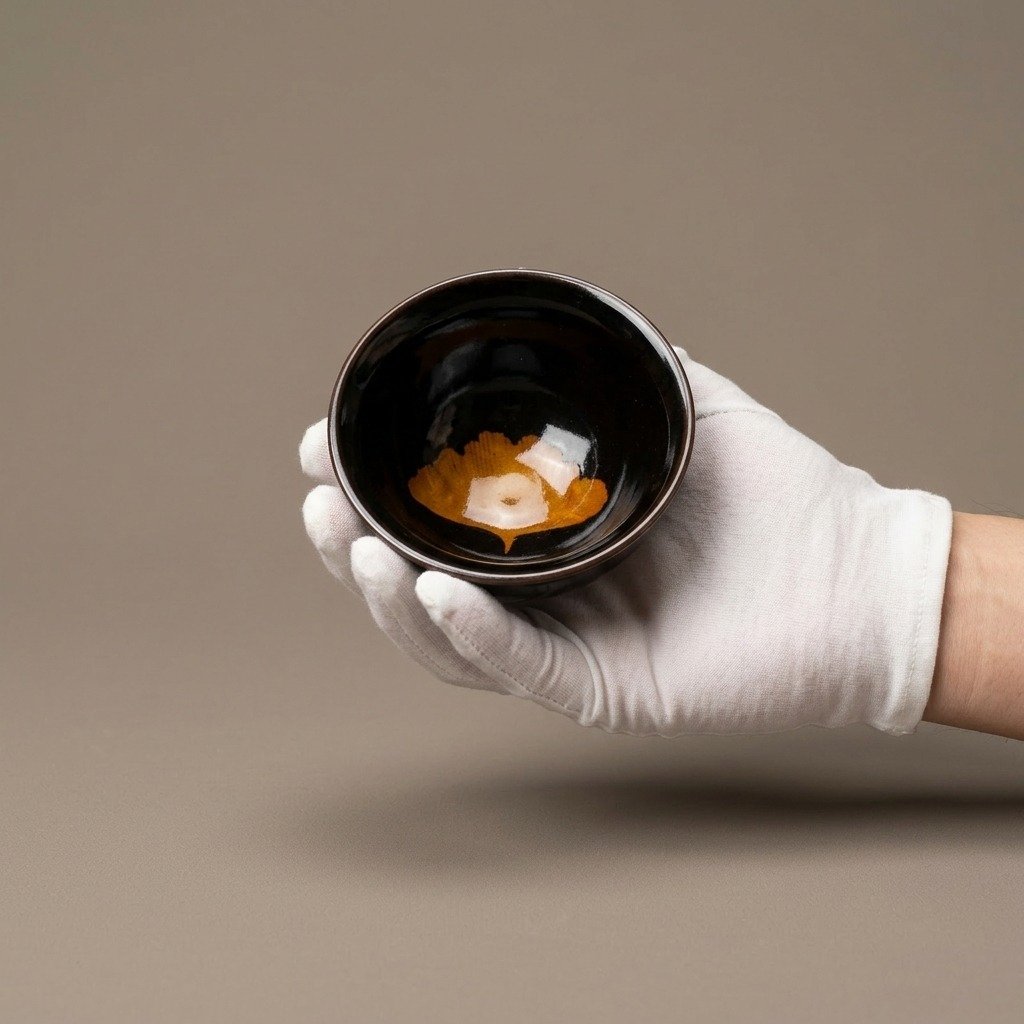
Look into Aurioo’s Ginkgo Douli Jizhou tea cup and the warm golden leaf draws your eye against the dark interior. The decoration sits inside the drinking bowl, where you can examine it before filling the cup and after the last sip.
Ginkgo leaf meaning depends on the setting in which the motif appears. Its familiar fan shape gives us a starting point; examples from decorative art help explain the associations a tea drinker might bring to it.
Recognizing the leaf inside the cup
The University College Cork ginkgo profile describes a fan-shaped leaf, often with a notch that divides it into two lobes. It also traces the use of ginkgo patterns across objects such as ceramics and textiles.
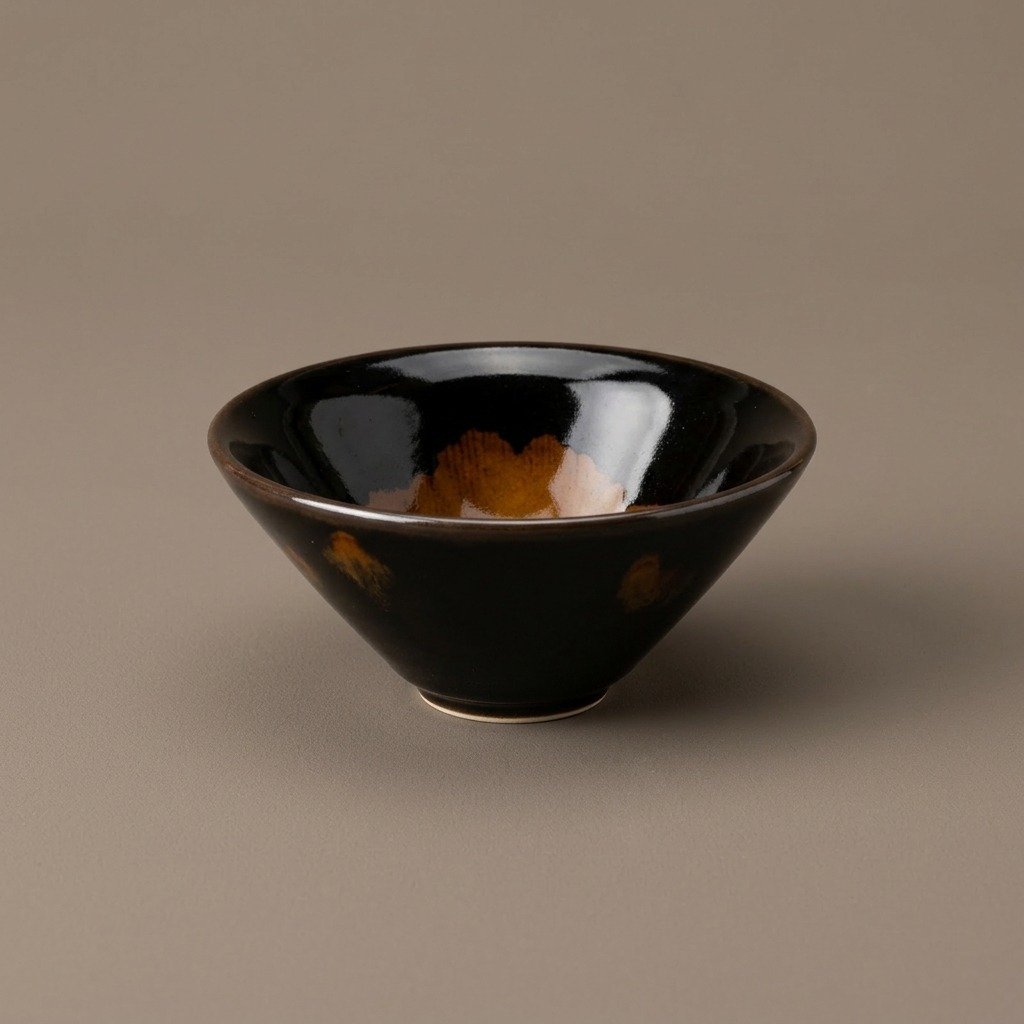
On this cup, look first at the broad outer edge of the golden motif and the way it narrows toward its base. The dark area around it makes the outline easy to follow. Compare the gallery’s open views when deciding whether you like the placement: a low side view reveals less of the interior than a view from above.

A leaf associated with longevity and endurance
The Metropolitan Museum of Art explains these associations in a specific context. Its writing box with ginkgo leaves, made by Murose Kazumi in 2015, accompanies an account of the leaf as a symbol of longevity and endurance in Japanese decorative arts.
That example offers a way to understand the motif’s wider appeal. Aurioo’s product description identifies a ginkgo design on a Jizhou cup, without assigning a particular symbolic message to its maker. You might choose it because those associations matter to you, or simply because you enjoy the golden shape inside the bowl.
For another botanical subject, magnolia blossoms on a porcelain gaiwan carry their own associations in Chinese art. Looking at the named plant and its cultural context makes each design more interesting to read.
Read the decoration alongside the product details
The cup’s name includes information about its motif, form and ceramic family. Keep each detail in view when choosing it.
| Detail | What it tells you about this cup |
|---|---|
| Ginkgo motif | The named leaf decoration visible inside the bowl. |
| Douli | The cup’s named form; the Douli shape guide explains the profile. |
| Jizhou listing | Aurioo specifies black pottery with plant ash glaze. See the distinctions between Jian Zhan, Tenmoku and Jizhou labels. |
| Size and capacity | Listed at 8 cm across, 5.5 cm high and 100 mL. Leave space below the rim when serving. |
The One option contains one drinking cup; Value pack(2) offers a two-cup choice. Handmade glaze and motif placement may vary slightly, so a pair need not have identical markings.
Serve brewed tea in small rounds and allow it to become comfortable to sip. Afterward, follow the cup’s direction to rinse gently and dry before storing. Our after-tea cleaning routine shows where to check for remaining tea around a cup’s interior and rim.
Frequently asked questions
What does a ginkgo leaf on teaware mean?
Longevity and endurance are documented associations in Japanese decorative arts. A particular cup’s meaning also depends on its context and maker’s explanation. Aurioo identifies this design as a ginkgo motif.
Is a real ginkgo leaf used to make this pattern?
The listing does not specify a real-leaf imprinting process. It identifies black pottery, plant ash glaze and a ginkgo motif; the resemblance alone cannot establish how the pattern was made.
Does Douli describe the leaf decoration?
Douli describes the cup’s named shape. Ginkgo identifies its decorative subject, so you can consider the form and the leaf design separately when choosing your cup.