
The dark surface of a Jizhou mug, the raised flowers on a Heni tumbler and the translucent fern details of Linglong porcelain show how differently a ceramic surface can be made. In each case, glaze is part of the finished piece, with a role in its appearance, texture or construction.
For a cup or gaiwan used with tea, there is also a practical question: is that surface safe for contact with a drink? The Aurioo products discussed here have corresponding lead and cadmium migration test reports, with results that meet the applicable U.S. FDA guidance limits for lead and cadmium release from ceramic foodware. Understanding what glaze is helps explain why testing the finished piece matters.
What is a ceramic glaze made of?
A glaze is a glassy coating that forms on a ceramic body during firing. The body gives a mug or bowl its shape; the glaze forms its surface. Porcelain and black pottery describe the body, while plant ash glaze and relief glaze describe aspects of the finish.
A glaze recipe usually combines several materials that contribute different chemical functions. One raw material can contribute more than one component. The UNSW introduction to glaze technology explains these roles:
| Component | What it does in a glaze | Examples of materials that can contribute it |
|---|---|---|
| Silica | Forms the glass network | Quartz or silica, and minerals such as feldspar |
| Alumina | Helps control the molten glaze’s viscosity and flow | Clay, including kaolin, and feldspar |
| Fluxing components | Help the glaze melt at a workable firing temperature | Feldspars and other materials supplying suitable metal oxides |
| Colouring components | Produce colour within a particular recipe and firing process | Metal oxides or prepared ceramic pigments |
This describes general glaze chemistry. The craft descriptions for the Aurioo pieces below identify their materials and techniques without publishing their complete glaze recipes.
During firing, the ingredients react together. The finished surface depends on the recipe, application and firing conditions, including cooling. A colour name alone cannot tell you the ingredients or their proportions.
Plant ash glaze on Jizhou black pottery
The Maple Leaf Jizhou mug and saucer is made from black pottery with plant ash glaze. Its dark surface frames a maple leaf motif, and its listing describes glaze movement during kiln firing.
Ash can contribute fluxing components to ceramic glazes. The Canadian Conservation Institute’s guide to ceramics explains how ash containing sodium and potassium can help form a glaze. The term “plant ash glaze” identifies an ingredient source; it does not specify one fixed formula.
On this mug, small differences in glaze flow and pattern placement are part of the stated handmade variation. The listed 450 ml mug comes with a matching saucer. Its material, decoration and included pieces are separate details worth checking when choosing it for a tea or coffee table.

Raised glaze on Heni floral relief ceramics
The Heni Floral Relief Medium tumbler uses jade clay ceramic with hand-outlined 3D relief glaze. The maker builds the outlines, fills the design with pigment by hand and fires the piece in a gas kiln.
Here, the glaze technique gives the decoration a softly raised contour. The close view shows the outlines between neighbouring flowers and coloured areas. The tumbler has a listed capacity of 440 ml and is supplied as one vessel.
Gas-kiln firing describes how the piece is fired. Relief describes the surface construction, and hand painting describes how the colour is applied. Each term describes a different part of making the piece.

Painted porcelain: colour beneath and above the glaze
Underglaze painting places decoration beneath the glaze. Overglaze decoration is applied to an already glazed and fired surface, followed by another firing at a lower temperature. The Museum of Oriental Ceramics, Osaka explains these techniques and how firing conditions affect ceramic colour.
Aurioo’s Sword Kiln Blue Bamboo tea cup explicitly lists hand-painted underglaze blue bamboo. The Red Green Lotus gaiwan lists red and green overglaze enamel, with a high-fired porcelain body and a second firing for the colour at a lower temperature. The gaiwan includes a bowl and lid, with an approximate capacity of 150 ml.
Those descriptions establish the methods used on these pieces. A blue-and-white appearance by itself does not establish that a design is underglaze. For a closer comparison of layer position, see Aurioo’s guide to underglaze and overglaze teaware.

Glaze-sealed details in Linglong porcelain
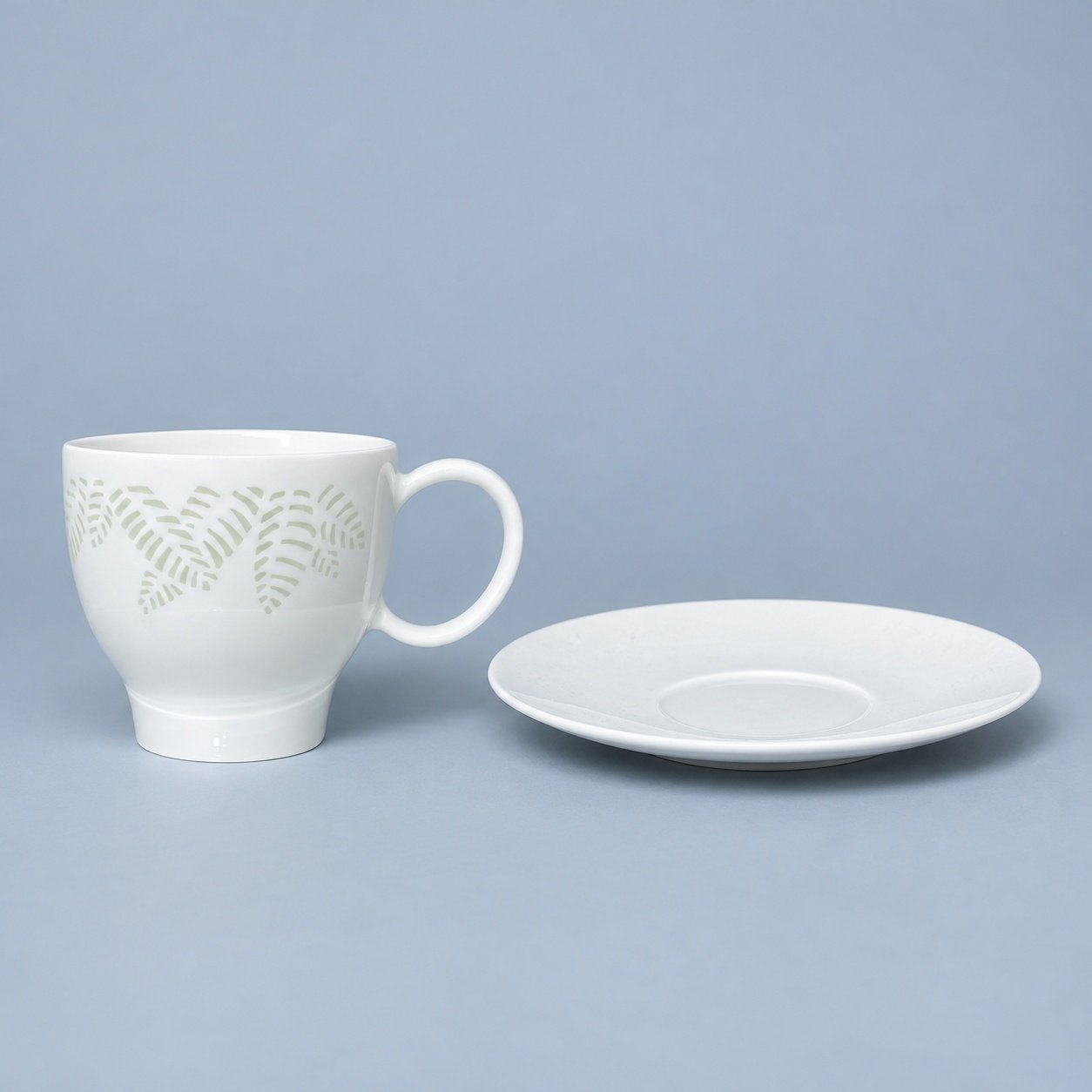
On the Linglong Rounded Fern cup and saucer, the translucent fern areas are sealed with glaze. Light passes through these details within the porcelain surface.
This is another use of glaze beyond a coloured finish. The product combines a rounded porcelain cup, a loop handle and a plain matching saucer. Its listed capacity is 250 ml; the single option contains one cup and one saucer.
Are these glazes safe for everyday tea drinking?
Aurioo holds corresponding lead and cadmium migration test reports for the glazed products discussed in this guide. Their results meet the applicable U.S. FDA guidance limits for lead and cadmium release from ceramic foodware.
Migration testing examines the release of substances from a finished ceramic article under specified test conditions. The FDA’s guidance for lead in ceramic foodware and cadmium in ceramic foodware addresses this release from the finished ware.
That is the basis for the lead and cadmium safety statement here. It applies to the products and conditions covered by their reports. Glaze colour, a natural ingredient or a high firing temperature cannot establish those results on its own.
When discussing “non-toxic” teaware, it helps to be specific: these products have compliant lead and cadmium migration results. That statement concerns what can migrate into food or drink during testing. It does not mean a ceramic contains no metal elements, since metal oxides can also be normal ingredients in glaze chemistry and colour.
How the glaze is used across these pieces
| Aurioo piece | Listed body material | Stated glaze or decoration technique | Listed size and contents |
|---|---|---|---|
| Maple Leaf Jizhou mug and saucer | Black pottery | Plant ash glaze with kiln variation | 450 ml mug; one mug and one saucer |
| Heni Floral Relief Medium tumbler | Jade clay ceramic | Hand-outlined relief glaze, hand-filled pigment, gas-kiln fired | 440 ml; one tumbler |
| Sword Kiln Blue Bamboo tea cup | Jade clay porcelain | Hand-painted underglaze blue bamboo | 130 ml; one tea cup |
| Red Green Lotus gaiwan | Jade clay porcelain | Red and green overglaze enamel; second colour firing | Approximately 150 ml; one bowl and one lid |
| Linglong Rounded Fern cup and saucer | Porcelain | Translucent details sealed with glaze | 250 ml cup; one cup and one saucer |
The capacities are listed vessel sizes. A comfortable fill leaves room below the rim, and leaves take up space inside a gaiwan.
Caring for the finished surface
Follow each piece’s care instructions. These listings call for gentle rinsing or hand washing and drying before storage; the Linglong cup specifically recommends a soft sponge. A glaze or decoration name does not establish dishwasher, microwave or oven suitability.
If a food-contact surface chips, flakes or develops unexpected damage, pause use and ask about that piece. Cleaning cannot replace safety testing. The FDA’s pottery safety questions and answers explains that washing or boiling pottery does not remove lead from it.
Frequently asked questions
Are these Aurioo glazes safe for tea?
Yes. The corresponding reports record compliant results against the FDA lead and cadmium release limits, as explained above. Use each piece as intended and follow its care instructions.
Does “non-toxic” mean a ceramic contains no metals?
No. Some metal oxides have useful roles in glaze formation and colour. Lead and cadmium migration testing measures release under specified conditions; a compliant result is different from a claim that every metal is absent from the material.
Is underglaze automatically safer than overglaze?
Neither decoration label establishes a finished product’s safety by itself. Underglaze and overglaze describe where decoration sits. Food-contact suitability depends on the finished piece and its supporting test results.
Can boiling a cup replace migration testing?
No. Boiling does not establish compliance with migration requirements, and the FDA states that it does not remove lead from pottery. Follow the care instructions supplied for the cup.