
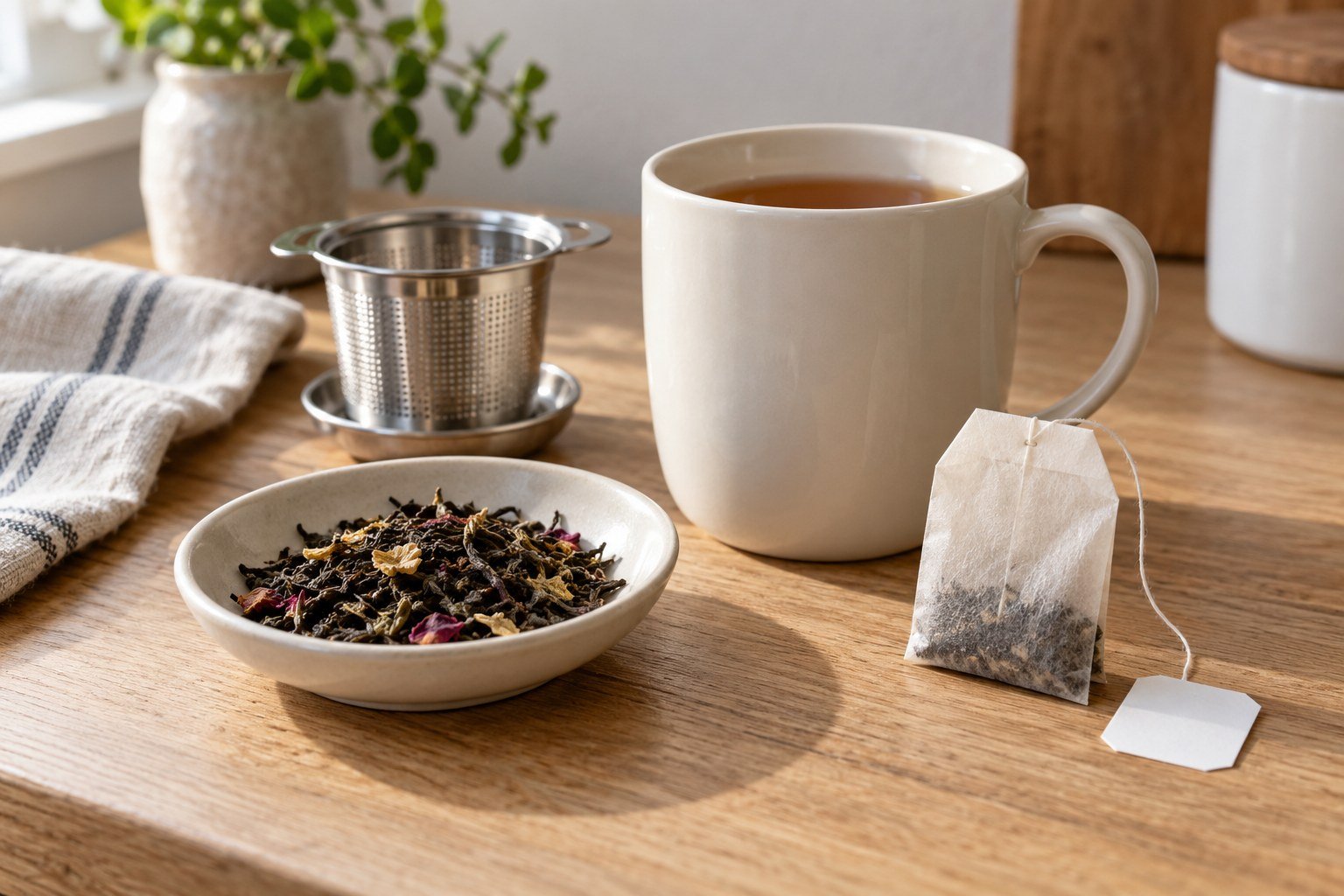
A tea bag is handy when you want to make a cup and get on with breakfast. Loose leaf makes sense when you want to choose the portion yourself or take a closer look at what you are brewing. You can keep both in the cupboard without choosing a side.
The useful question in loose leaf tea vs tea bags is which format fits the cup you actually make. Start with your usual mug, the time you have, and how much washing up you are willing to do.
Start with the morning you already have
Picture the whole job: finding the tea, preparing it, removing the leaves, and cleaning up afterward. A bag combines the tea portion and filter in one item. With loose tea, you measure the leaves and decide how to separate them from the drink.
If you have a kettle and mug at work but nowhere convenient to empty an infuser, bags may suit that setting. At home, a roomy basket infuser can make loose tea an ordinary part of breakfast. Keep a small dish nearby for the wet bag or basket. That detail matters when your cup is ready and the counter is already busy.
| Your daily situation | What a tea bag offers | What loose leaf asks you to arrange |
|---|---|---|
| You want a repeatable portion | Tea is already portioned; check the recommended water amount | Measure a portion you can repeat |
| Your mug changes size | Check whether one bag suits the new fill | Adjust the leaf portion to the water you use |
| You like seeing the leaves | Visibility depends on the bag and product information | Inspect the dry leaves and the leaves after brewing |
| You have limited cleanup space | Lift out the bag and discard it appropriately | Empty the leaves and wash the brewing tool |
| You enjoy adjusting each cup | Start with the package directions, then change one variable | Adjust portion, water, or time deliberately |
Look at the tea inside the packaging
“Loose leaf” describes how tea is sold. It does not promise that every leaf is intact or that you will enjoy the flavor. Likewise, a bag does not tell you that its contents are all finely broken leaf. Harney & Sons describes its pyramid sachets as containing full loose leaf tea, with the portion already measured.
Read the tea name, ingredients, preparation advice, and any leaf photographs before making a choice. If a listing only says “premium,” you still need to know what kind of tea it is and what the seller says it tastes like.
Loose tea does make inspection straightforward. Aurioo’s Dragon Well Lung Ching Green Tea has broad, flat leaves. You can look at that shape before brewing and compare it with the wet leaves afterward. Appearance gives you something concrete to observe; the cup still decides whether you want another serving.

Give the leaves space without overcomplicating the setup
When choosing a filter, consider its usable space and how easily you can empty it. A small tea ball may be convenient to store, but check how crowded it becomes with your chosen portion. A wide basket gives you easier access when adding or removing leaves.
For bagged tea, follow the maker’s directions and let the bag sit freely in the water. Avoid treating every sachet shape as a quality grade. The tea inside and the finished drink matter more than the outline of the packet.
You do not need a full tea set to try loose leaf. A suitable infuser and a mug can cover a single serving. Check dimensions before buying an infuser: it needs to sit securely in the mug you intend to use.
Check the water amount and the brewing instructions
A premeasured bag removes one decision, but it does not measure your water. Filling a larger mug to the brim changes the relationship between tea and water. With either format, choose a comfortable fill and keep it consistent while you learn what you like.
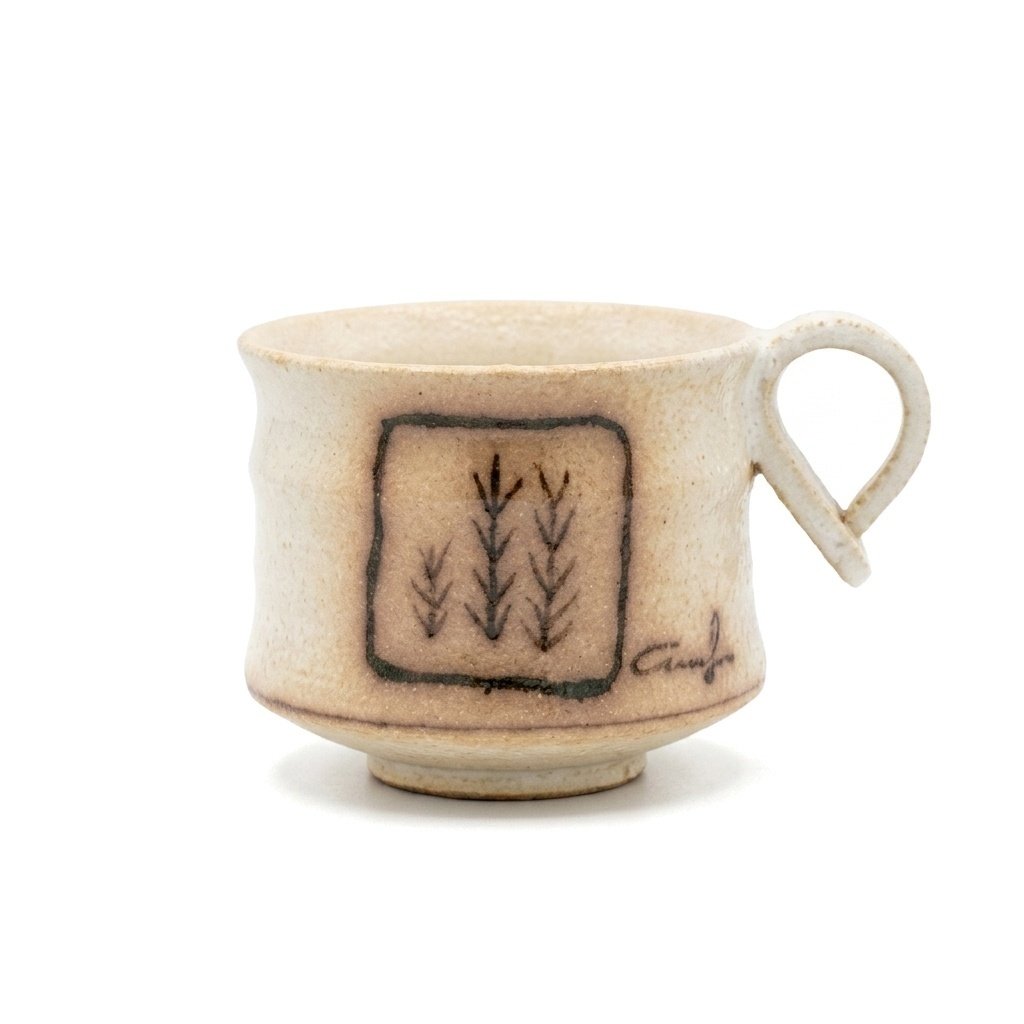
Aurioo’s Botanical Panel Er Kang ceramic mug has a listed capacity of approximately 300 mL. That is a vessel specification, not a required brewing portion. The listing includes one mug; an infuser, lid, and saucer are not included. For a closer look at handles, saucers, and capacity, see our teacup vs mug guide.
Check temperature and steeping time for the particular tea rather than using a single rule for every bag or loose leaf. Aurioo’s Dragon Well guidance specifies water around 80 to 85°C. Set a timer when you begin, then remove the bag or separate the drink from the leaves at the recommended point. Write down any adjustment you want to try next time.

Compare two cups you would actually drink
Choose teas with a similar intended flavor before judging the format. Comparing a familiar breakfast blend with an unfamiliar oolong may tell you more about your tea preferences than about bags versus loose leaf.
Brew each according to its own instructions and use the same drinking vessel where practical. Taste them as you normally would, including milk or sweetener if that is your routine. Note whether you enjoyed the flavor and whether the preparation felt manageable.
For a separate flavor experiment, Aurioo’s Bai Hao Oolong Tea is described as having an amber infusion with ripe-fruit and honey aromas. Its 10 g option lets you try a smaller quantity before choosing the 120 g size. Treat that as exploring another tea, rather than proof that one format wins.
Questions that come up when switching formats
Do I need a teapot for loose leaf tea?
No. A mug with a suitable infuser is one option. Choose a tool you can fill, lift, empty, and wash comfortably.
Can one tea bag fill any size mug?
Check the package’s recommended water amount. A bag is a fixed portion; a mug is not a fixed serving size. Measure your usual fill once if you are unsure.
Should I replace all my tea bags?
Only if you want to. Try loose leaf during a convenient part of your day and keep bags where they work well. There is no need to change a routine that already makes tea you enjoy.