
A small cup makes sense when you pour a little tea, finish it, and pour again. A larger vessel suits a single serving beside your breakfast or book. That is a useful place to start with the teacup vs mug question, although the names alone won’t tell you how much either one holds.
Look at the capacity, handle, dimensions, and what comes in the box. A cup with a saucer can hold more than a product called a mug. And a teacup doesn’t need a handle to be a teacup.
What the names tell you
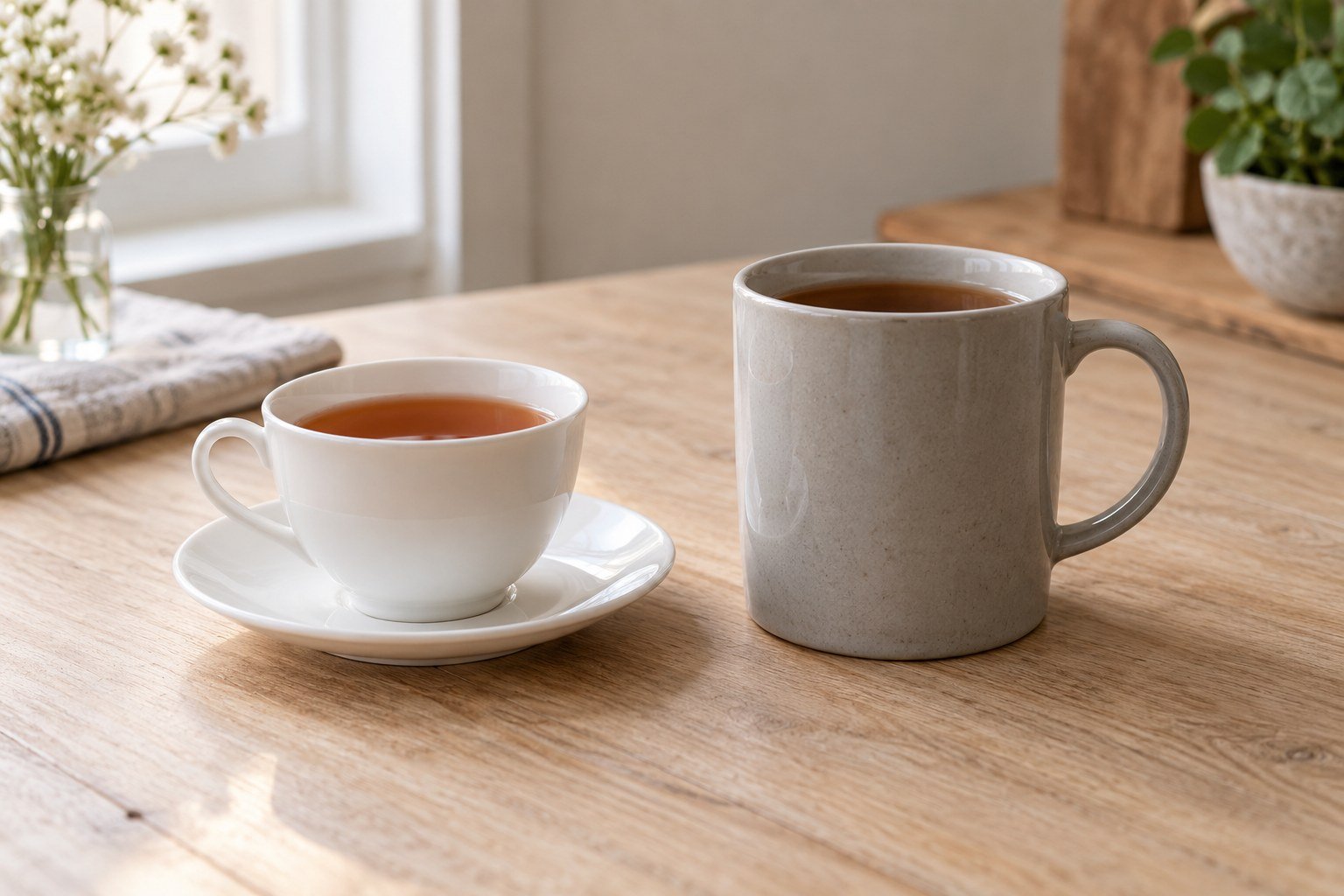
Oxford describes a mug as a tall drinking cup, typically straight-sided and handled, used without a saucer. That is a helpful picture of the familiar everyday mug.
Product names are less tidy. Makers use “cup,” “tea bowl,” “tumbler,” and “mug” across different shapes and sizes. Teacups include handled designs with matching saucers and small handleless vessels for pouring tea in rounds. Neither category has a universal capacity cutoff.
So use the name to find possibilities, then read the measurements. The word “large” is especially unhelpful without a number beside it.
Start with the amount you want to pour
Think about your last cup of tea. Did you finish the serving, leave some behind, or refill it several times? That tells you more about a useful capacity than whether the vessel looks formal.
For small repeated pours, Aurioo’s Blue White Floral Tall tea cup has a listed capacity of approximately 60 ml. Its diameter is 4.5 cm and its height is 5 cm. It belongs beside a brewing vessel that you return to between pours; it would be an awkward choice if you wanted to empty a large breakfast serving into one cup.
A practical check takes only a measuring jug. Fill a cup you already like to your usual drinking level with cool water, then measure that water. Keep the result handy while shopping. Leave space below the rim, particularly if you add milk or carry your tea across the room. A listed capacity should not become a target you must fill to every time.
Three Aurioo pieces that make the difference clearer
These products show why size deserves a separate check from the label. Capacities below are the amounts stated in their product listings.
| Piece | Listed capacity | Detail to consider |
|---|---|---|
| Blue White Floral Tall tea cup | Approx. 60 ml | Small portions for repeated gongfu tea pours |
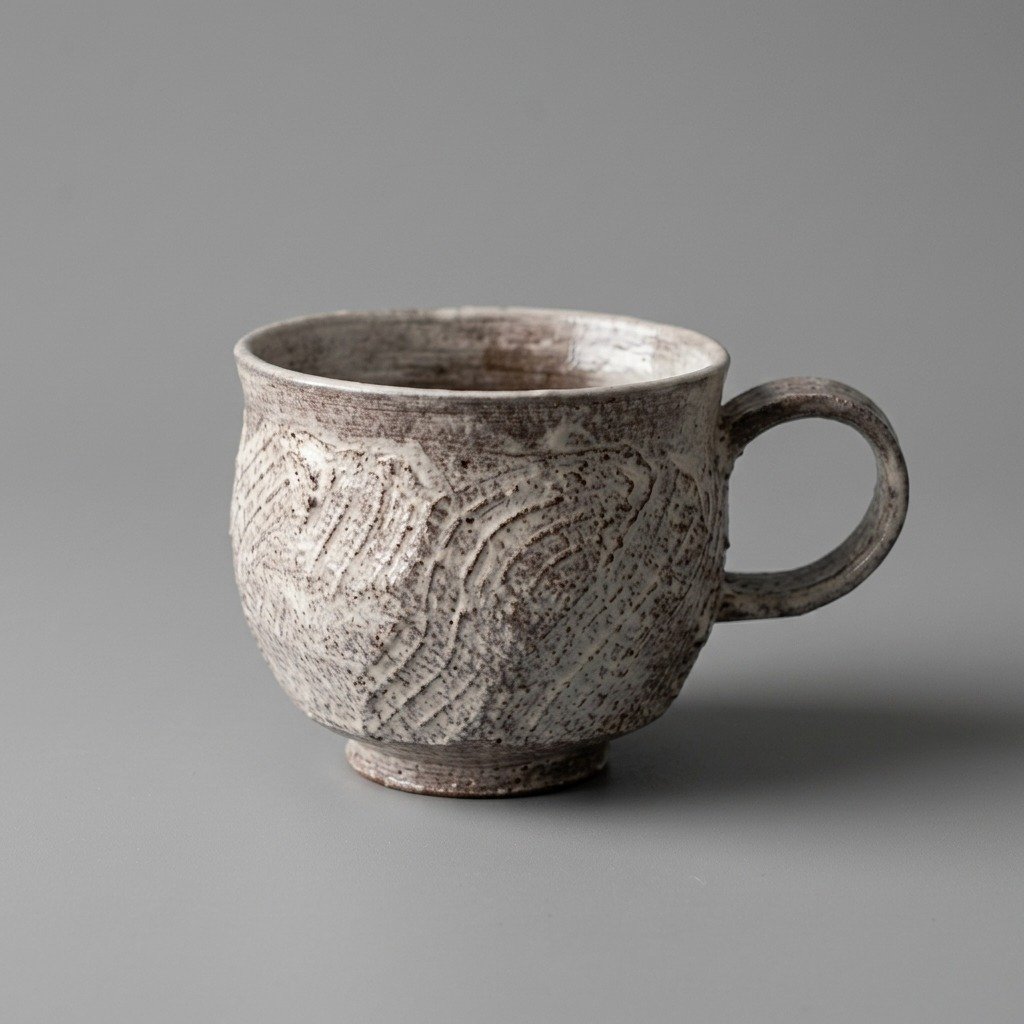
| Carved Texture Er Kang ceramic mug | 150 ml | A handled mug with a modest serving size |
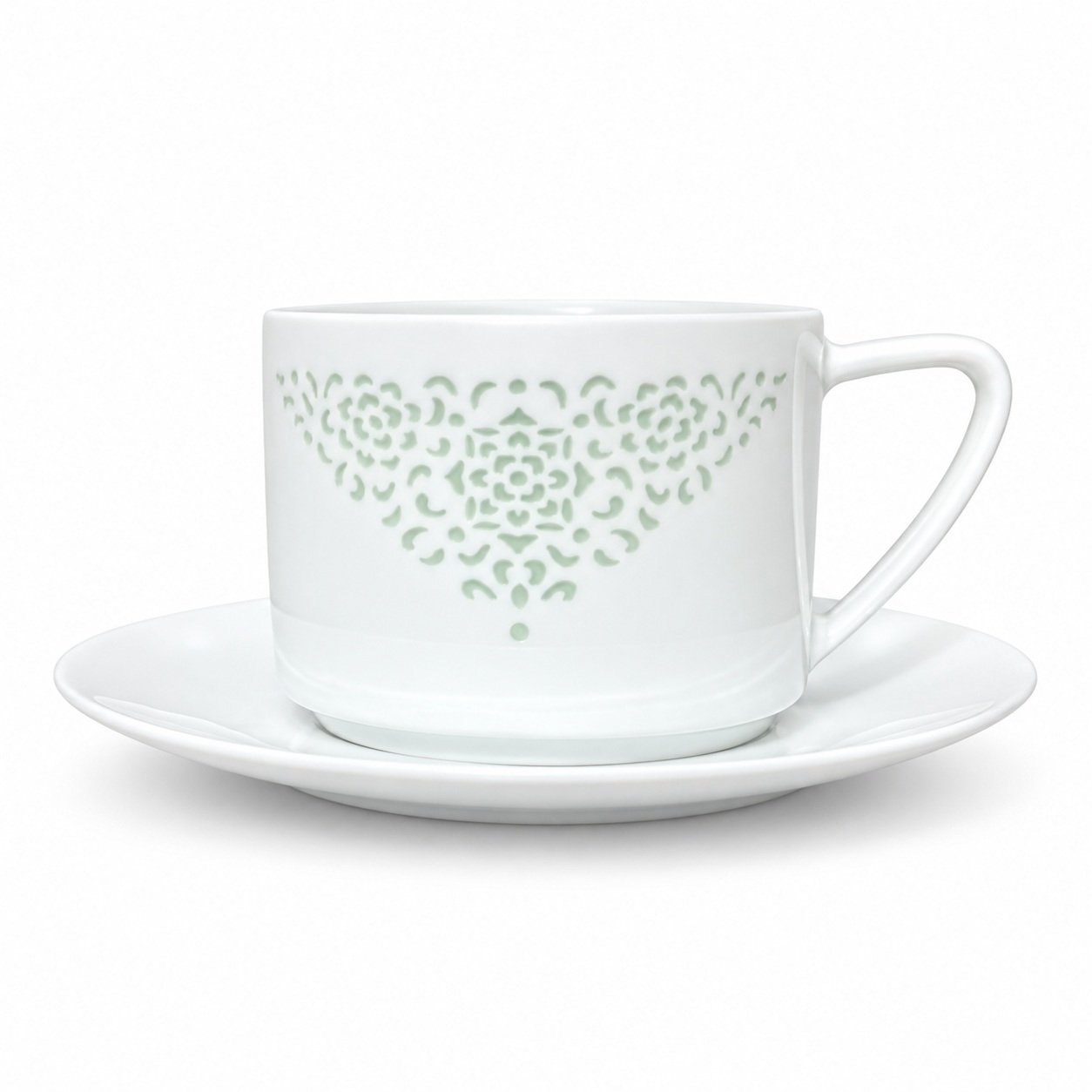
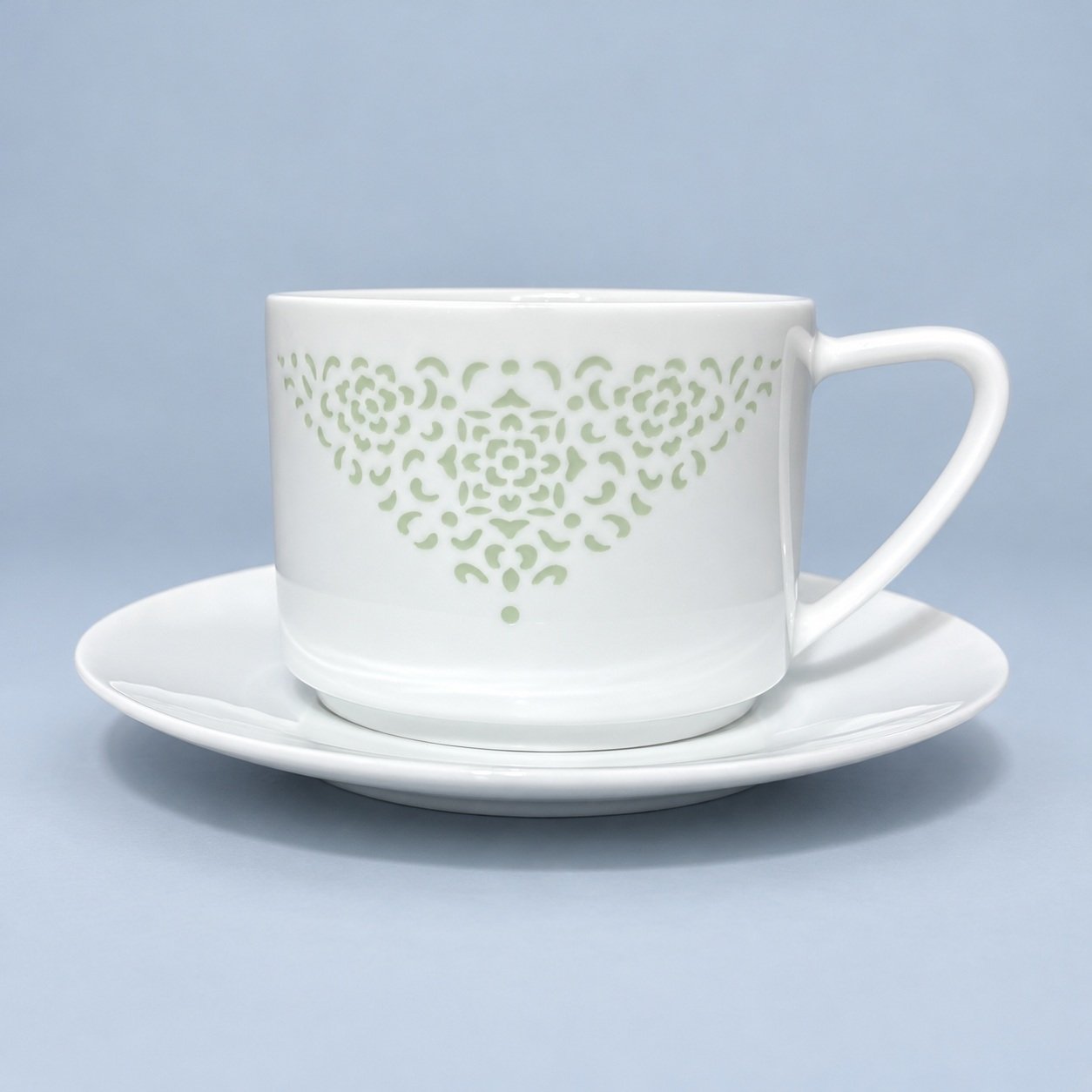
| Linglong Floral Heart coffee cup and saucer | 350 ml | A larger handled cup supplied with a matching saucer |
The Carved Texture Er Kang mug is listed for tea and herbal drinks. It has a ring handle, an 8 cm diameter, and a 6 cm height. At 150 ml, it is a useful reminder that “mug” does not necessarily mean a very large drink.
The Linglong Floral Heart cup and saucer goes in the other direction: the cup holds 350 ml. Aurioo lists it as a coffee cup. If you prefer a handled cup and saucer for your brewed tea, it is an option to consider for that use. Check the set selection when ordering, since the listing offers one pair or two pairs.
Check the grip and the space on your table
A handle deserves a closer look than “yes” or “no.” Examine its opening and its distance from the cup wall. A small ring handle and a broad loop will feel different in your hand. Photographs can help you judge the shape, but they cannot establish how comfortable a filled cup will feel to you.
With a handleless cup, think about where your fingers will sit. Let the outside become comfortable to touch before lifting it. A decorative shape is not worth an awkward grip.
Then check the footprint. The Linglong cup’s matching saucer is 15 cm across, while the cup itself is 9 cm across. On a narrow desk, that extra space matters. At a breakfast table, you may welcome a dedicated place to put the cup down.
If you plan to brew directly in the vessel, compare its opening with your infuser’s dimensions. A capacity figure alone cannot tell you whether a basket will fit. If you pour from a separate pot, you can choose the drinking vessel without having to accommodate that basket.
Read material and care details separately
Porcelain is a type of ceramic. A comparison that treats “porcelain teacup” and “ceramic mug” as completely separate material categories can be misleading.
Nor does the name establish how long your tea will stay warm or which vessel will make it taste better. Choose the form you like using, and look for product-specific information before making a claim about performance.
Care instructions deserve the same attention. A ceramic or porcelain label does not automatically confirm dishwasher or microwave suitability. Follow the instructions for the particular piece. Aurioo recommends gentle hand washing with a soft sponge for the Linglong Floral Heart cup, followed by drying before storage.
Questions before you buy
Do I need both a teacup and a mug?
Only if they solve different needs for you. A small cup for repeated pours and a larger vessel for breakfast can both earn their shelf space. If you drink tea the same way each day, start with the size you already know you use.
Does a teacup need a saucer?
No. A saucer is useful when you want a matching resting place for a handled cup, but handleless tea cups can be used without one. Check the included pieces rather than assuming the product photograph shows everything in your chosen option.
Should I choose my cup before my tea set?
If you already have a pot or gaiwan, consider how you will divide each pour among your cups. If you are starting from scratch, Aurioo’s Chinese tea set guide covers the wider setup. Decide how you want to brew and serve, then choose a cup size that fits that routine.