

Would you rather start with fruit, honey and floral aromas, or a clean-tasting green tea? That is a useful first question when choosing between Aurioo’s Golden Bud Jin Jun Mei and Dragon Well Lung Ching. The category names tell you something about how the leaves were made. The individual product descriptions tell you more about which packet to try.
Both teas have a 10 g option, so you can explore the difference without immediately choosing a larger quantity. Look at the leaves, follow each tea’s own preparation guidance, and decide which cup you want to return to.
Two different starting points
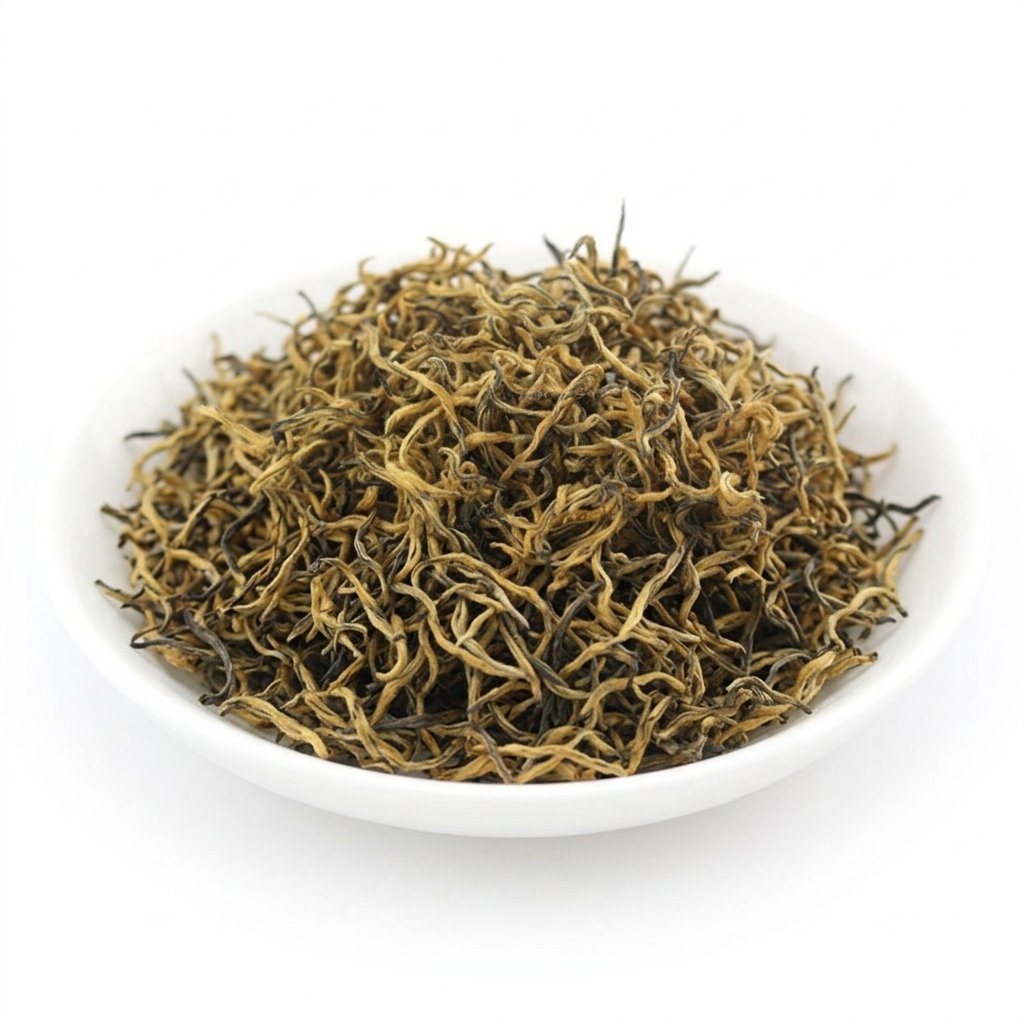
Golden Bud Jin Jun Mei Tea is Aurioo’s black-tea option in this comparison. Its fine, tightly shaped buds have golden tones, and its listed aroma combines fruit, honey and flowers. If those are the notes that attract you when reading a tea description, start here.
The golden appearance is also a useful reminder to read the product name and category together. A black tea does not need to look uniformly black in its dry form. For this product, the fine bud shape and golden tones are part of the description, not grounds for assigning it to another tea category.
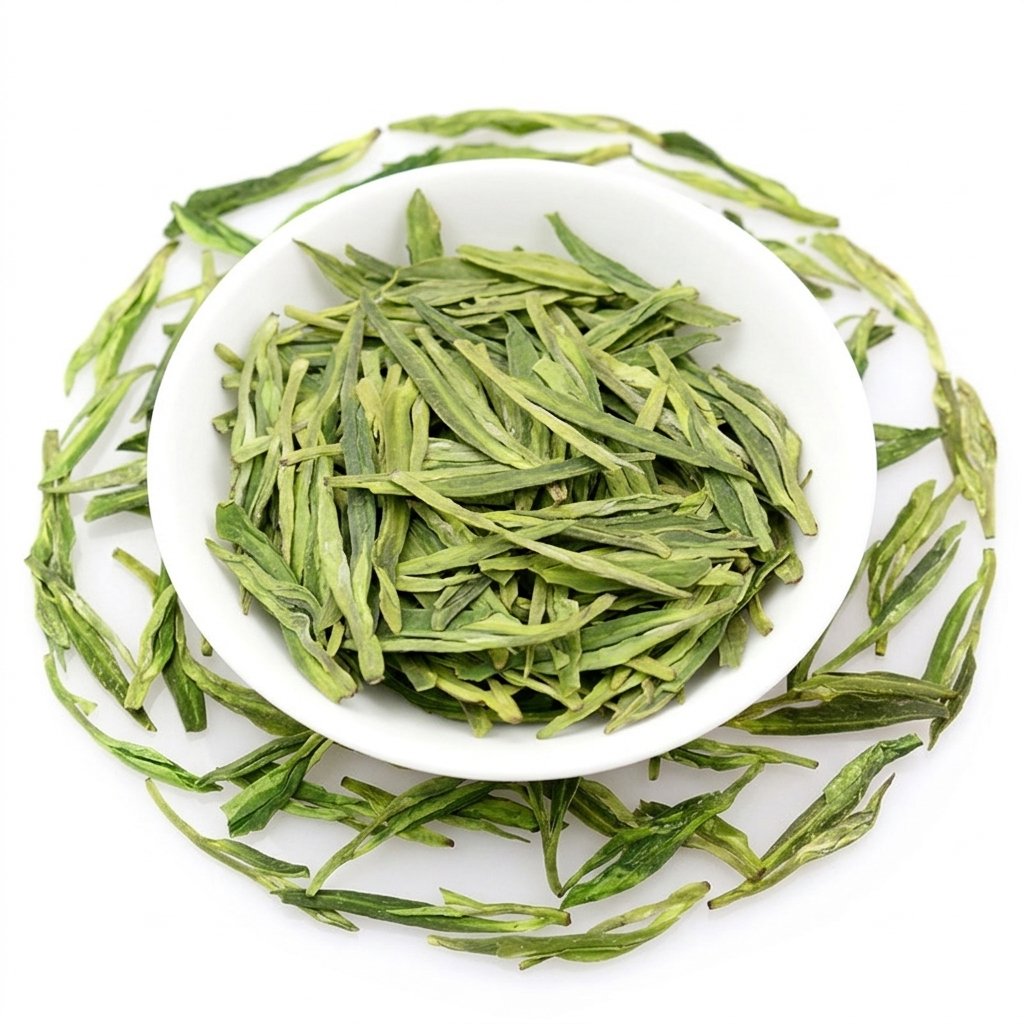
Dragon Well Lung Ching Green Tea has broad, flat green leaves and a clean-tasting profile. Choose it if that fresh green-tea character sounds closer to the cup you have in mind. The listing does not promise a particular nut, vegetable or roasted flavor, so there is no need to go searching for one during your first brew.
Set a little of each dry tea on separate dishes before brewing. Their different shapes give you something concrete to compare before you have learned either tea’s aroma. Keep the names beside the dishes; a quick phone photo can help you remember which was which.
What the black and green categories explain
Black and green tea come from Camellia sinensis. During green-tea processing, heat is used to stop oxidation early; black tea undergoes more oxidation. This processing difference helps explain the categories, but it does not provide a complete tasting description for every tea within them. ArtfulTea’s category comparison provides background on that distinction.
For this choice, return to the two actual products: fine golden-toned buds with fruit, honey and floral aromas, or flat green leaves with a clean taste.
Compare the details before choosing a size
| Detail | Golden Bud Jin Jun Mei | Dragon Well Lung Ching |
|---|---|---|
| Tea category | Black tea | Green tea |
| Dry leaf form | Fine, tightly shaped buds with golden tones | Broad, flat green leaves |
| Listed profile | Fruit, honey and floral aroma | Clean taste and fresh green-tea character |
| Available quantities | 10 g or 150 g | 10 g or 120 g |
| Starting preparation | Small portion in a teapot or gaiwan; begin with a short infusion | Water around 80-85°C; moisten the leaves with a little water, then top up |
| What to adjust | Tea amount and infusion time to taste | Steeping time to taste |
Choose a larger pack after you know which tea fits your routine. If you alternate between several teas, check what you already have open before ordering. Our guide to storing opened loose-leaf tea offers a simple way to organize that shelf.
Taste them with a setup you already understand
Use each tea’s instructions for its first brew. There is little value in forcing both through an identical recipe when the product guidance differs. For Jin Jun Mei, begin with a small portion and a short infusion. For Dragon Well, use the listed 80-85°C range, moisten the leaves first, then add the remaining water.
Keep a note of what you did and what you would change. On the next attempt, adjust one thing at a time so you can follow the result. You do not need to decide which tea is “better”; deciding which one you would like another cup of is enough.
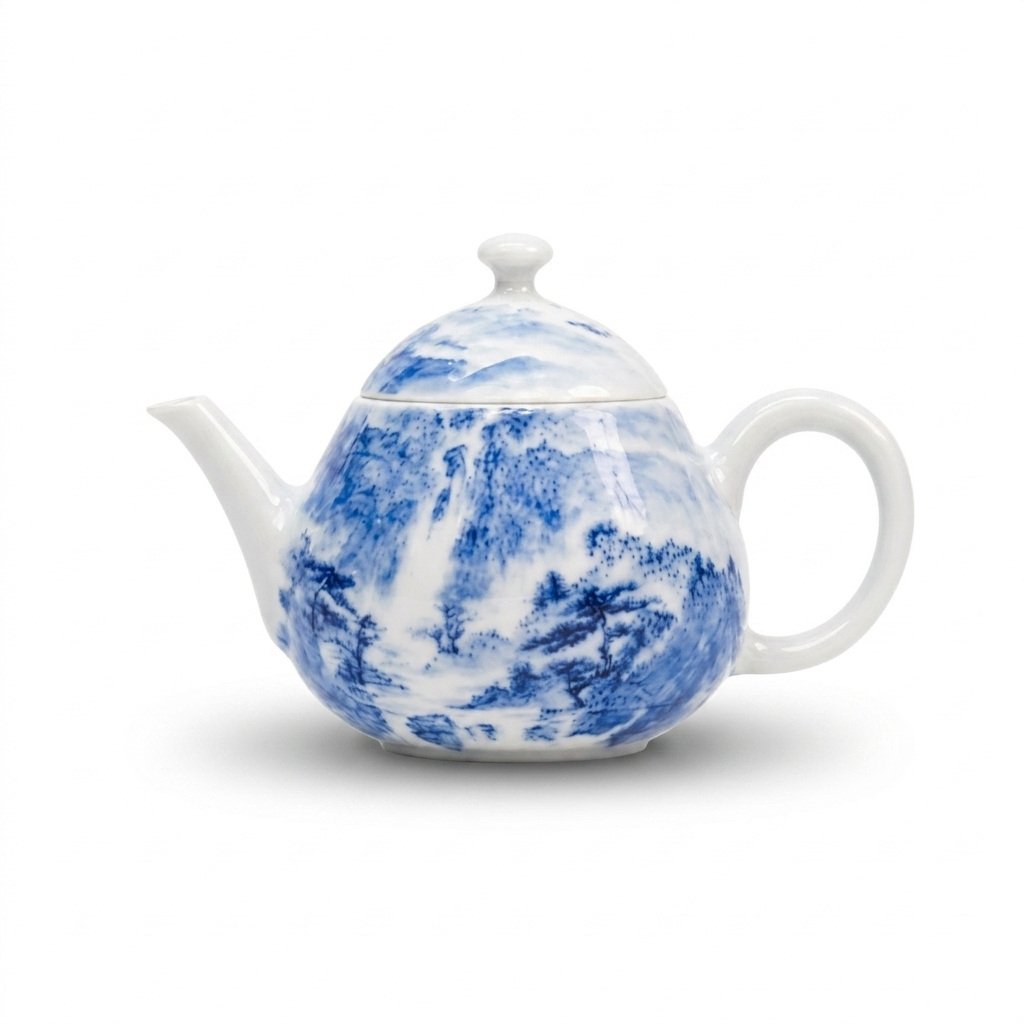
If you want a compact pot for this routine, Aurioo’s Blue Landscape Round Teapot is a hand-painted jade clay porcelain piece with an approximate 160 mL capacity. The single option includes one teapot. Its care instructions are straightforward: rinse it and leave the lid open while drying.
Frequently asked questions
Do black tea and green tea come from the same plant?
Yes. Both belong to Camellia sinensis. Their processing differs, and the named tea matters when choosing a flavor. Here, compare Jin Jun Mei’s listed aromas with Dragon Well’s clean-tasting profile.
Can I identify the tea from the brewed color alone?
Do not use color alone to label an unknown cup. Keep the product name with the tea and check its stated category. These two listings give leaf and flavor descriptions; they do not supply a color test for identification.
Do I need to buy new teaware to try both?
No. Start with suitable tea-brewing equipment you already use and follow its care instructions. The small porcelain pot is an optional choice if its capacity suits you. Trying the 10 g tea sizes can be the first step.