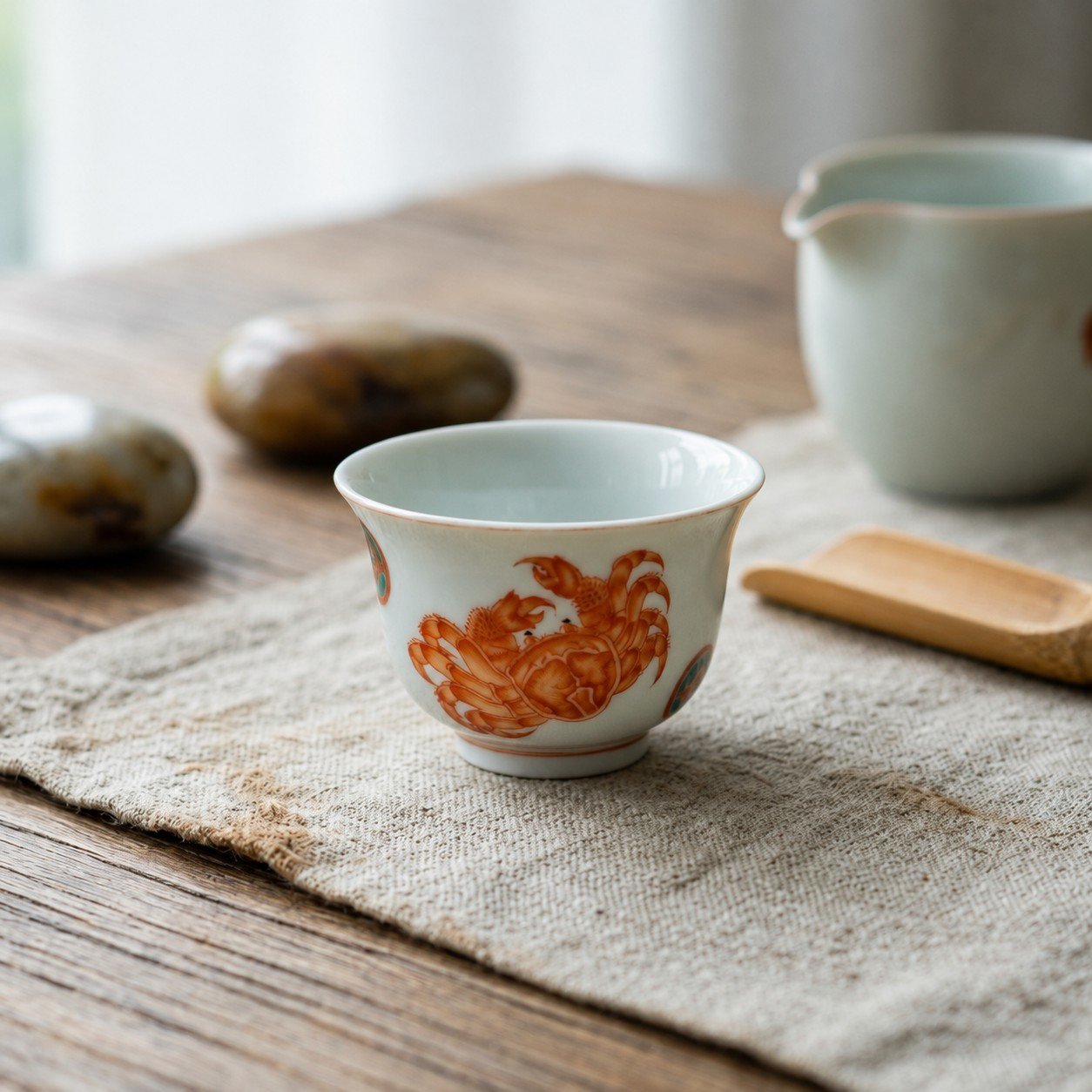
Orange-red claws and a rounded shell cover much of Aurioo’s Red Green Crab tea cup. Small leaves and flowers fill the space beside the animal. The cup is only about 5 cm across, which brings the painted subject close when you pick it up.
A crab has a place in the language of Chinese decorative art. To understand a particular design, look at what accompanies it as well as the animal itself.
A crab can suggest prosperity and standing
The crab entry in NationsOnline’s guide to Chinese animal symbols connects it with prosperity and social status. The guide also lists combinations of animals and plants, showing how neighboring details can give a familiar subject a more specific reading.
One documented example is the white-jade Crab-Shaped Paperweight in Japan Search’s museum record. The crab holds reeds in its claws. The record explains how wordplay involving the shell and reeds alludes to success in the imperial examinations. That composition would have been especially appropriate on a scholar’s desk.

Read the flowers on this cup in their own right
Aurioo describes the Red Green Crab cup as crab and small floral brushwork. In the close view, fine stems and small leaves give the crab a painted setting. You can follow the claws toward those smaller marks, then see how the decoration fits beneath the narrow rim line.
The historical paperweight offers a way to understand how an animal and its surroundings can form a message. For this modern cup, the listing’s named subject and visible flowers are the starting point. A wish associated with a particular historical combination needs the elements of that combination to be identifiable.
| Object or detail | Accompanying imagery | What supports a reading |
|---|---|---|
| Historical jade paperweight | Reeds held in the crab’s claws | Its museum record explains an examination-success wordplay. |
| Aurioo Red Green Crab cup | Small floral strokes and leaves beside the crab | The listing identifies a crab-and-floral design. Prosperity and standing provide broader cultural context. |
| A detail you want to identify more closely | Plant shapes or other small painted marks | Ask for a close photograph and a description of that detail. |

Choose a painted cup you’ll enjoy looking at
This cup’s listed capacity is approximately 50 mL. Its compact body makes it a small drinking vessel, with the animal on the exterior and a pale interior visible from above. The One option contains one cup. Check the quantity selector when comparing it with the Value pack(2) option.
If you enjoy reading animal motifs, our fish-symbolism guide follows a different wordplay involving abundance. The butterfly and floral gaiwan offers another example of an animal appearing among flowers.

Among Aurioo’s small tea cups, choose the image you want to keep returning to. Here the broad crab shapes give you an animal to recognize, while the finer leaves reward a closer look.
Frequently asked questions
What does a crab symbolize in Chinese decorative art?
Prosperity and social standing are common associations. Some historical crab designs carry more specific meanings through accompanying plants and wordplay.
Does this cup show the crab-and-reeds examination symbol?
The Aurioo listing identifies crab and small floral brushwork. The museum paperweight’s examination reading depends on identifiable reeds held in the claws. Read this cup using the details its listing and photographs establish.
How large is the Red Green Crab cup?
It is listed at approximately 50 mL, 5 cm in diameter and 4 cm tall. The One option contains one cup.