

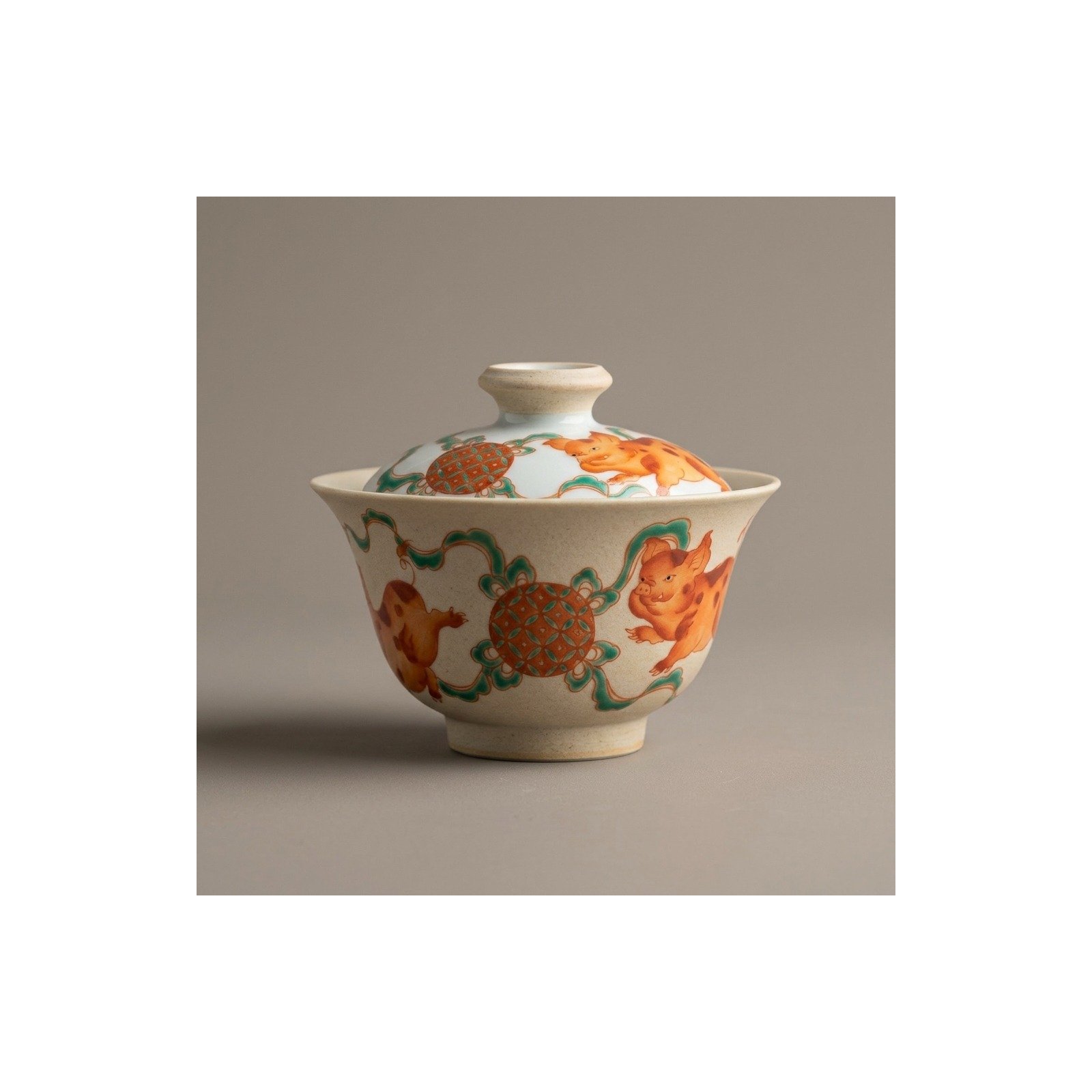
An orange-red pig runs around the white bowl of Aurioo's Red Green Auspicious Pig gaiwan, alongside a patterned ball and curling green lines. The lid carries the decoration too. Turn the vessel and the scene changes: a pig, a ribbon-like curve, then the round ball come into view.
Chinese pig symbolism helps explain why this cheerful animal belongs on an auspicious piece of teaware. The pig can express wishes for prosperity and abundance. To understand this particular gaiwan, it helps to keep that cultural background alongside what the product actually shows and includes.
Why a pig can be an auspicious animal
The Smithsonian's introduction to the Year of the Pig identifies the pig with wealth, abundance and good fortune. It also places the pig last in the Chinese zodiac's twelve-animal cycle, before the rat begins the next cycle.
That context makes a pig motif a reasonable choice for someone who likes a warm, generous message. It can be a wish for plenty expressed through an animal image.
The catalogue calls this design Auspicious Pig and identifies the accompanying object as a brocade ball. It does not provide a maker's explanation of a specific rebus. The broader pig association is supported, while a precise phrase supposedly encoded by this pig-and-ball arrangement would need further evidence.
Look at the painting before interpreting every detail
The pigs are painted in warm orange-red tones, with darker spots and small facial marks. The ball has a repeated patterned centre, framed by green curves. Those lines carry your eye around the bowl instead of enclosing the scene in a rectangular panel. Across the lid, the same palette ties the two parts together.
The pale porcelain makes the drawing easy to follow, but the body has enough curvature that a front photograph cannot show the whole design. Compare the straight-on view with the close-up. Notice the painted outline, the spaces between figures and the way the green lines lead toward another part of the scene.
The listing describes hand-painted blue-and-white porcelain with red and green overglaze enamel, with the porcelain body fired before a second colour firing. That is the product's stated process. Our underglaze and overglaze guide explains what the position of decoration relative to the glaze means. A photograph alone cannot establish its firing schedule or food-contact testing.

Separate the visible design from the cultural reading
You can describe the pig and ball directly, then use supported cultural context to explain why the combination feels festive. Keeping those two steps separate leaves room for the maker's drawing without assigning a fixed secret meaning to every stroke.
| Detail | What the piece or source supports | Limit of the interpretation |
|---|---|---|
| Pig figures | The catalogue names an auspicious pig; Smithsonian links the animal with abundance. | A cultural wish does not guarantee prosperity. |
| Patterned ball | The catalogue calls it a brocade ball. | No maker-specific rebus is documented. |
| Green curves | Visible lines frame the figures and connect the scene. | Do not assign a fixed meaning to every stroke. |
| Painted bowl and lid | The current listing names red and green overglaze decoration. | Appearance alone does not verify firing or testing. |
| Zodiac association | The pig closes the twelve-animal cycle. | The product has no birth-year restriction. |
Auspicious decoration also appears as writing. If you are comparing animal imagery with a character-based design, our Fu and Houde calligraphy guide helps you read the difference. On this gaiwan, the animal scene carries the visual emphasis.
Choose the 150 mL vessel for the way it will be used
The current listing specifies one gaiwan bowl and one lid. It gives an approximate capacity of 150 mL, a diameter of 9 cm and a height of 8 cm. A saucer, drinking cups, pitcher and tea are not listed as included pieces. Quantity options are One and Value pack(2); choose the option that matches the number of units you want.
The capacity is a starting point for planning a small brewing session. Actual poured tea will depend on how much leaf you use, how high you fill the bowl and how completely you drain it. Leave comfortable headroom instead of filling to the rim for the sake of reaching a number.
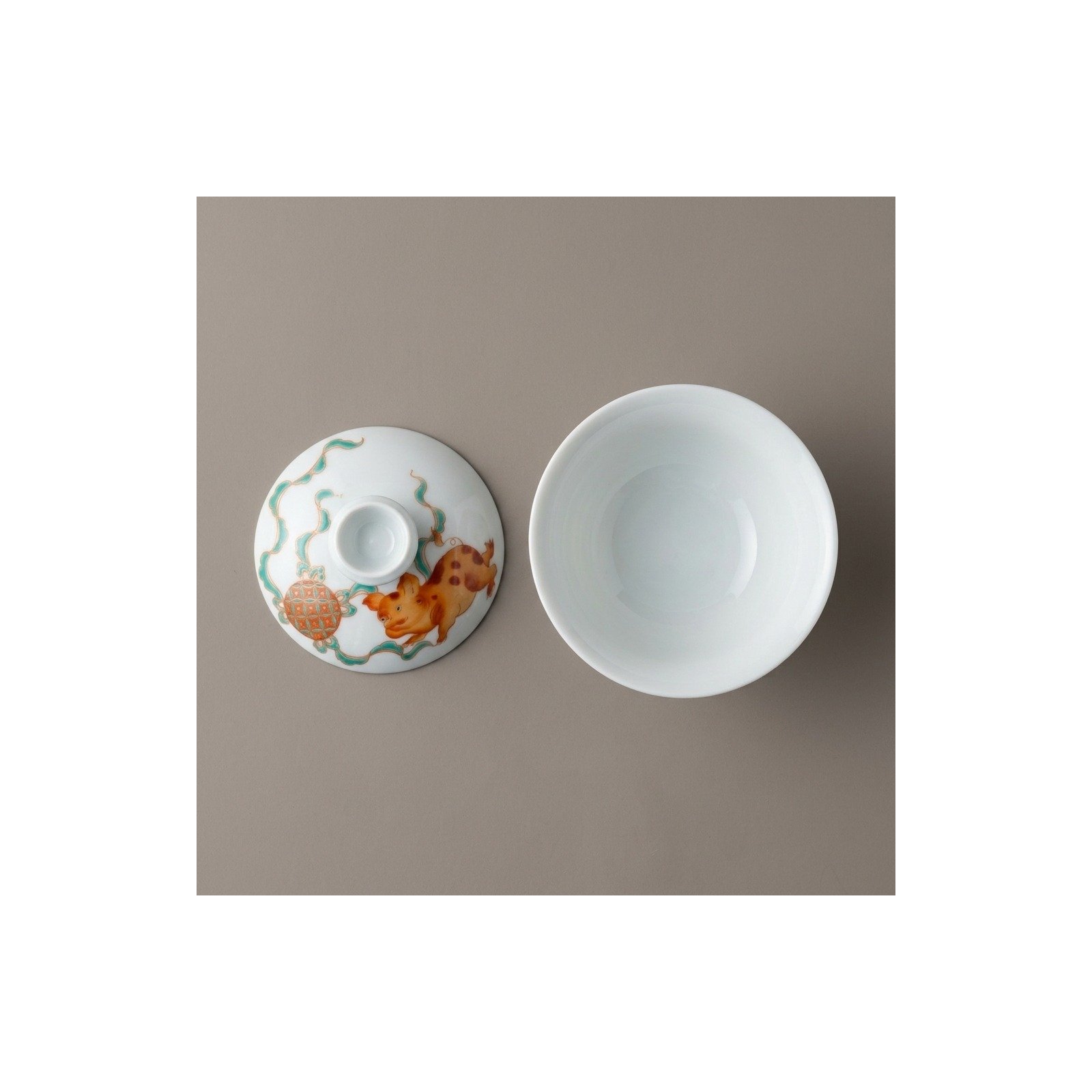
Practise the lid position and pouring grip with cool water first, over a stable surface. When you move to hot tea, follow the tea's own preparation needs. Our first-session gaiwan guide explains the brewing sequence without requiring a particular decorative style.
For a gift, think about whether the recipient already uses a gaiwan and owns cups for serving. The cheerful painting may catch your eye first, but an unfamiliar brewing vessel also needs a little explanation. Our tea gift guide can help you match the piece to the recipient's habits. A note about abundance makes the thought behind the gift clear.
After use, wash gently by hand, avoid abrasive rubbing over the painted surface and dry the pieces fully. See the painted-teaware cleaning routine for the daily steps. Keeping the lid and bowl together also makes it easier to enjoy the scene as a complete design at the next session.
Frequently asked questions
What does the pig symbolize in Chinese culture?
In the Chinese zodiac context described by the Smithsonian, it represents wealth, abundance and good fortune. Those are cultural associations that help explain an auspicious pig design, rather than guarantees attached to the object.
Must a recipient be born in the Year of the Pig?
No birth-year restriction appears in this product's listing. You can choose it because the recipient likes the painting, uses a gaiwan or appreciates the wish for abundance. If a specific zodiac birthday matters to your gift, check the lunar calendar dates for that person separately.
Does the pig gaiwan include a saucer?
The listed contents are one bowl and one lid. A saucer is not listed. Select One or Value pack(2) as appropriate, and arrange any cups or serving pieces separately.