
Start with the characters you can see
Fu and Houde give Aurioo’s porcelain sets different meanings. Fu, 福, is associated with good fortune. Houde, 厚德, points to generous moral character. Once you can read the named motif, you can compare how it sits on a gaiwan or teapot, alongside the colors and shape you prefer.
Umi Tea Sets’ essay on calligraphy and tea discusses both poems about tea and writing built around the single character for tea. That distinction suggests a useful first step: identify the text before treating an inscription as a poem or quotation. Here, start with the Fu and Houde names attached to the actual sets.
Fu: a single character for good fortune
The Ministry of Education’s dictionary entry for 福 gives its pronunciation as fú and includes senses of good fortune and auspiciousness. “Good fortune” is a useful short English gloss for reading the motif.
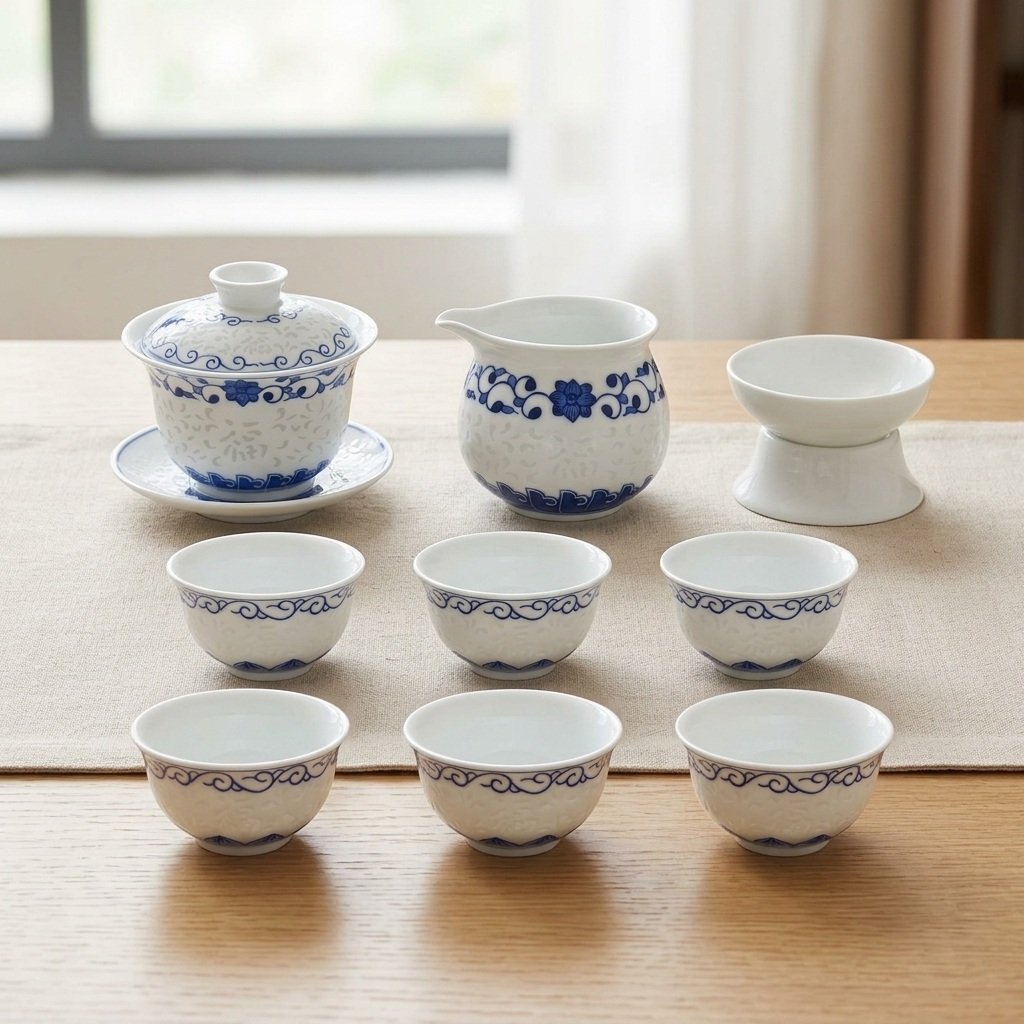
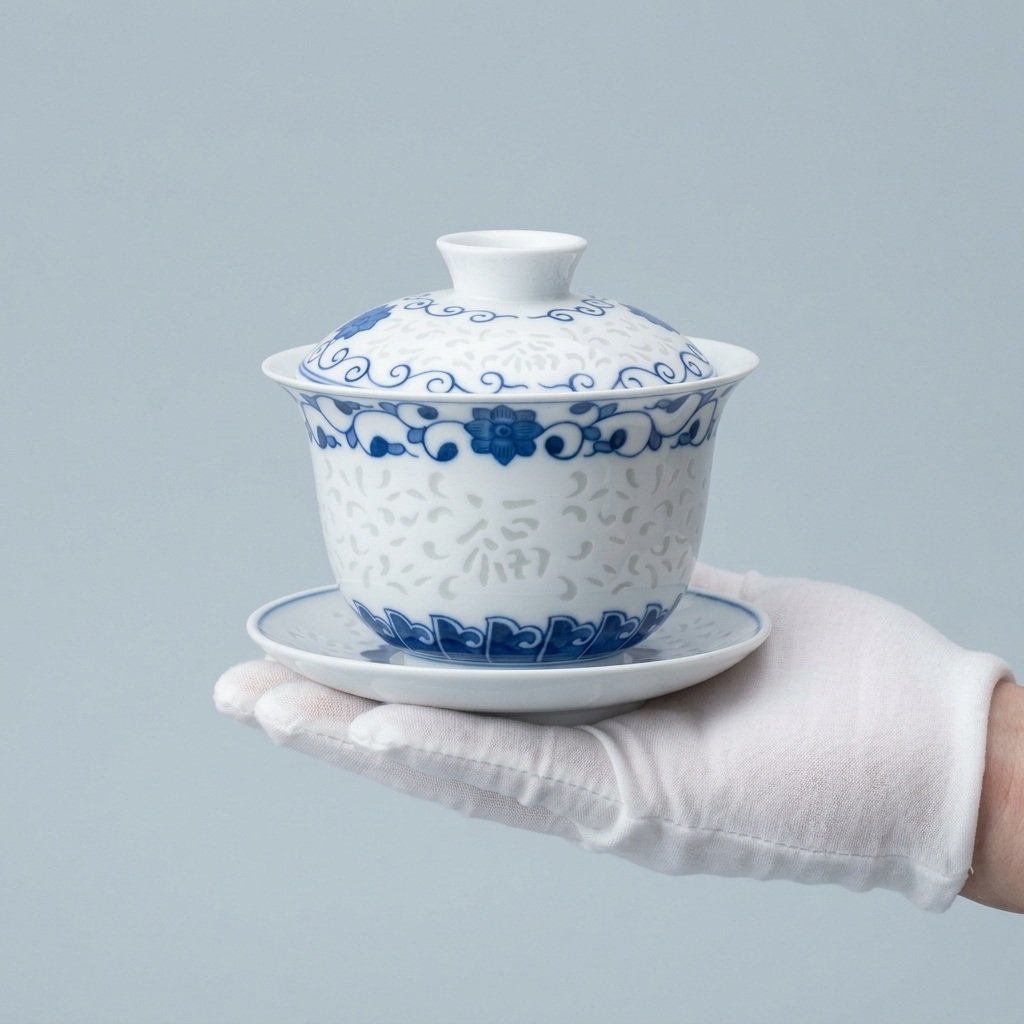
On the Blue Fu porcelain gaiwan set, look at the front of the bowl below the blue floral border. The pale Fu character sits among smaller curved marks, between the upper band and the darker border near the foot. Seeing the word within those borders helps you separate the inscription from the surrounding ornament.
The side view is useful for reading the bowl. The full-set photograph shows how the gaiwan’s blue borders relate to the pitcher and cups. Use both views when deciding whether you want the inscription or the whole coordinated pattern to draw your attention.
Houde: a different idea on a rounded teapot
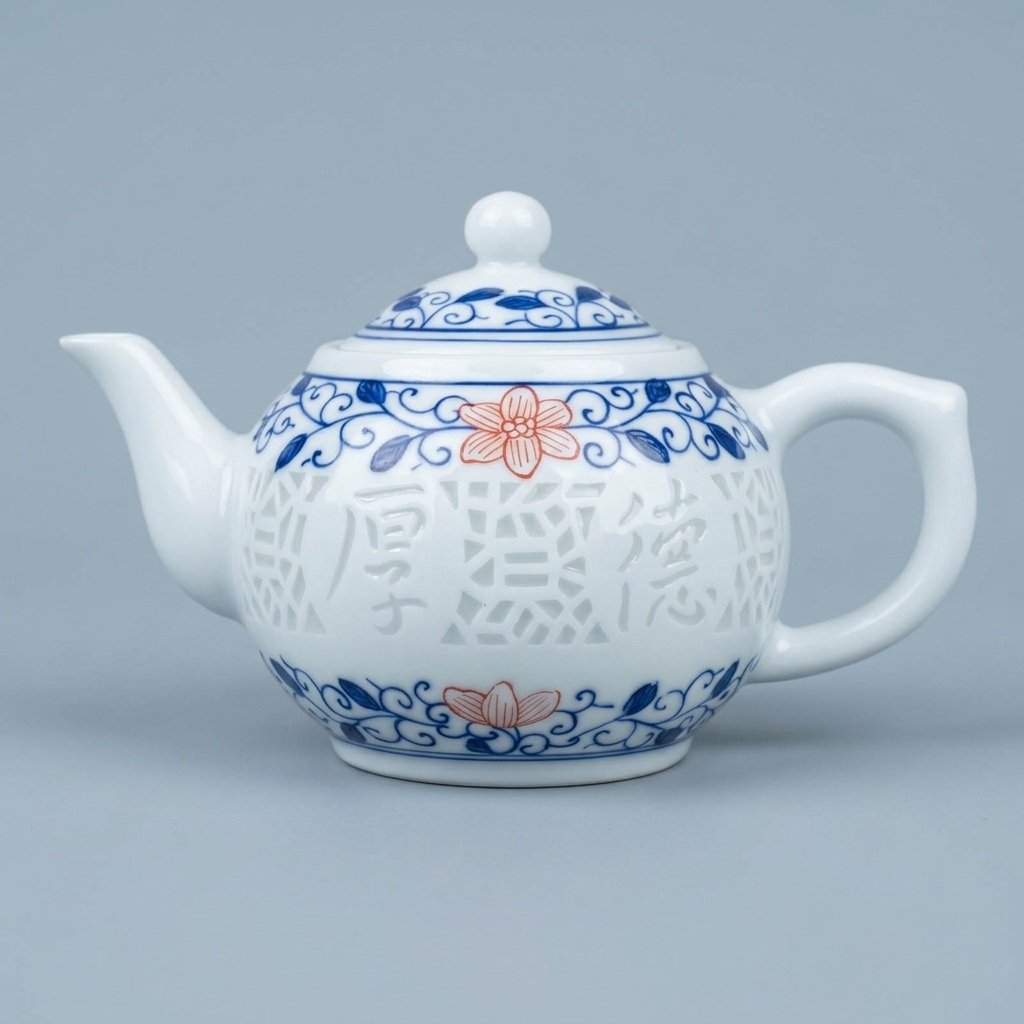
Aurioo calls the motif on its Houde Calligraphy porcelain teapot set Houde, 厚德. A plain-English reading is “generous moral character.” Tsinghua University’s explanation of Houde connects it with magnanimity, broad-mindedness and understanding toward other people. It gives the word a different emphasis from Fu’s good-fortune meaning.
Look at the writing across the rounded body between the spout and handle. Blue scrolls and coral-red flowers frame the pale character forms. The handle, spout and broad body also change how much of the decoration you can see from one position. Step back from the detail to judge the balance of writing and flowers across the whole pot.
Compare the inscription and the vessel
| Set | Named inscription | Visible arrangement | Main brewing vessel |
|---|---|---|---|
| Blue Fu | 福: good fortune | Pale character on the bowl, framed by blue floral and scroll borders | Gaiwan with fitted lid and matching saucer; listed capacity 240 ml |
| Houde Calligraphy | 厚德: generous moral character | Writing across a rounded body, with blue scrolls and coral-red flowers | Teapot with fitted lid; listed capacity 300 ml |
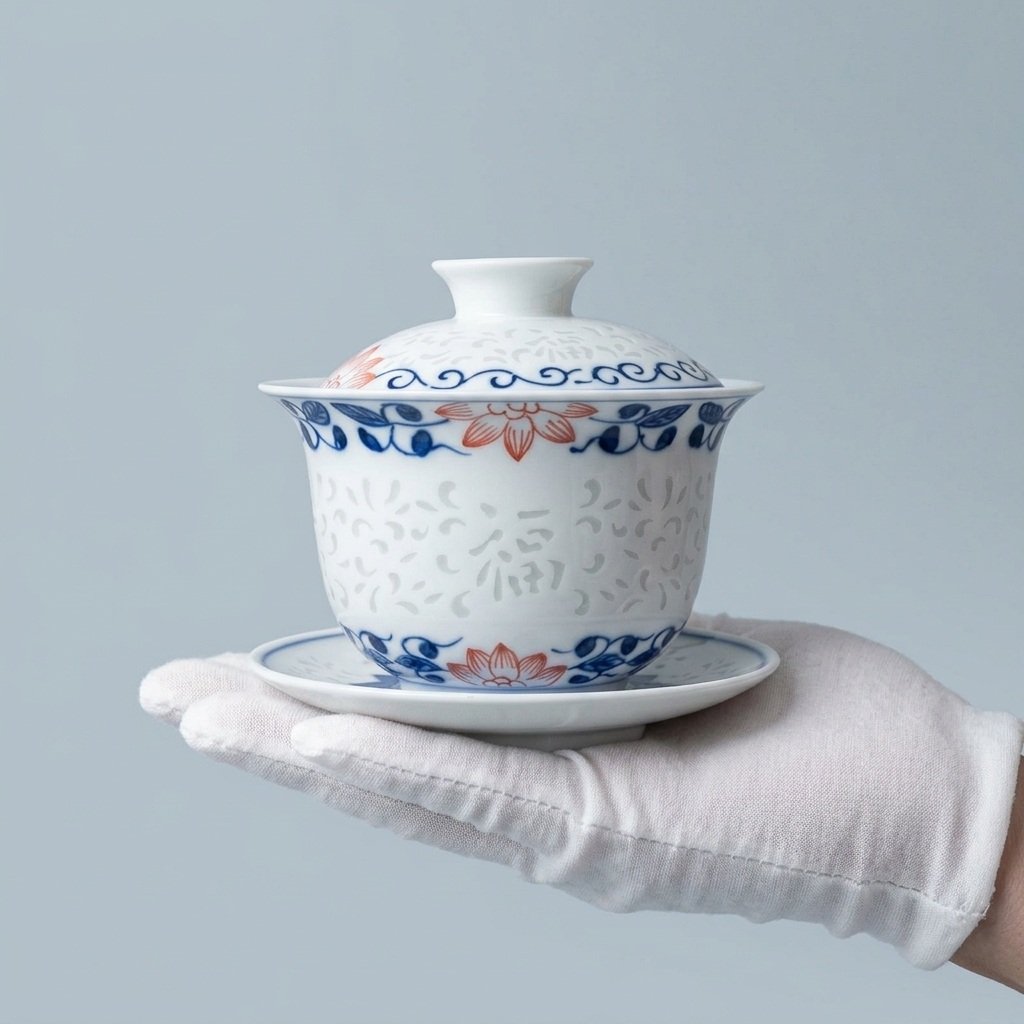
| Red and Blue Fu | 福: good fortune | Pale character on the bowl, with blue borders and coral-red floral accents | Gaiwan with fitted lid and matching saucer; listed capacity 240 ml |
The two Fu sets let you compare palettes while keeping the named character and main vessel type the same. Houde changes both the word and the brewing vessel. Keep those choices separate: first decide whether you want a gaiwan or teapot, then compare the meaning and arrangement of the inscription.
Look at the lettering within the whole design
The Red and Blue Fu gaiwan set adds coral-red flowers to the blue borders. In its side view, the central Fu remains pale against the porcelain. The colored flowers sit above and below it, so you can compare how the added color frames the same character seen on the Blue Fu bowl.
Brewin Teaware’s discussion of calligraphy on tea sets relates the layout of words to the curves of a vessel. For these sets, compare the space around the characters, the borders above and below them, and the portion visible from the side. A close photograph helps you read; a wider view helps you choose the overall arrangement.
A short check before the first session
All three sets are listed as porcelain. Their capacities are vessel specifications, not guaranteed serving yields. If you are also choosing your first brewing setup, Aurioo’s Chinese tea set guide introduces the component roles.
The product pages recommend gentle hand washing and drying before storage. They also note that hand-painted lines, color depth and placement can vary slightly. Compare the overall design in the photographs while allowing for those small differences.
Frequently asked questions
Do Fu and Houde mean the same thing?
They convey different ideas. Fu, 福, expresses good fortune or auspiciousness. Houde, 厚德, concerns generous moral character. Choose the meaning you prefer alongside the vessel and its decoration.
Are the pale shapes open holes in the porcelain?
No. Aurioo describes the translucent areas as glazed. Read the pale character shapes as part of the finished surface, rather than openings through the bowl or teapot.
Do all three sets include six tea cups?
Yes. Each lists six 50 ml cups, a 180 ml fairness pitcher and a complimentary ceramic strainer with its stand. The Fu sets include a gaiwan with fitted lid and matching saucer; the Houde set includes a teapot with fitted lid.