
What is Daqi lacquer teaware made from?
The red surface is only part of the piece. Aurioo describes its Daqi tea cup and gaiwan as jade clay ceramic with a natural lacquer finish. If you are drawn to the color, it helps to look at the body, the interior and the included pieces before deciding which one belongs on your tea table.
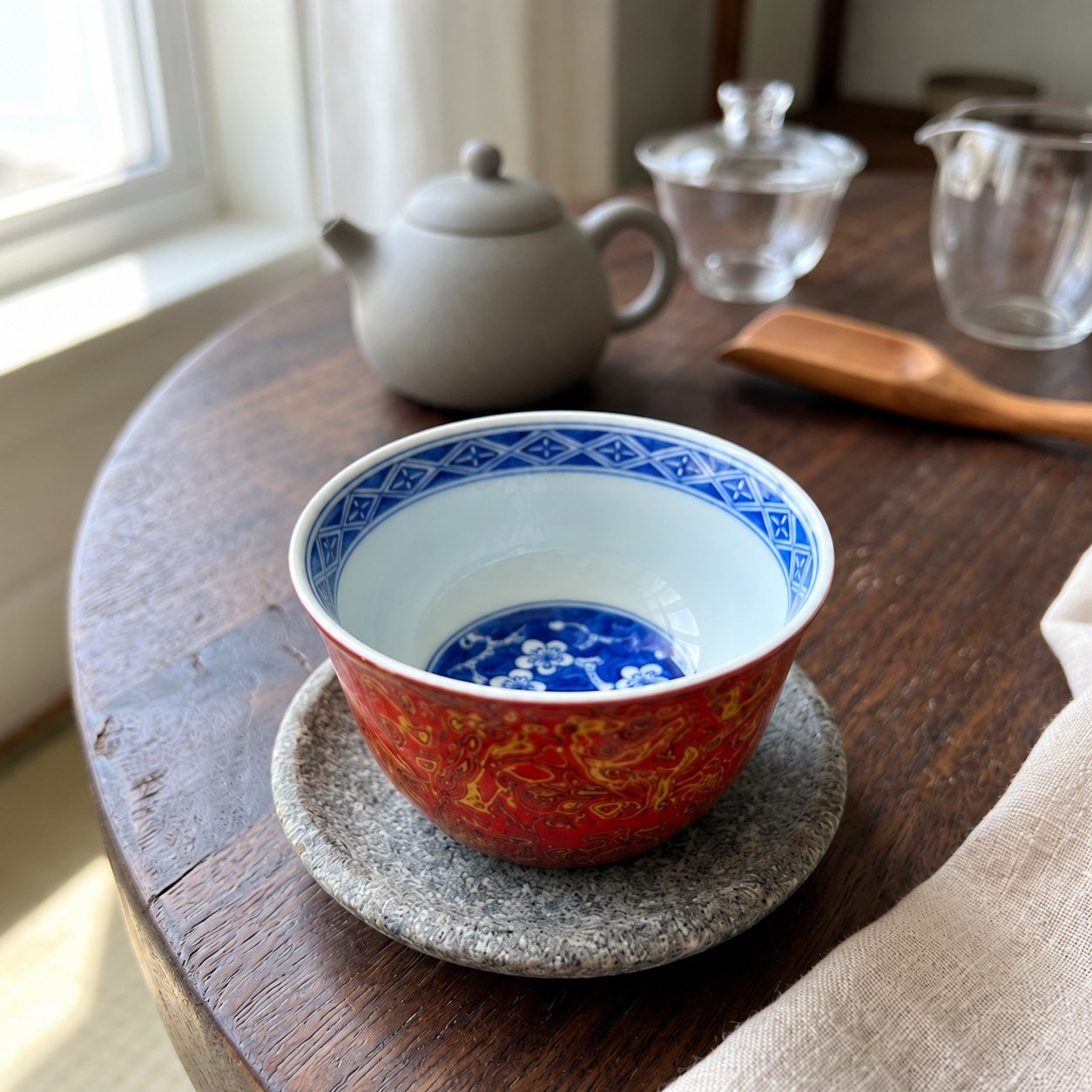
The ceramic body gives each vessel its form; lacquer is the finish described in the listings. On the cup, a red exterior surrounds a blue-and-white interior. On the gaiwan, the red finish covers the outside of the bowl and lid, with a pale interior visible when the lid is lifted. The two vessels bring a similar red finish to different roles in a tea session.

Choose the piece for the job
The Ceramic Tea Cup Red Daqi Lacquer Blue White is a drinking cup. The Ceramic Gaiwan Daqi Lacquer Red is a brewing vessel: tea leaves go in the bowl, and the lid helps control the pour. Choose according to the piece you need, then compare the listed size.
| Piece | Included pieces | Listed capacity | Dimensions as listed |
|---|---|---|---|
| Red Daqi tea cup | 1 tea cup | Approx. 80 ml | Diameter 5.5 cm; height 4 cm |
| Red Daqi gaiwan | 1 bowl and 1 lid | Approx. 150 ml | Diameter 7 cm; height 9 cm |
These figures come from the individual product pages. They describe the vessels, rather than a measured working fill. The gaiwan’s capacity should not be divided by the cup’s capacity to promise a number of servings: leaves and the amount poured will change that.
For the other brewing and serving pieces around them, the Chinese tea set guide explains the wider setup.
Look inside before choosing a finish
The cup’s blue floral design sits inside the bowl, with a geometric band near the rim. You will see a different part of that decoration as the cup empties. Its red exterior and patterned interior make it worth viewing from both sides.
The gaiwan’s pale interior contrasts with the red outside, and the open-lid photograph shows the two surfaces together. Compare that view with the closed vessel below. The product pages also allow for small differences in handmade finishing and measurements, so treat the photographs as views of the design, rather than a promise that every brush mark will match.

A gentle routine after tea
Both Aurioo listings give the same care instructions: rinse gently by hand after use, and dry fully before storing. Keep that short routine in mind when deciding where these pieces will sit after a session.
Tezumi’s teaware care guide recommends gentle handling, avoiding prolonged soaking and limiting direct sunlight for lacquerware. Those reminders fit a simple habit after a session: finish rinsing, dry the vessel and put it away, instead of leaving it standing in water. Choose a place away from direct sunlight when you put the pieces aside.

FAQ
Is the Daqi tea cup made entirely from lacquer?
No. The listing describes a jade clay ceramic cup with a natural lacquer finish. The blue-and-white interior and red exterior are visible in its product photographs.
Does the red Daqi gaiwan include a saucer?
The listed contents are one gaiwan bowl and one lid. A saucer is not included in that list.
Do 80 ml and 150 ml tell me how many cups I can serve?
They are the listed capacities of two different vessels. They do not establish a working fill or a serving yield for your tea session.