

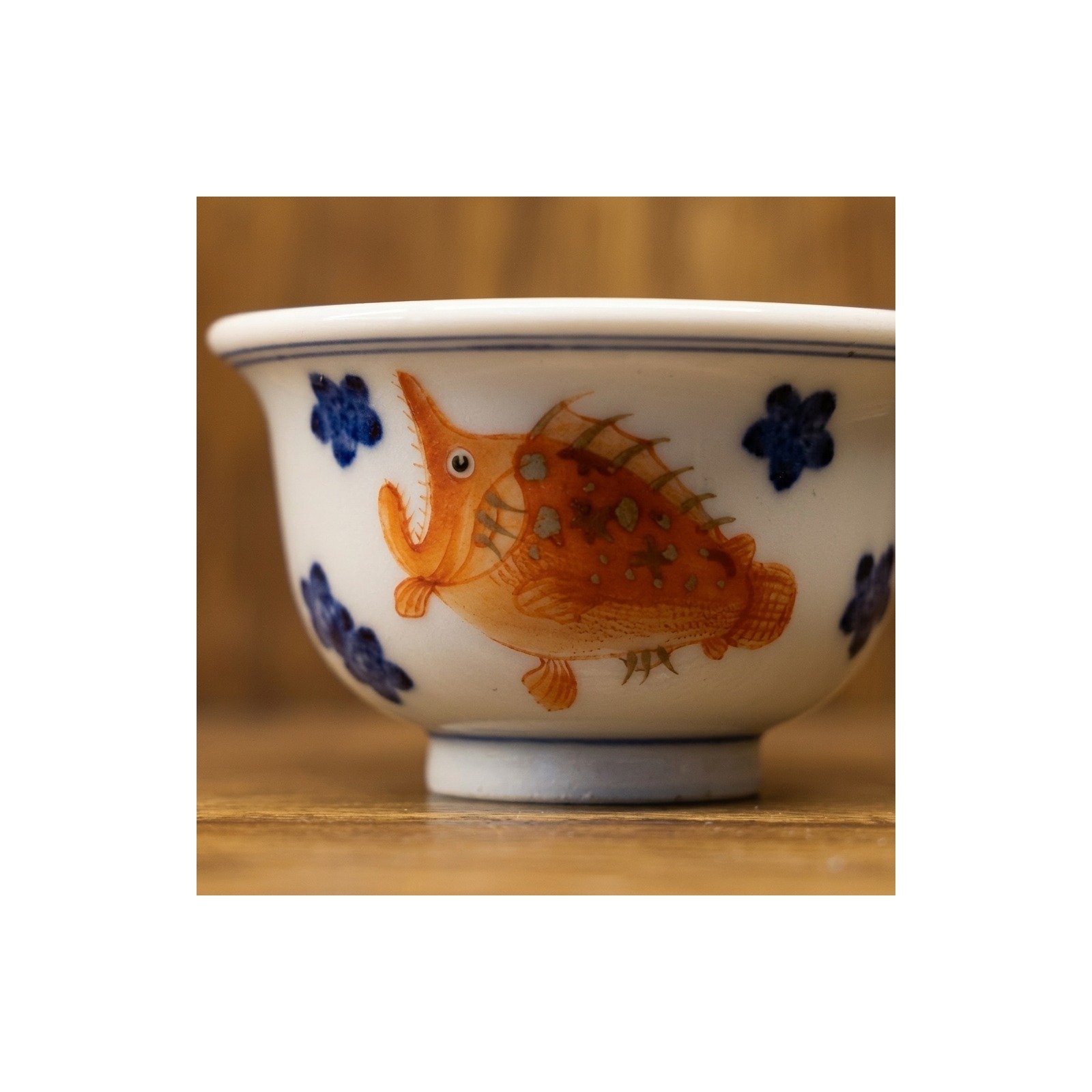
The fish on Aurioo’s Red Green Fish gaiwan swim through a small painted scene. The water plants give them somewhere to go. The matching Red Green Fish tea cup repeats the subject on a vessel you can turn in your hand. Set the two pieces side by side and the pattern carries from the brewing bowl to the drinking cup.
What does a fish symbolize in Chinese ceramics?
In Mandarin, the word for fish (鱼, yú) sounds like the word for surplus (余, yú). A fish can carry a wish for abundance. Gotheborg’s ceramics glossary also describes fish swimming among waterweed as a motif found on Yuan blue-and-white porcelain. The plants are part of the picture. They turn a fish on a plain surface into a scene underwater.
Some historical paintings carry a more specific meaning. Another example appears in the crab-and-reeds wordplay behind a historical crab motif. The Walters Art Museum’s carp jar shows carp in a lotus pond and connects that particular fish with the story of a carp becoming a dragon. Aurioo describes its decoration as fish and aquatic plants. The broader association with abundance is enough to understand the motif without assigning a species to the brushwork.
Follow the scene across the gaiwan and cup
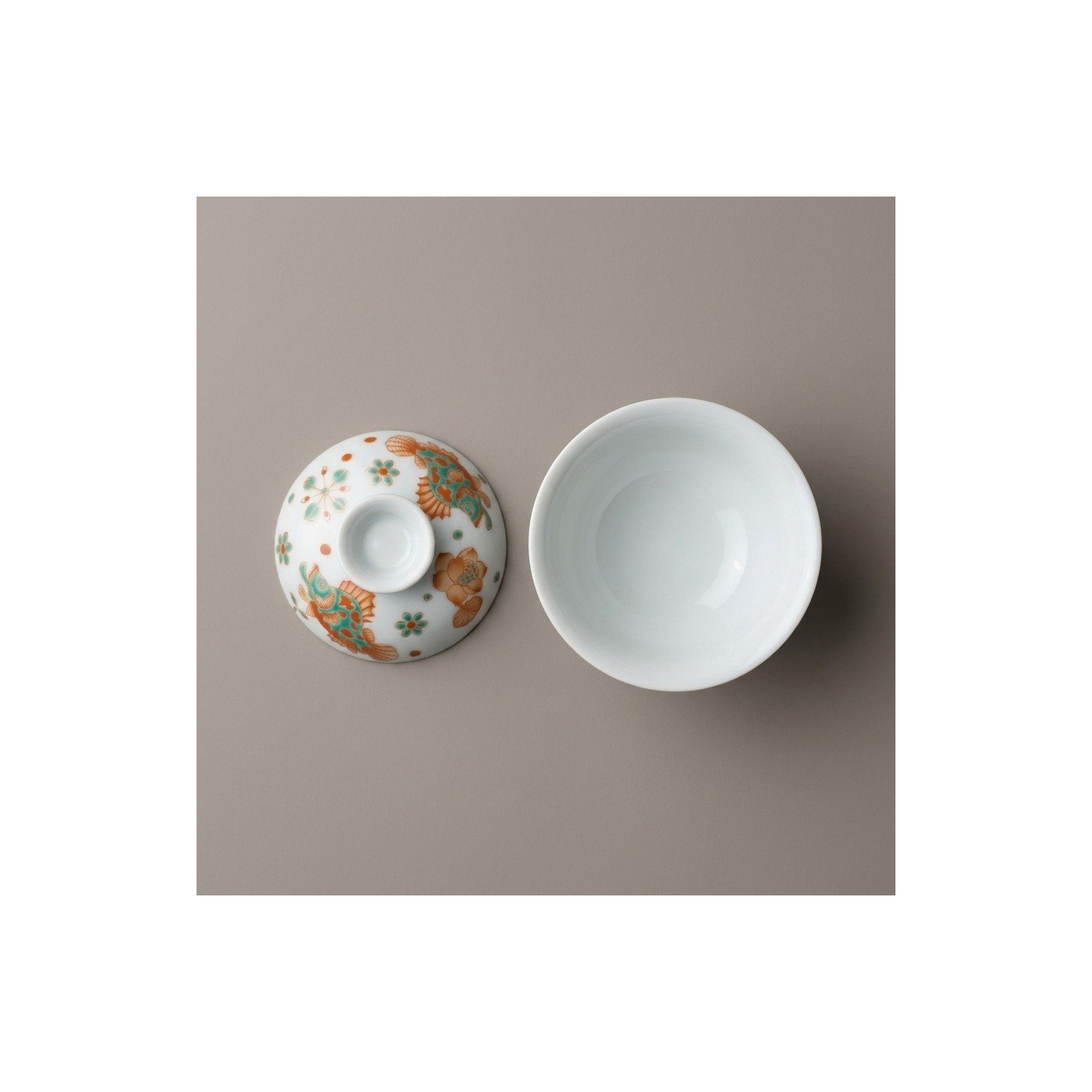
Start with the gaiwan’s side view. It shows how the fish sit on the curve of the bowl. Look at the bowl with its lid lifted, too. The shape of the vessel and the placement of the painted details are easier to separate once you can see the two pieces apart.

The cup makes a good second look. Its smaller surface brings the fish and plants close together, and the compact bowl puts that detail within reach as you sip. Both pieces are described as hand-painted porcelain. Small shifts in the brushwork and glaze tone are part of the variation the listings describe. Our guide to underglaze and overglaze decoration explains the craft terms used for the red and green enamel.
Which pieces go on the table?
Choose the gaiwan for steeping and the cup for drinking. The gaiwan’s single-piece option is a bowl and lid. If you prefer a separate resting surface, check the pieces included in the listing and choose a saucer separately. Our guide to gaiwans with and without saucers shows where to check those details.
| Piece | Listed capacity | Pieces in the One option | Role on the tea table |
|---|---|---|---|
| Red Green Fish gaiwan | About 150 ml | One bowl and one lid | Steep and drain the tea |
| Red Green Fish cup | About 50 ml | One drinking cup | Sip a small serving |
For a solo session, set a small pitcher beside the gaiwan and fill the cup in stages. A listed 150 ml bowl does not guarantee three full 50 ml servings. Leave room for the leaves and the lid, and expect the amount you pour to vary. If you’re putting together your first setup, the Chinese tea set guide explains how the pitcher fits between the gaiwan and cup.
Frequently asked questions
Does a fish motif always carry the same meaning?
Fish can suggest abundance because of the sound of the word in Mandarin. The kind of fish and the other elements in a historical composition can add another meaning. The Aurioo listing identifies a fish-and-water-plant scene.
Does the Red Green Fish gaiwan come with the cup?
The gaiwan and drinking cup are separate listings. In the One option, the gaiwan includes a bowl and lid. Choose the cup separately if you want the two pieces together.
Can I pour directly into the 50 ml cup?
Yes, if your infusion fits comfortably below the rim. For a larger pour, drain the gaiwan into a pitcher first. That leaves the rest of the tea ready for a second serving while you drink the first.