
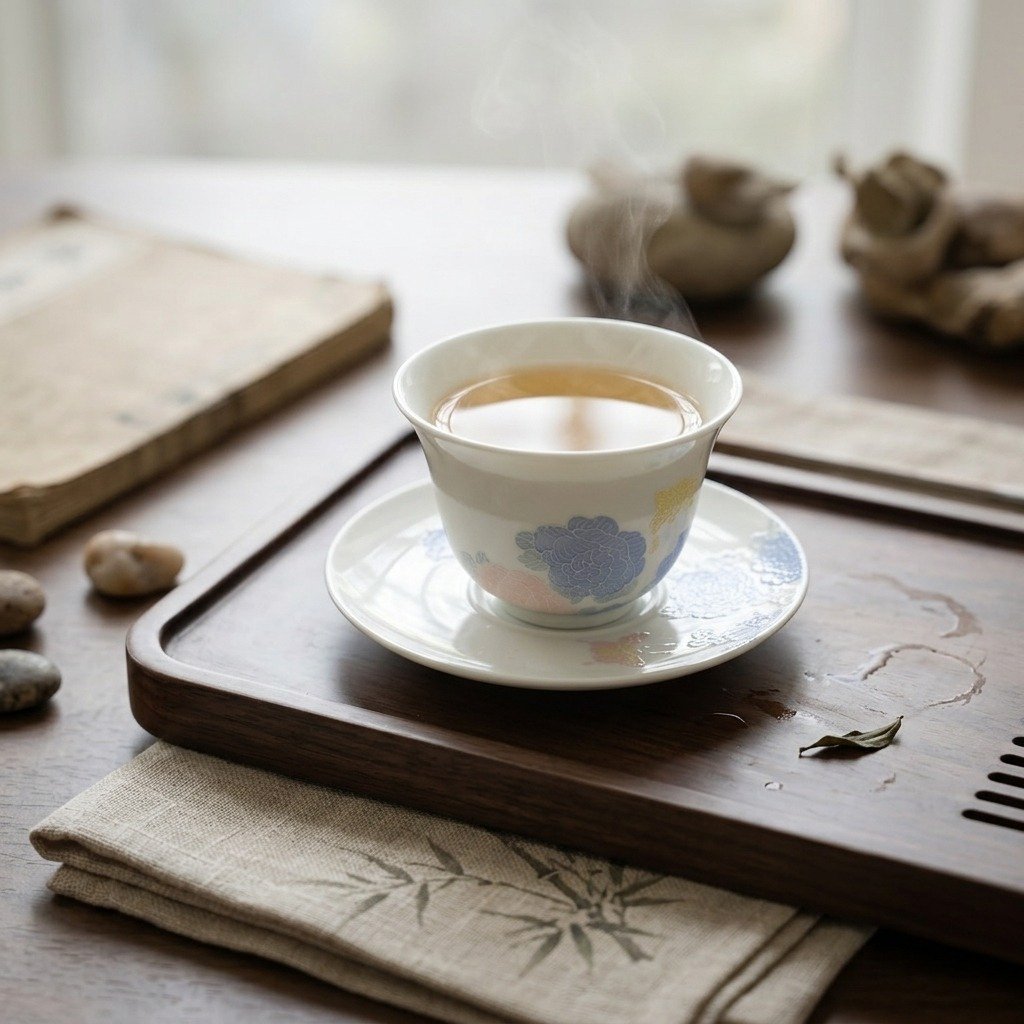
A rounded blue patch on Aurioo's Hydrangea Floral Relief gaiwan looks like one large bloom from a distance. Look more closely and the patch is made up of many small marks. Pink and yellow areas repeat that clustered effect around the bowl and lid.
That change of scale is useful for reading a hydrangea flower head. The large head on a living plant contains many flowers. A ceramic design can keep the recognisable outline of the cluster while reducing the smaller units into a repeated surface pattern.
One flower head contains many flowers
NC State's Hydrangea macrophylla profile distinguishes rounded mophead clusters from flatter lacecap clusters. In a lacecap, smaller flowers occupy the centre, with more prominent flowers around the edge. The whole head is a group, not a single enormous flower.
A second distinction concerns the colourful, petal-like parts. Horticulturist Dan Gill's LSU AgCenter explanation identifies them as modified sepals. These enlarged, showy parts can dominate the impression of a flower head even though the actual flowers are small.
You do not need to identify every part in the ceramic to use that knowledge. Begin with the outline of one coloured cluster. Then notice the small repeated marks inside it. Moving between those two views explains why the motif reads as a hydrangea head even when its individual units are simplified.

Mophead and lacecap are reference shapes
The two names offer different ways of organising a head: a rounded mass, or a flatter centre with a more conspicuous outer ring. They are useful botanical comparisons, but the gaiwan's listing does not identify a species, cultivar or exact flower-head type.
On this design, the blue, pink and yellow groups appear as rounded clusters on a pale ground. Some sit close to the lower bowl, while others continue onto the lid. From a distance, their outline is the strongest feature. At closer range, the smaller relief marks become more apparent.
Use the reference shapes to ask what has been retained in the drawing. Does a group read as a compact round head? Can you distinguish smaller units within it? Those are observations you can make from the product views.
| Reading level | Plant reference | What to observe in the design |
|---|---|---|
| Whole head | A cluster of many flowers. | Look first at the rounded coloured silhouette. |
| Smaller units | Showy petal-like parts include enlarged sepals. | Small raised marks simplify the units inside the cluster. |
| Head outline | Rounded mopheads and flatter lacecaps are reference types. | Compare the visible group shape; no cultivar is identified. |
| Colour | Living plants vary in flower colour. | Read blue, pink and yellow as the ceramic palette. |
The small units build the larger image
The open view separates bowl, lid and saucer, so you can follow the same clustered subject across each surface. A group seen near the bowl's curved edge may look different from one viewed directly on the lid. That is worth noticing before deciding that every coloured area is intended to be an identical flower head.
The listing describes hand-outlined relief glaze and hand-filled colour. This gives the small marks a physical surface to catch the light. Our Heni relief teaware guide covers that making description and the cup-versus-gaiwan choice; the question here is how many small visual units come together as one larger floral subject.
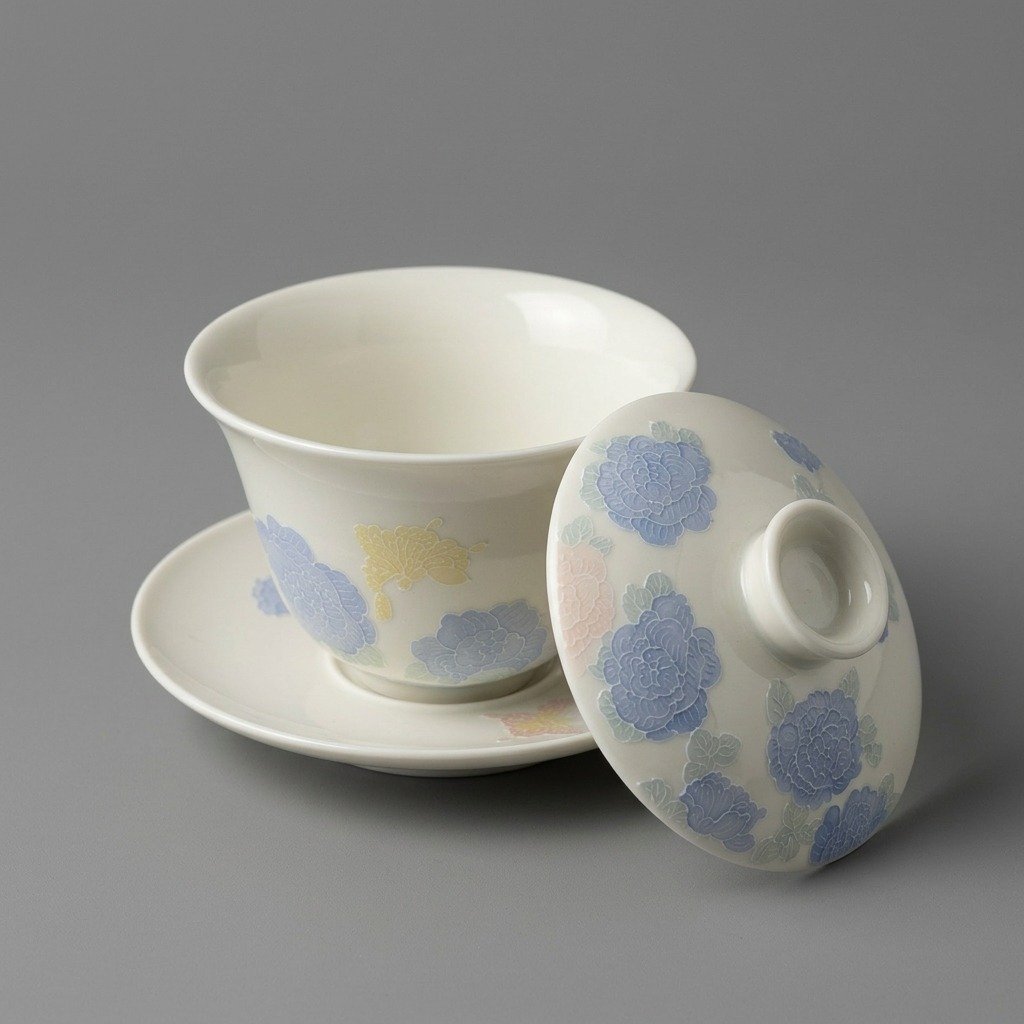
The ceramic palette is a design feature. Garden descriptions of blue and pink hydrangeas concern living plants; they cannot establish soil conditions, a cultivar or a growing method from this painted surface. Enjoy the colours as part of the vessel's finish and compare them with the actual product gallery.
The Osmanthus gaiwan guide offers another small-flower subject. Its scattered blossom groups create a different impression from these larger, rounded heads. Comparing named subjects can help you choose a floral pattern without treating every small raised mark as the same kind of bloom.
Keep the product details separate from the plant name
This listing specifies a jade clay ceramic gaiwan with an 8 cm diameter, 6 cm height and 180 mL nominal capacity. It includes the gaiwan and a saucer measuring 12 cm across and 2 cm high. The pictured gaiwan comprises a bowl and lid. Quantity choices are One and Value pack(2).
Check the selected quantity and the included pieces as you would with any other gaiwan. Our guide to gaiwan and saucer options explains the different combinations in the collection.
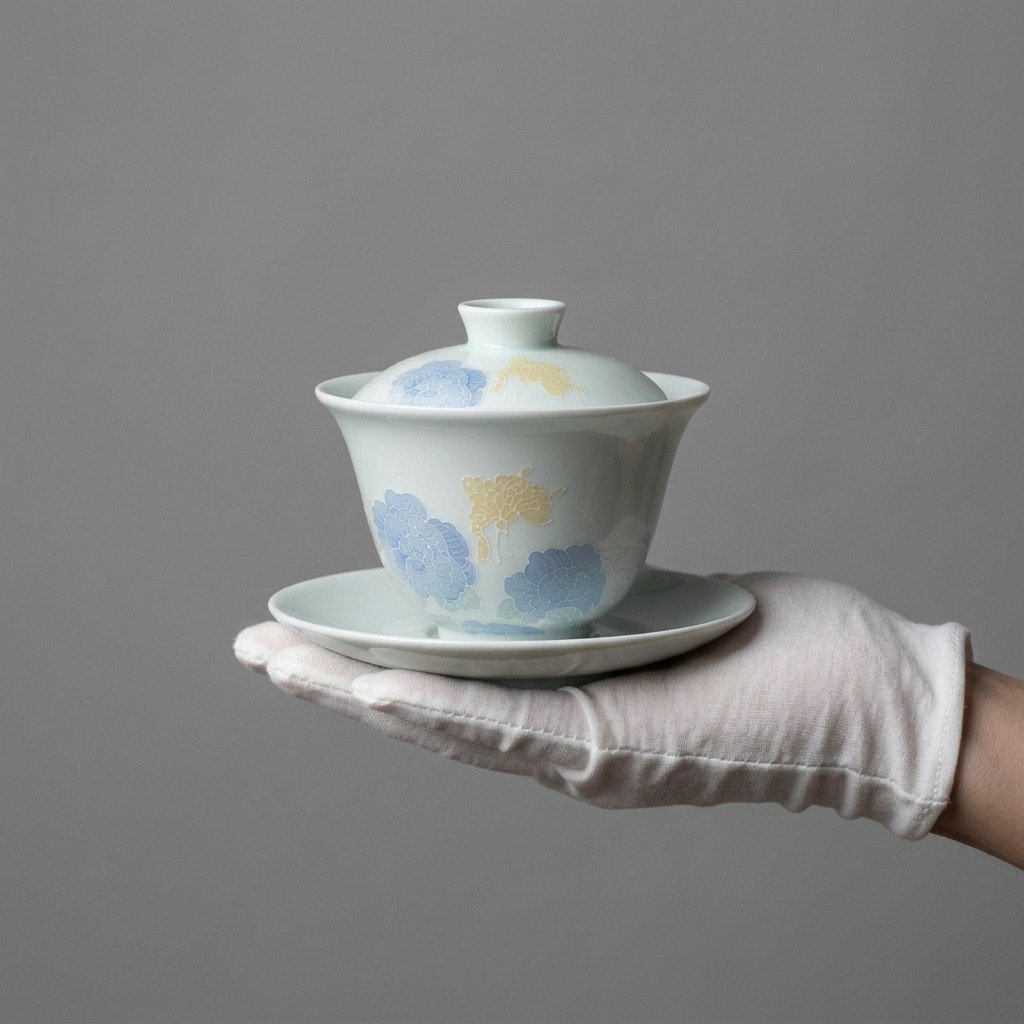
Choose leaf quantity, water temperature and timing for the tea you are brewing. Leave comfortable headroom instead of treating 180 mL as a promised finished serving. After the session, rinse gently and allow bowl, lid and saucer to dry; the painted-teaware cleaning routine covers those daily steps.
The botanical idea to return to is simple: look at the whole coloured head, then the smaller units that create it. That way of looking brings the subject of the decoration into focus alongside its raised texture.
Frequently asked questions
Is a hydrangea flower head one flower?
It is a cluster of many flowers. The rounded or flatter outline describes the whole head. Prominent petal-like sepals around small flowers contribute to its showy appearance.
Is this ceramic motif definitely a mophead cultivar?
The listing names Hydrangea Floral Relief but does not identify a cultivar or botanical species. Rounded clusters make mopheads a useful comparison; the pattern alone is not enough for a definite identification.
Is this gaiwan the same size as the Tulip design?
Both have a listed capacity of 180 mL, but their other dimensions differ. This Hydrangea gaiwan is listed at 8 cm across and 6 cm high, with a 12 cm saucer. The Tulip listing gives 8.5 cm, 7.5 cm and an 11 cm saucer respectively. Choose from the current specifications rather than assuming all floral designs share one shape.