

Before making tea in a new ceramic teapot, try a gentle pour with cool water. It gives you time to find a comfortable movement, watch the stream and notice how the lid sits without handling hot liquid.
Aurioo’s Pear Amber Mottled, Round Amber Mottled and Amber Speckled Jizhou teapots are useful examples for this check. Their listings describe different dimensions, but those measurements do not tell you how an individual pot will pour. The photographs below show the pieces; they do not show measured pouring trials.
Begin with an intact, room-temperature pot
Look over the dry vessel before adding water. Check the rim, spout, handle attachments and lid for a concern you can see. Set it on a level surface and place its own lid in position gently. If there is visible damage, an unexplained crack-like line or a lid that will not sit securely, leave the pot unused and ask Aurioo for advice.
The Pear Amber Mottled Jizhou teapot is listed at 170 ml with a diameter of 7 cm. That capacity is a catalog specification, not a direction to fill the pot to the brim. For a first check, use a modest amount of cool water and leave generous headroom.
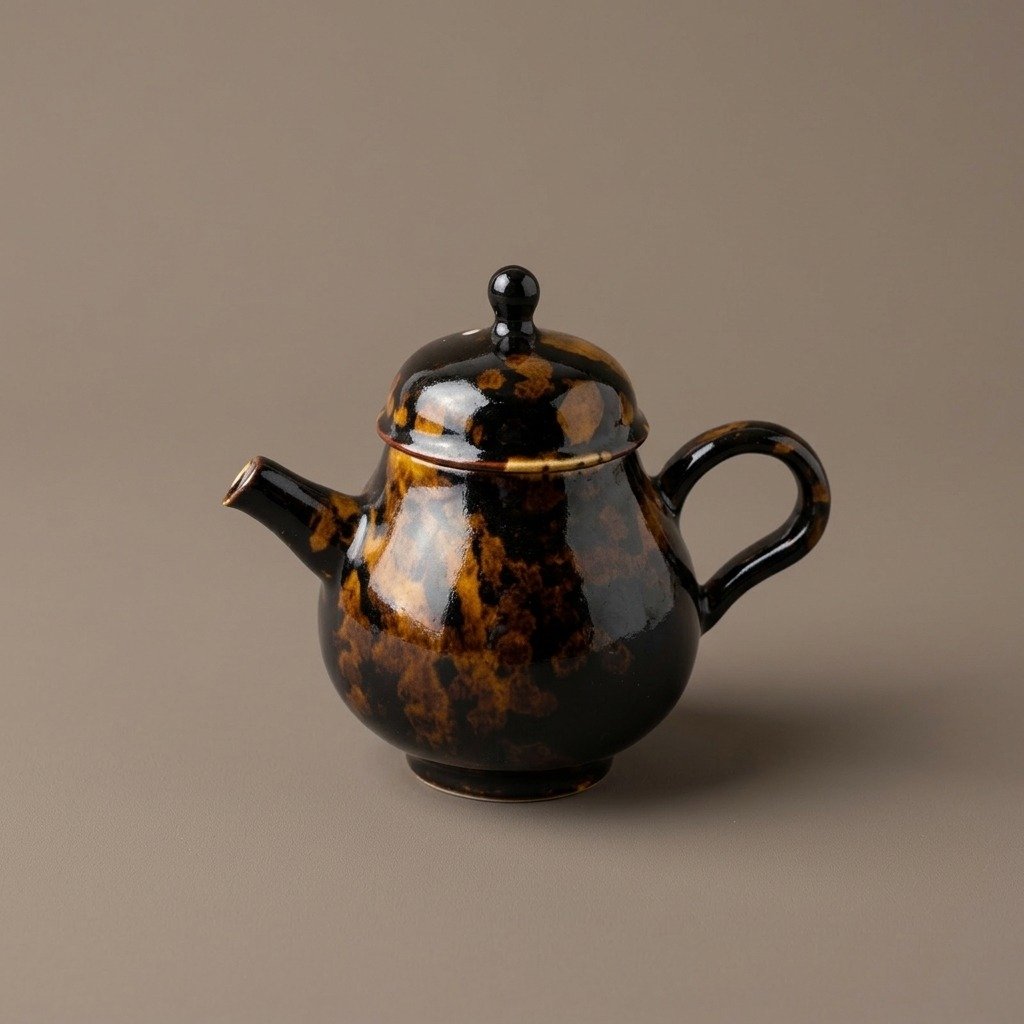
All three listings describe black pottery with plant ash glaze and advise avoiding sudden temperature shocks. Start this exercise with both the pot and water at a comfortable room temperature.
Use the listing to identify what you have
The Round Amber Mottled teapot is listed at 180 ml, while the Amber Speckled listing gives dimensions without a capacity. Keep that distinction when planning the check or explaining a question about your order.
| Aurioo teapot | Current listed specifications | What to record during your check |
|---|---|---|
| Pear Amber Mottled | Diameter 7 cm; capacity 170 ml | The amount of water used and where the stream starts to change |
| Round Amber Mottled | Diameter 8 cm; height 10 cm; capacity 180 ml | Whether the lid remains secure through your comfortable pouring movement |
| Amber Speckled | Diameter 9 cm; height 10 cm; capacity not specified | Your actual modest fill amount, rather than a capacity inferred from its dimensions |
Make one controlled pour
Place a stable receiving bowl in a sink or on a surface where a small spill is manageable. Keep the area clear so that you can put the teapot down without reaching around other pieces.
Add cool water below the rim, then replace the pot’s own lid. Establish a comfortable grip on the handle and support the lid without forcing it into place. If you cannot hold both securely, set the pot down and resolve that before continuing.
Tilt slowly toward the receiving bowl. Keep the movement within a range you can control; there is no need to drain every last drop. Bring the pot upright and set it down before changing your grip or examining anything closely.
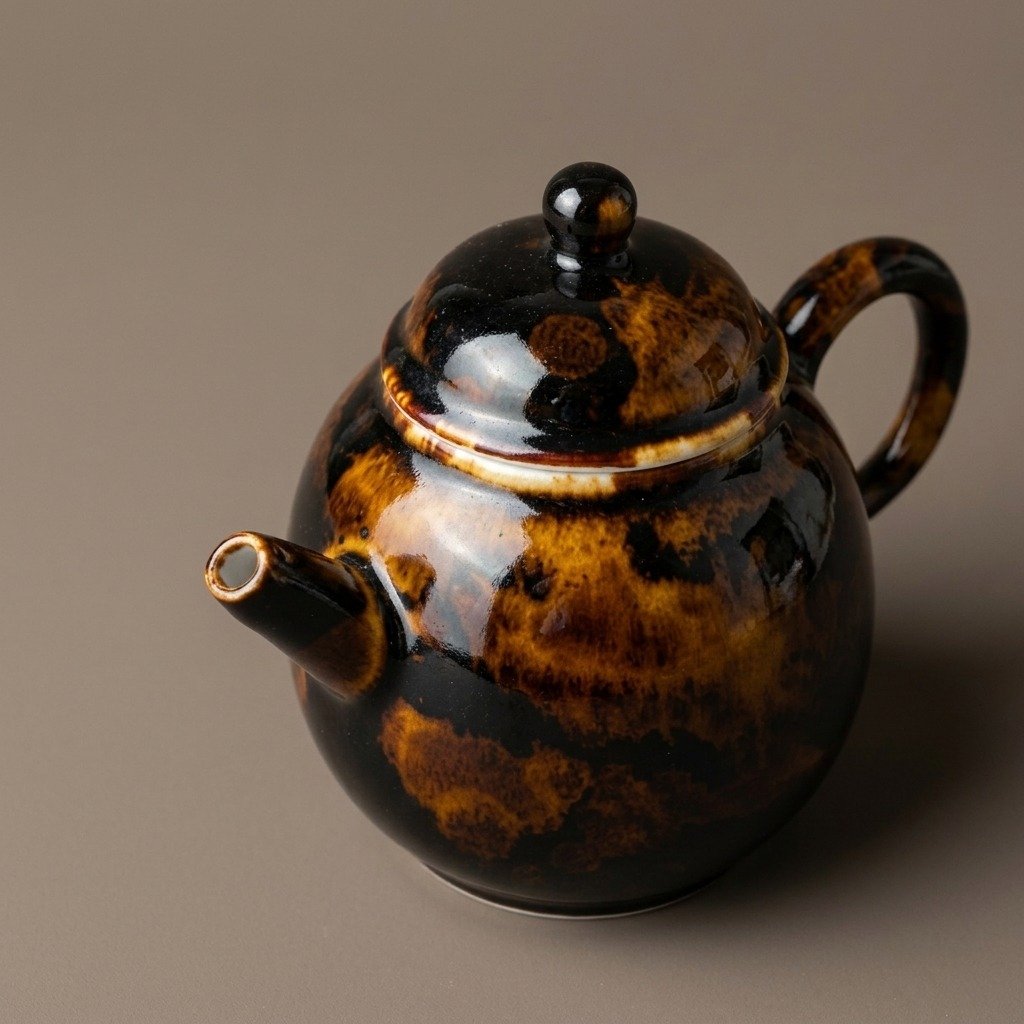
A second pour can help you describe what happened. Use a similar amount of water and a similar movement, so that you are not changing several things at once.
Watch the beginning, middle and finish
Notice when the stream begins, whether it stays continuous, and what happens as you return the pot upright. If water appears elsewhere, identify the place: the lid edge, the outside of the spout or another part of the vessel. A clear description is more useful than simply calling the pour “good” or “bad.”
TeaVivre’s explanation of teapot pouring discusses water quantity, pouring angle, obstructions and air entry. Its examples concern Zisha teapots; their filter designs and craftsmanship standards should not be assumed for these Jizhou pieces.
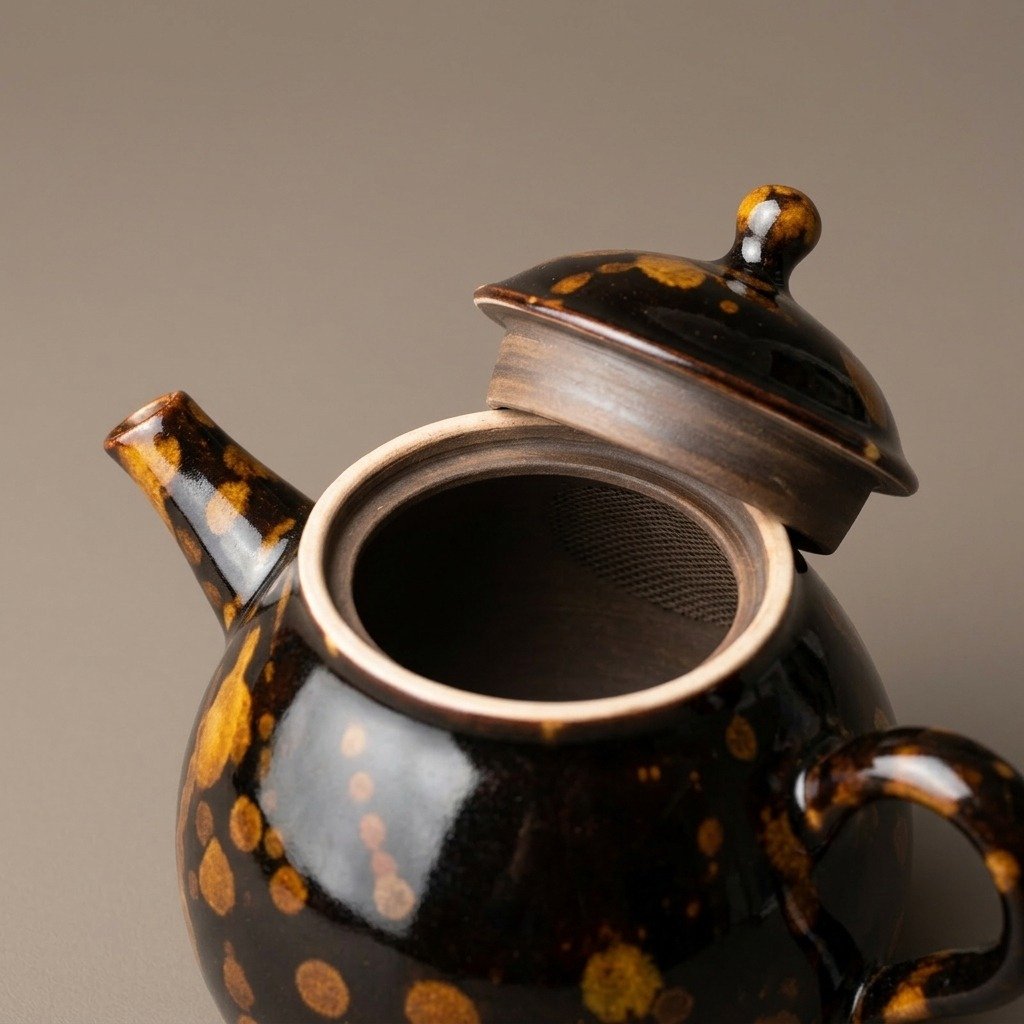
One relevant observation is that a stream can weaken as the water level falls while the pouring angle stays the same. If your actual lid has a visible air vent, check whether your supporting finger accidentally covers it. Do not assume a vent exists where you cannot see one, or push a tool into an opening to investigate.
The Amber Speckled Jizhou teapot can be approached with the same modest, repeatable exercise.
Ask about a persistent concern before brewing
Stop if the lid shifts unexpectedly, the pot feels unstable or a concern remains after a gentle check. Record the product name, approximate fill amount and where you saw water escape. A short cool-water video can help explain a repeatable behavior, provided the piece is intact and comfortable to handle.
Avoid trying to correct the pot yourself by sanding a lid or enlarging an opening. Once questions are resolved, follow its care instructions before making tea.
FAQ
Does a fast pour prove a better teapot?
No. Water quantity, angle and the vessel’s design can affect the stream. A useful check tells you how your pot behaves in your hands. It does not produce a universal quality score or show that one of these models pours faster than another.
Should I block the openings to test the lid seal?
Keep the pot upright and use it in an ordinary pouring position. Do not invert a filled pot or block its openings for a seal or suction test. These listings do not promise an airtight lid.
What if the lid or pot seems damaged?
Leave it unused and contact Aurioo with photographs and the order details. A visible chip, crack-like line or unstable lid should be resolved before adding water or brewing tea.