
When someone pours tea for you, a light tap of the fingers on the tabletop can serve as a quiet thank-you. It acknowledges the person serving while the conversation continues. The gesture is often called finger tapping or finger kowtow.
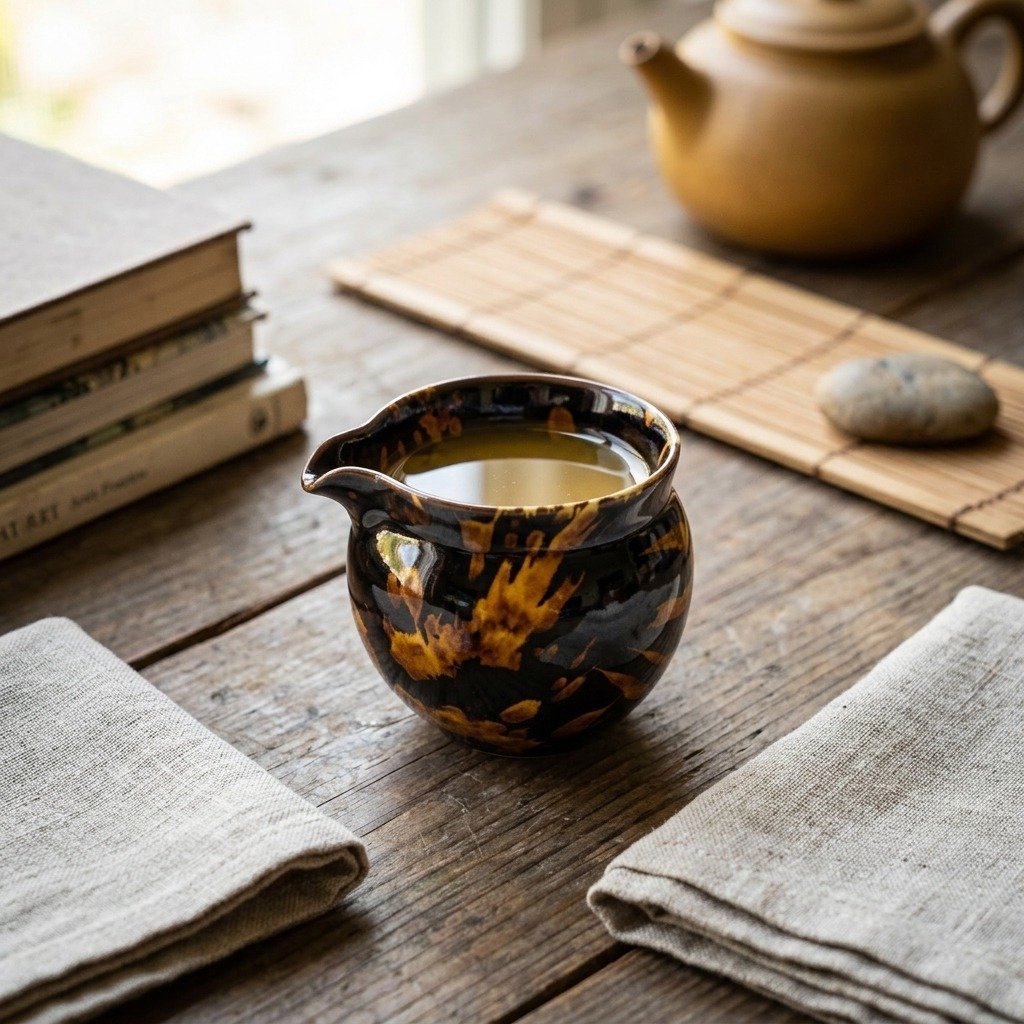
At a small tea table, the distinction between the objects helps make the moment clear. Aurioo's Leopard Jizhou tea cup pair provides two drinking cups. The separate Round Amber Splash fair cup receives brewed tea and pours it into those cups. The thank-you is directed to the person serving, rather than to a particular kind of cup.
What the tapping expresses
TeaVivre's explanation of finger kowtow describes a two-finger tap on the table as silent gratitude to the tea server. Visit Beijing's account of the Cantonese custom is more specific about the movement: light tapping with the index and middle fingers on the tabletop beside the cup.
That regional context matters. The official tourism account places the custom in Cantonese and southern Chinese tea settings. It is a useful practice to recognize when a host or fellow guest uses it, rather than a nationwide test that every person must perform in exactly the same way.
If the gesture is familiar at your table, bring the index and middle fingertips together and tap a clear spot beside the resting cup lightly. Tap the table, not the cup. Keep the movement brief and out of the server's pouring path. If you are unsure of the local practice, a simple spoken thank-you is a clear choice.

Give the resting cup and the pouring hand room
The Leopard listing contains two cups, each with a listed capacity of 60 mL, a 5 cm diameter and a 4 cm height. Place a cup at each drinking position with a clear area beside it. The aim is to leave room for serving and acknowledgement without moving a cup to make space for your fingers.
The Round Amber Splash fair cup is a separate item, listed at 300 mL and 7 cm in both diameter and height. Its role is serving, with an open body and pouring lip. It is not included with the two-cup listing. Our gong dao bei guide explains the receiving and pouring role if the term is new to you.
For this small-table arrangement, let the cup stay on a stable surface while tea is served. Keep the area beside it free of loose objects and allow the pouring hand to pass. A quiet acknowledgement needs only a small clear place; it should not require you to reach across the pitcher or bring your fingers into the stream.

A few moments to distinguish
The table below is a practical way to approach an informal session. It keeps the act of receiving tea separate from the choice of how to acknowledge the person pouring.
| Moment | Practical action | Acknowledgement choice |
|---|---|---|
| Tea is being served | Let the cup rest and keep the pouring path clear. | Wait for a comfortable moment beside the cup. |
| The cup is resting | Use a small clear spot on the tabletop. | A brief, light index-and-middle-finger tap if familiar. |
| You are unsure of the custom | Follow the host or ask about the local practice. | Use a simple spoken thank-you. |
| You are pouring your own tea | Keep serving and drinking roles clear. | There is no other server to acknowledge. |
The Leopard cups have amber-and-dark tortoiseshell-style markings; the Round Amber Splash pitcher has a different mottled pattern. These separately sold pieces can share a tea table, with the two cups at the drinking positions and the pitcher by the person serving.
If the host uses a personal drinking cup, that is another separate role. Our personal host cup guide explains the distinction. A guest can acknowledge the person pouring without copying the host's cup or changing the amount of tea in it.

Treat the emperor account as a story
You may hear that finger tapping began when a servant needed to thank Emperor Qianlong discreetly during an incognito visit. TeaVivre introduces this as a legend, and the Visit Beijing account calls it a story. These sources do not establish a documented historical origin.
The present-day meaning is enough to understand the gesture: someone has served you tea, and you are acknowledging that attention. At an informal gathering, use the gesture to thank the server and follow the host's practice.
For the pieces around that gathering, the Chinese tea set guide explains which objects brew, receive and serve tea. Once the session is over, follow each listing's gentle cleaning and drying guidance. Our decorated-teaware cleaning routine covers the ceramic pieces; the courtesy itself needs no special accessory.
Frequently asked questions
Which fingers are used for tea tapping?
The Cantonese custom described by Visit Beijing uses the index and middle fingers, tapping lightly on the tabletop beside the cup. Treat this as one described practice and follow the host's local custom if it differs.
Is the Qianlong origin story proven history?
The sources used here present it as a story or legend, rather than documented proof of the gesture's origin. The contemporary thank-you meaning can be understood without accepting that account as historical fact.
Must I tap every time someone pours tea?
Use the gesture as a courtesy when it is familiar at your table. If you are unsure, thank the server in words or ask the host about the local practice. When pouring your own tea, there is no other server to acknowledge in the same way.