
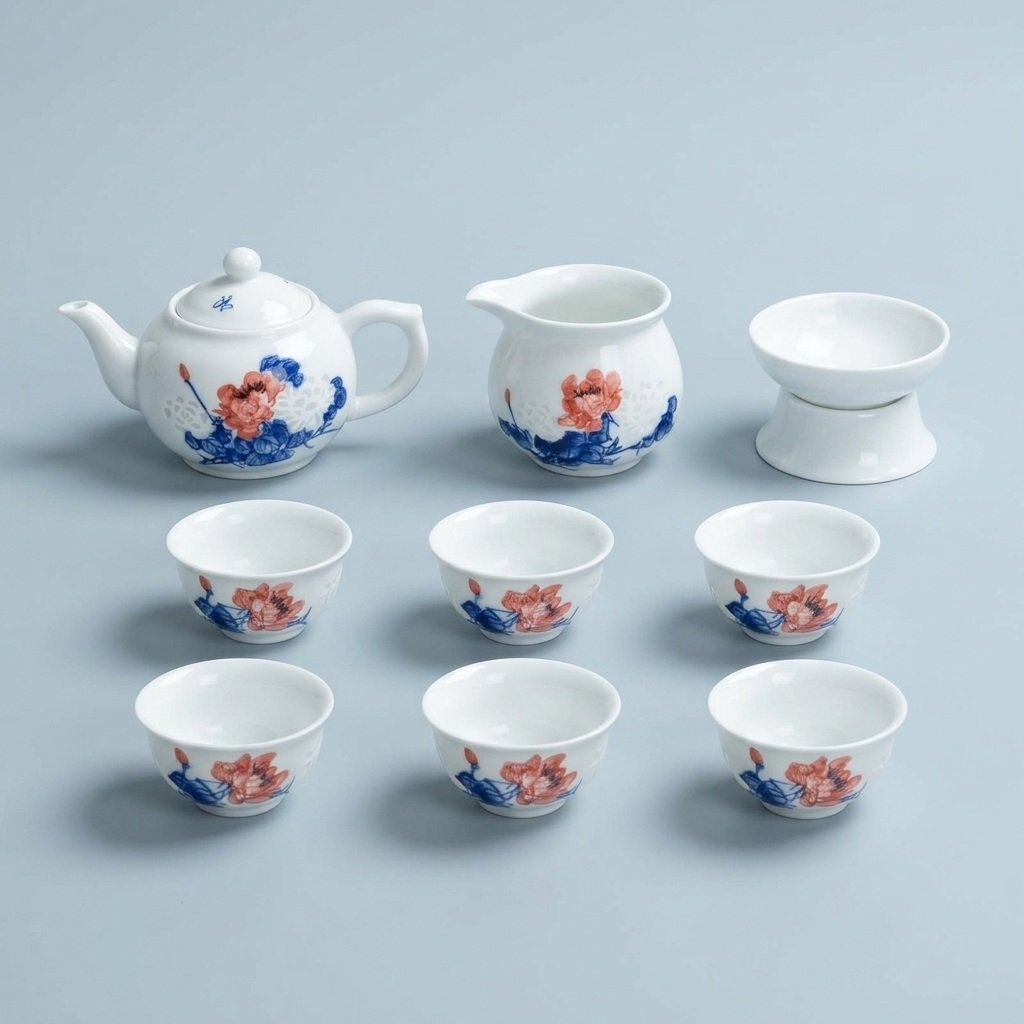
A coral-red peony fills the front of Aurioo’s Peony Porcelain Teapot Set. Look again at the pitcher and cups. The same flower appears at a smaller scale on each, so guests can see a detail from the pot on the cup in front of them.
What does a peony mean in Chinese art?
Peonies have long been associated with prosperity and honor. Floraly’s guide to peony meanings traces the Chinese name fùguìhuā, a name that links the flower with wealth and standing. The University of Alberta Museums’ peony scroll offers a concrete example. Its inscription connects flowers in the imperial garden with the wish for a prosperous spring.
On the Aurioo pot, the layered coral petals make the open bloom easy to pick out. Blue leaves sit low on the white porcelain, and small buds leave more white space above. If you’re comparing floral subjects, our guide to lotus imagery on Chinese teaware covers a flower with a different history in decorative art. The magnolia blossoms on a porcelain gaiwan and cup offer another floral subject, with associations of purity and nobility in traditional Chinese art.
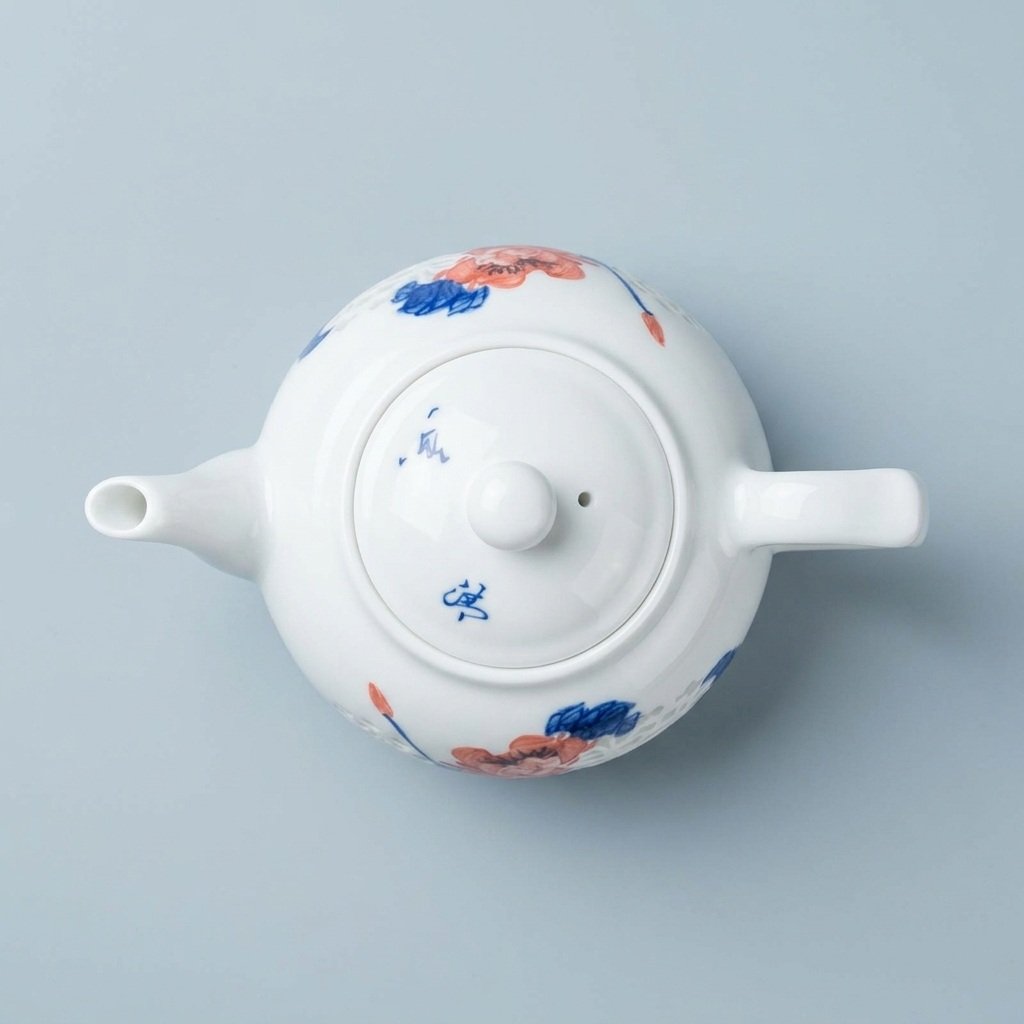
Where the flower appears as you serve
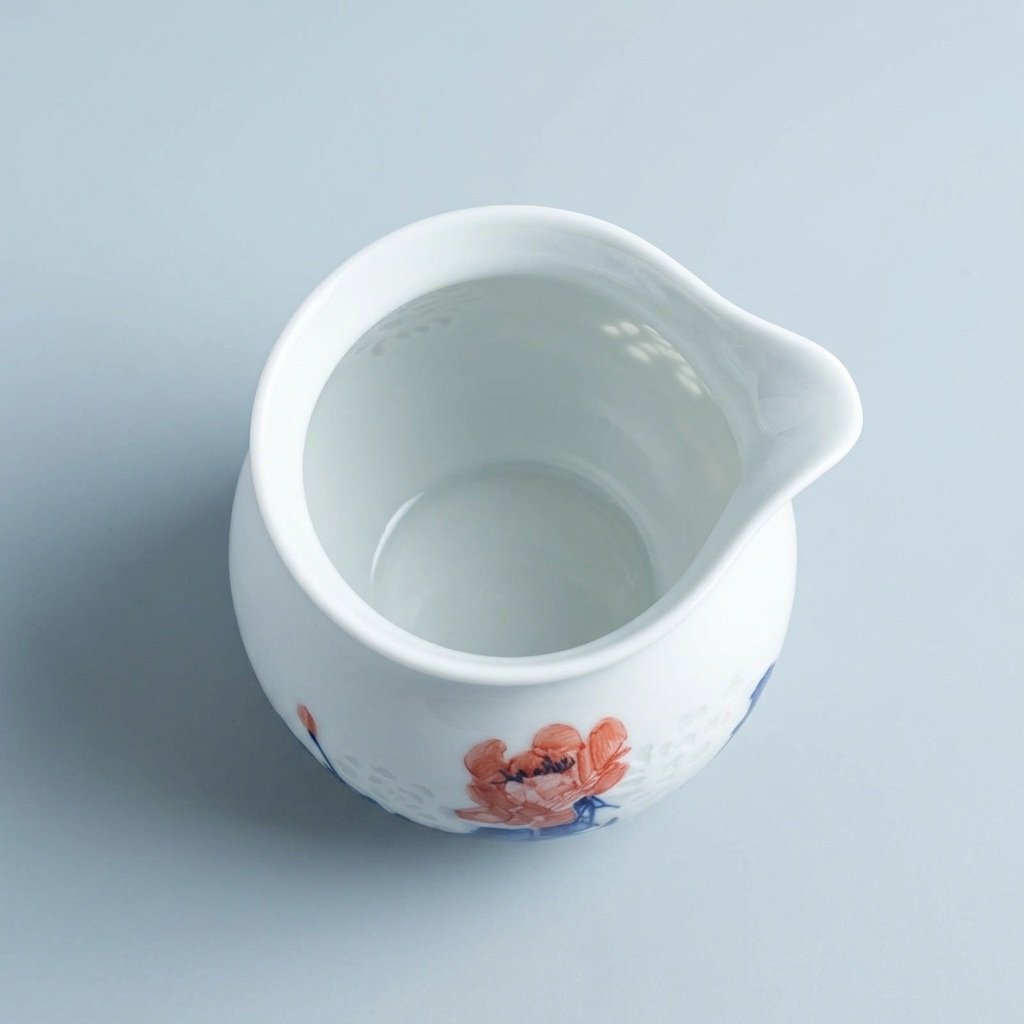
The pitcher repeats the large blossom at the front of a smaller vessel. On the cups, the bloom and a few leaves fit into a low band near the foot. You can see the change in scale by placing one cup beside the pot before you serve. The plain ceramic strainer and stand leave the painted vessels in view.
| Piece | What to look for | Listed capacity and role |
|---|---|---|
| Teapot with fitted lid | Full coral bloom and blue leaves across the rounded body | 300 mL. Steep the tea here. |
| Fairness pitcher | A smaller blossom beneath the pouring lip | 180 mL. Collect the infusion here before dividing it. |
| Six drinking cups | A compact flower and leaf design on each exterior | 50 mL each. Serve small portions. |
| Ceramic strainer and stand | Plain finish beside the painted pieces | Included accessory. Strain the tea as you decant it. |
Make room for the pitcher
For a shared round, place the pitcher close to the pot and set out only the cups you need. Brew an amount you can decant into the pitcher with room below its rim. The teapot’s 300 mL listing is a vessel capacity. It doesn’t tell you how much tea will reach the pitcher after the leaves expand and retain some water. Once you’ve collected the infusion, divide it into small pours. For other shapes, see our guide to choosing a fairness pitcher.
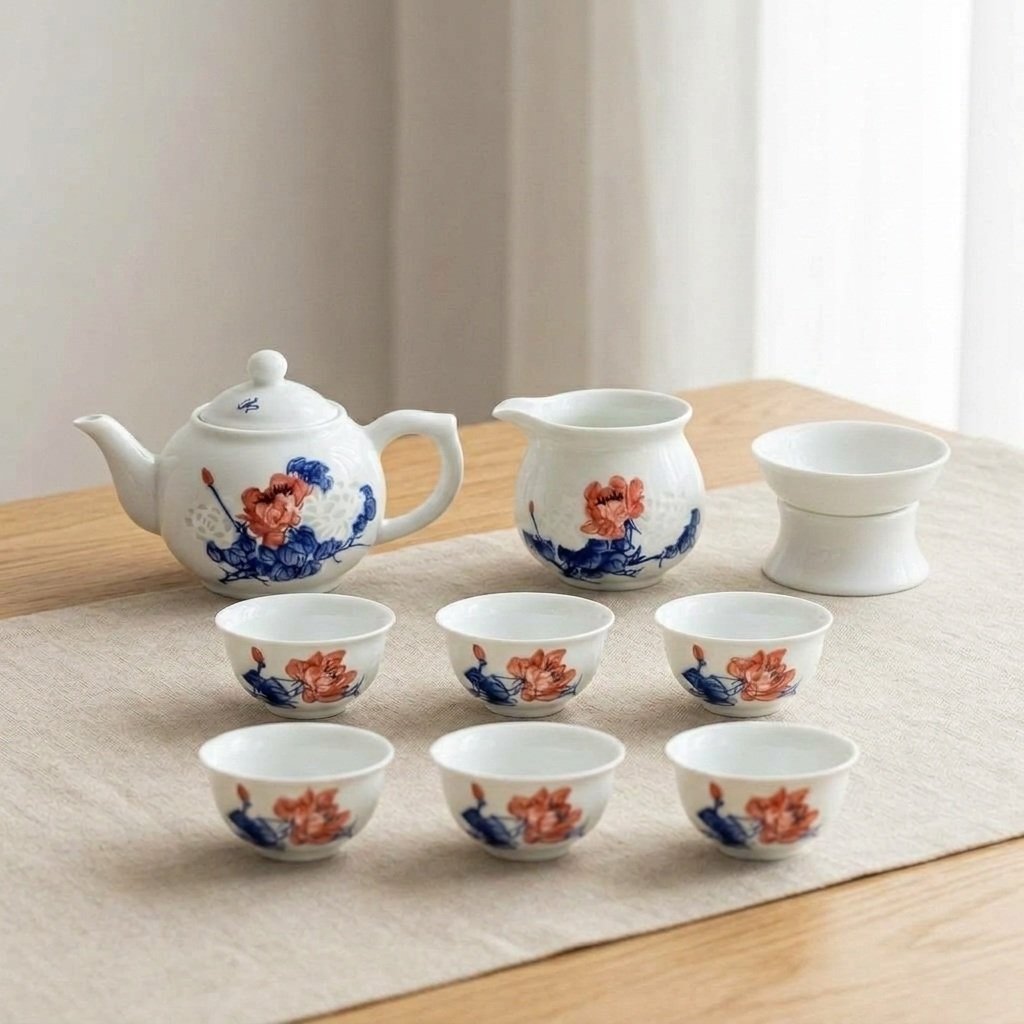
If you’re comparing complete gongfu tea sets, look at the serving pieces alongside the pot. This set gives every guest the same flower at their place, even when the pot stays beside the brewer.
Frequently asked questions
What does a peony on Chinese porcelain suggest?
Prosperity and honor are common associations. The design around the flower and the context of an individual object can add to that reading.
Is the ceramic strainer included with the Peony set?
Yes. The listing includes a ceramic strainer and its stand alongside the lidded teapot, pitcher and six cups.
Can the pitcher take a full 300 mL from the teapot?
The pitcher is listed at 180 mL. Plan a smaller brew so the actual amount you decant leaves room below the pitcher’s rim.