

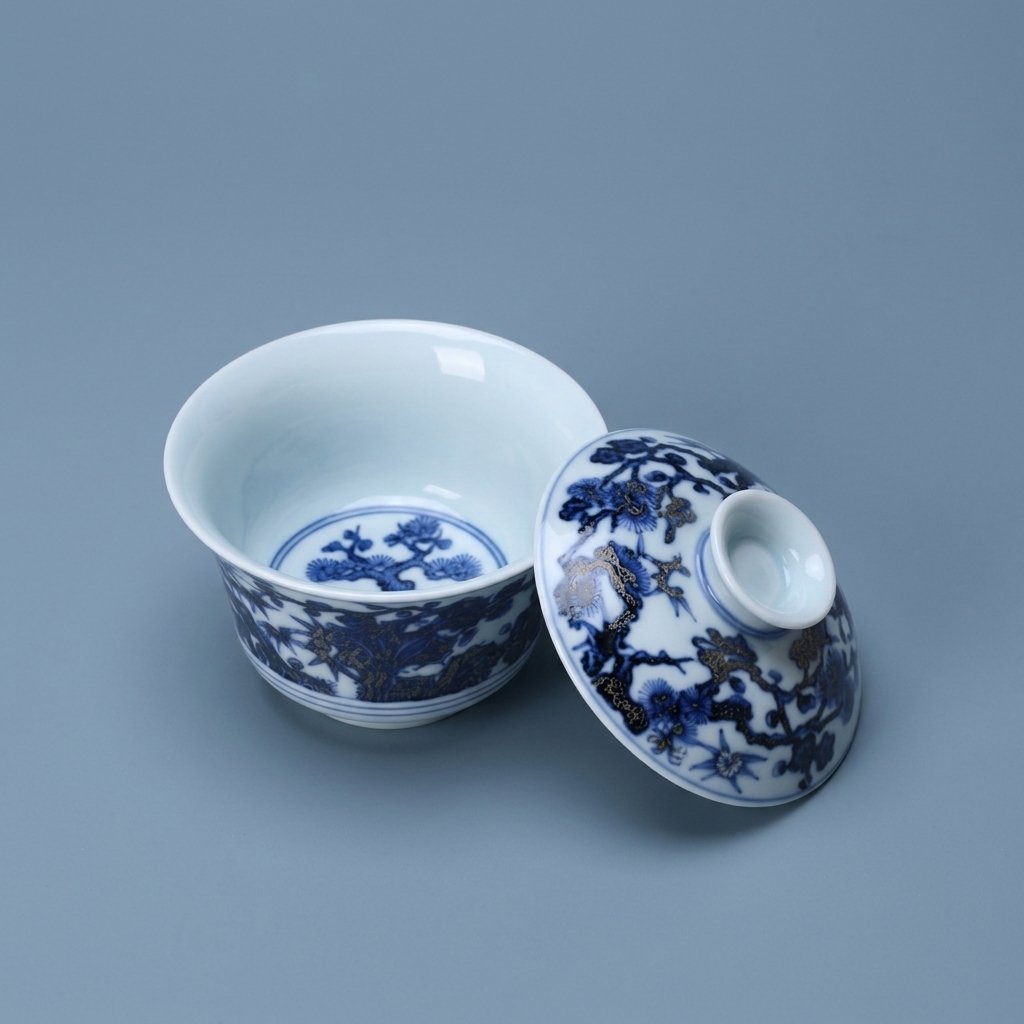
A pine-painted gaiwan beside a bamboo cup and a plum blossom cup brings three familiar plants to the tea table. Together, their subjects recall the Three Friends of Winter, a grouping in Chinese art associated with endurance through difficult conditions.
You can explore that idea with three separate Aurioo listings. The Pine Tree gaiwan supplies the brewing vessel, while the Blue Bamboo and Plum Blossom cups give each drinker a different plant to look at. This is a suggested arrangement inspired by the motif. Choose the pieces individually and check the option selected on each product page.
Why these three plants belong together
Pine and bamboo remain green through winter, while plum blossoms appear around the end of winter and the beginning of spring. Their different responses to the season gave artists a way to express human qualities through plants.
The Metropolitan Museum of Art connects the grouping with endurance, modesty and fortitude in its description of a dish decorated with the Three Friends of Winter. Its porcelain example brings all three into one composition.
The Philadelphia Museum of Art explains the individual associations in its bowl with pine, bamboo and plum. Pine represents longevity, bamboo suggests resilience, and plum’s early flowering expresses perseverance. Knowing those associations gives you something specific to recognize when comparing botanical teaware.
Begin with the pine gaiwan
Aurioo’s Pine Tree blue-and-white gaiwan carries hand-painted pine decoration in underglaze blue. Start with the tree’s overall shape, then look more closely at the branching pattern and clusters of needles.
The gaiwan has a listed capacity of approximately 150 ml. Place it where the person brewing can lift and pour comfortably, with enough clear space to set down the lid. Arrange the cups around that practical position.
Add bamboo and plum at the drinking places
The Blue Bamboo tea cup continues the blue palette with hand-painted underglaze bamboo. Its listed capacity is 130 ml and its diameter is 9 cm. Follow the narrow leaves and stems around the cup to see how the plant occupies its curved surface.

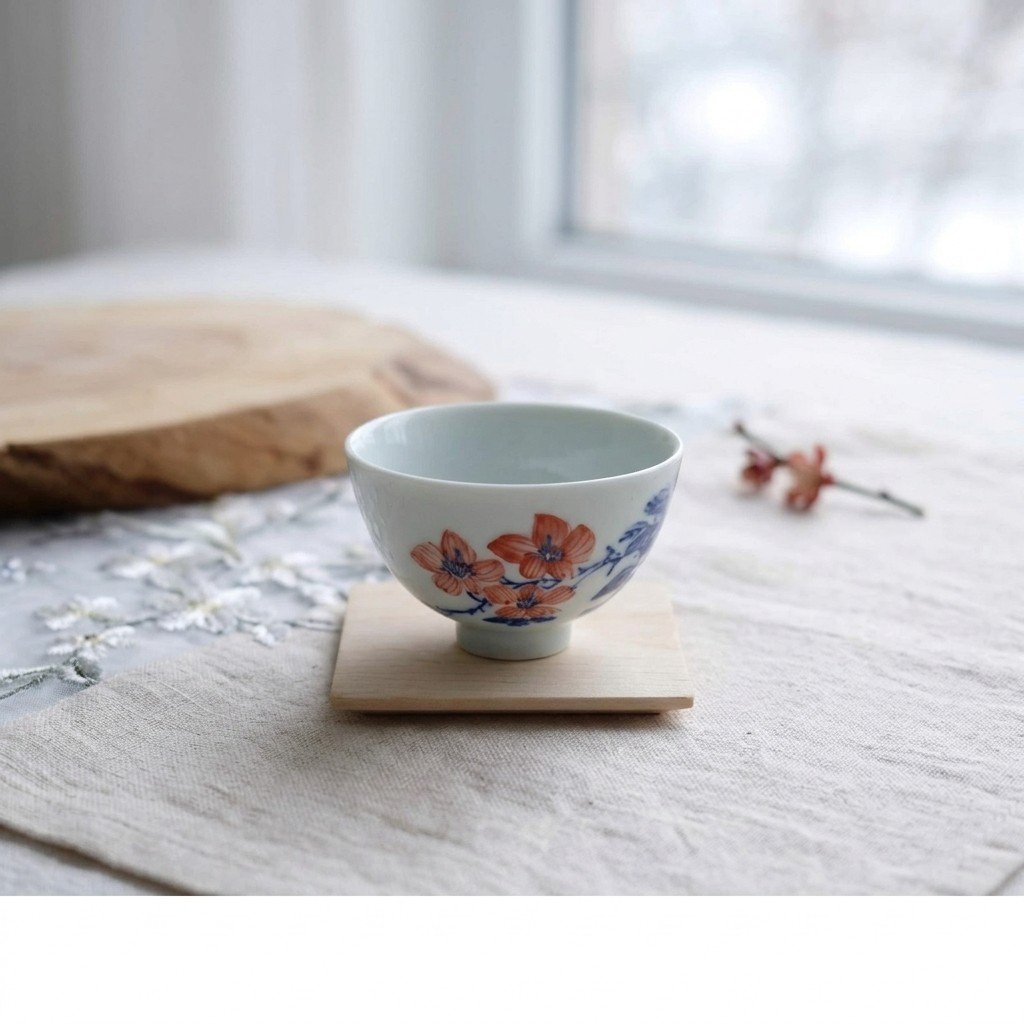
The Plum Blossom tea cup brings flowering branches into the arrangement. It is listed at 80 ml, with a diameter of 7 cm. Compare the blossom clusters with the longer lines of the bamboo painting. Both cups are hand-painted, so brush placement and color can vary between individual pieces.
For a closer look at decoration around a curved vessel, our guide to reading hand-painted teapot designs suggests comparing the whole piece, details and reverse views.
Make the arrangement work for tea
| Piece | Plant to recognize | Listed capacity | Place in the setup |
|---|---|---|---|
| Pine Tree gaiwan | Pine branches and needles | Approximately 150 ml | Brewing vessel within the host’s reach |
| Blue Bamboo cup | Bamboo stems and narrow leaves | 130 ml | Drinking cup at one place |
| Plum Blossom cup | Blossoms along branches | 80 ml | Drinking cup at the other place |
These capacities describe the vessels. Allow headroom when serving, and account for the leaves and water retained during brewing. A 150 ml gaiwan will not fill both cups to their listed capacities in one infusion. Offer smaller servings to each person, using a suitable sharing pitcher if that is part of your setup. Our Chinese tea set guide explains the roles of the main pieces.
Frequently asked questions
What are the Three Friends of Winter?
They are pine, bamboo and plum. Chinese artists grouped them around ideas of endurance and upright character, drawing on evergreen growth and early flowering.
Must all three plants appear on one piece?
The museum examples place the plants within one composition. For your own table, you can bring the three subjects together through separately chosen pieces, as suggested here.
Can the bamboo and plum cups share one tea session?
Yes. Their different listed capacities simply call for attention when pouring. Give each person a comfortable serving below the rim and replenish the cups during later infusions.