
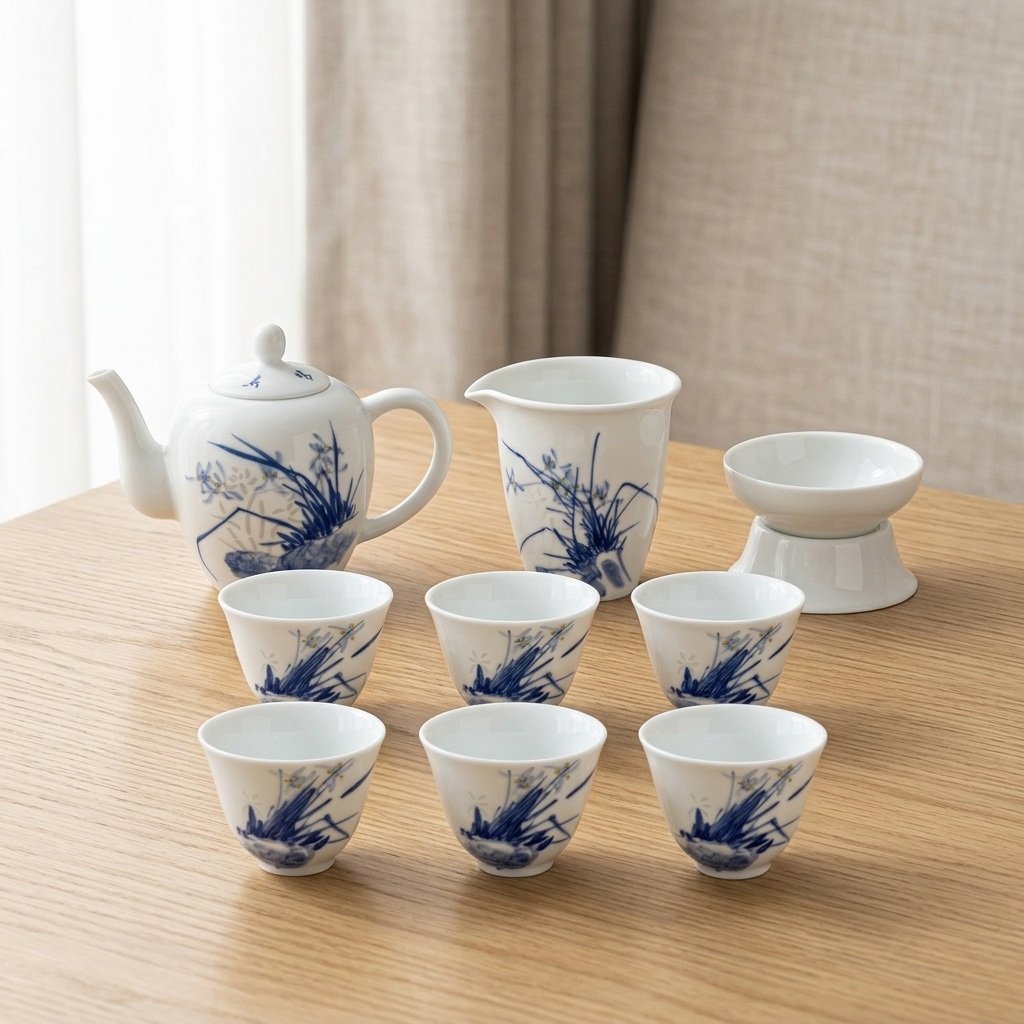
A plum blossom, bamboo, or orchid motif gives you a subject to look for. To choose a hand-painted teapot you enjoy from every side, look at how that subject sits on the body and how the spout and handle join the design.
Aurioo’s Plum Blossom, Bamboo and Orchid porcelain teapot sets offer three different ways to make that comparison. The flowers and leaves matter, but so do the rounded or straight-sided bodies, the empty space around the painting, and the details visible when you turn the pot.
Start with the whole pot
Begin with a wider product view. Trace the outline from the lid to the body, spout and handle. Then move to the closer photographs and see where the painted lines lead. A close-up can show a flower clearly while leaving the overall shape out of view, so both scales are useful.
In its description of a historic painted wine cup, Christie’s discusses how turning the vessel reveals the composition around it. You can use that simple looking habit with a contemporary teapot: follow the decoration across successive views and notice what changes as the surface curves away.
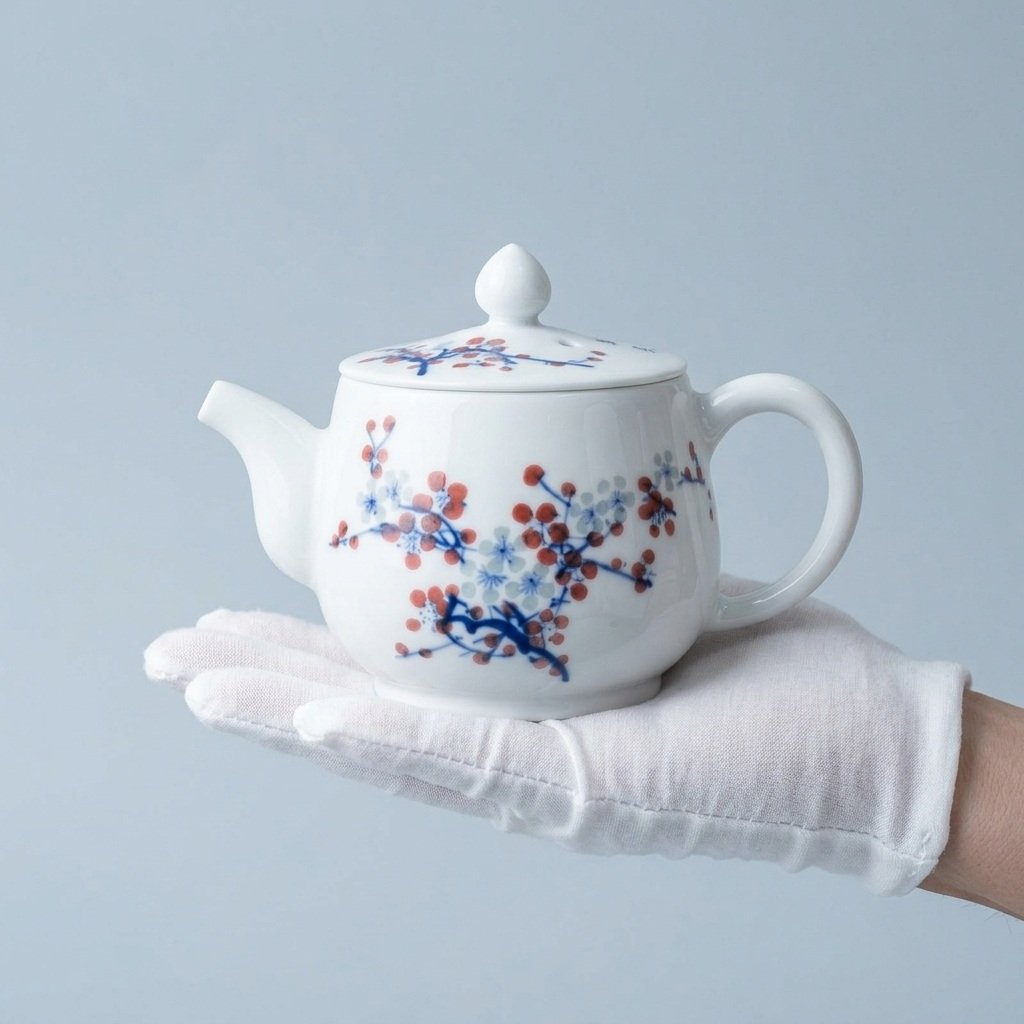
Follow the plum blossoms to the reverse
The Plum Blossom porcelain teapot set has red flowers along cobalt-blue branches on a rounded pot. Its listing identifies calligraphy on the reverse and describes the painting continuing around the vessel.
Start with the red blossoms, then follow the branches toward the sides. Compare that view with the reverse. Flowers and writing give the two sides different details to enjoy; looking at both helps you decide which side you would usually like facing you on the tea table.
For this design, a photograph of the flowers alone leaves part of the decision unfinished. The rounded body and reverse decoration belong to the same piece. If a detail you care about is unclear in the available views, ask for a closer photograph before choosing.
Notice where bamboo becomes part of the shape
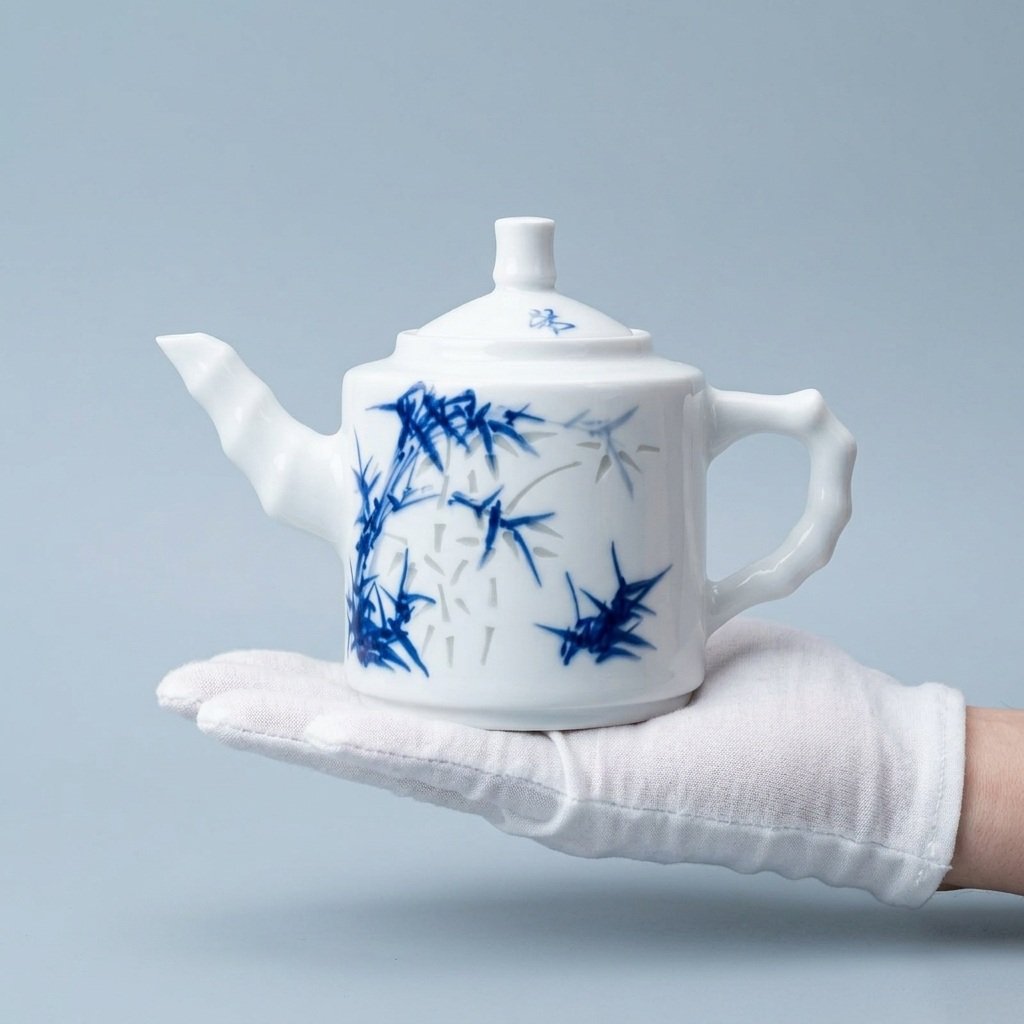
The Bamboo porcelain teapot set carries its subject into the ceramic form. Blue bamboo leaves decorate a straight-sided body, while the spout and handle have a segmented bamboo-style shape.
Compare the painted leaves with those modeled sections. Even where there is little painting, the outline continues the bamboo theme. A side view is especially useful for seeing how the spout and handle relate to the body.
This gives you a concrete choice: do you want the plant to appear mainly as a picture, or do you enjoy seeing it expressed in the shape as well? The Bamboo pot is worth a closer look if those modeled details are what catch your attention. For a table arranged around botanical motifs, see how pine, bamboo and plum come together on teaware.
Give the orchid painting some room
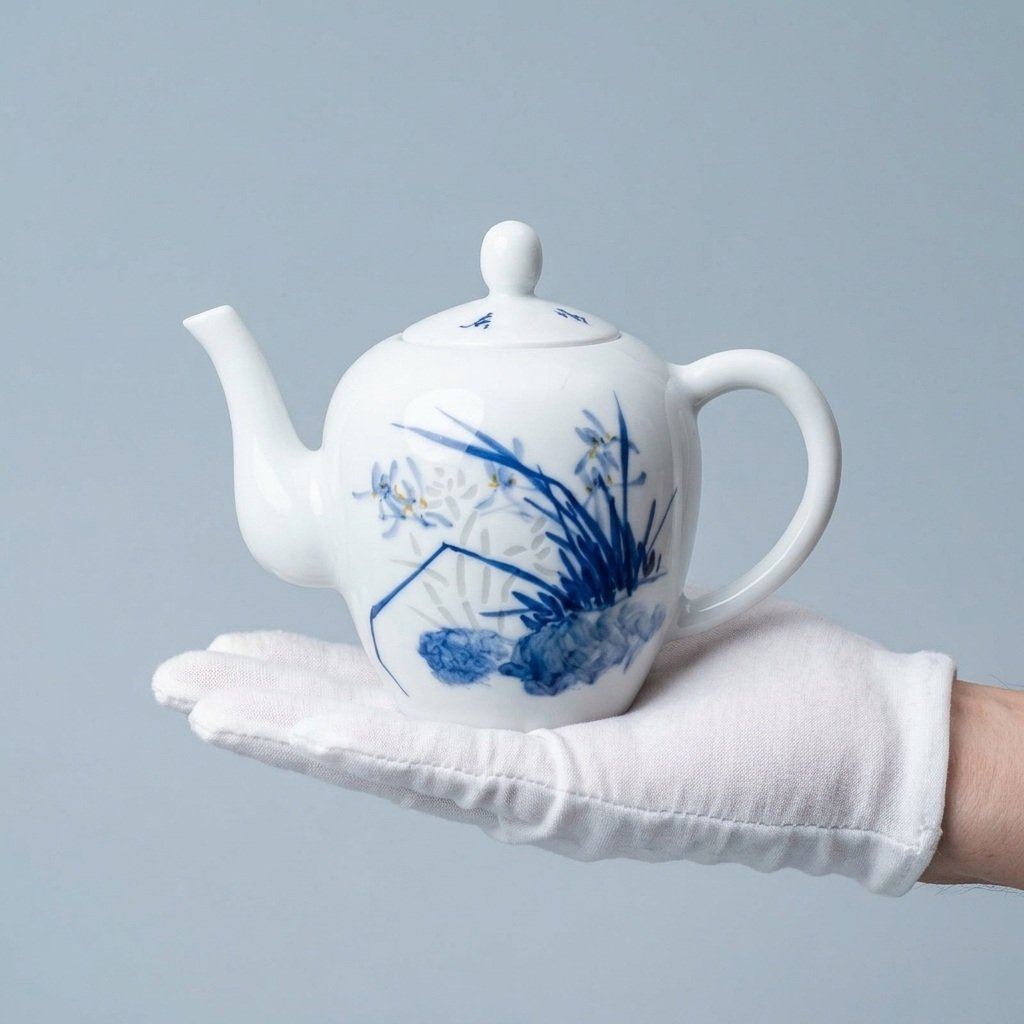
The Orchid porcelain teapot set has cobalt-blue orchids and rocks on a tall white pot, with Chinese calligraphy. Its description draws attention to the open spacing around the painting and the long, upward-curving spout.
Look at the white areas between and around the painted forms. They are part of what you will see each day. Then look at the whole outline again: the taller body and rising spout give this design a different profile from the rounded Plum Blossom pot. For a scene built from trees and distant ridges, see Chinese landscape imagery on a tea cup.
If you prefer a painting with more open space, compare the Orchid views first. If a small red accent is what you enjoy, return to the Plum Blossom. You are choosing details that appeal to you, so take time with the side views as well as the main photograph.
Compare the details you will keep noticing
| Teapot design | Painted detail to follow | Shape to check in a wider view | A useful comparison |
|---|---|---|---|
| Plum Blossom | Red flowers, blue branches and calligraphy on the reverse | Rounded body | Compare the flower-facing side with the reverse |
| Bamboo | Blue bamboo leaves | Straight-sided body; segmented spout and handle | Compare the painted plant with the modeled details |
| Orchid | Blue orchids, rocks and calligraphy, with open spacing | Taller body and upward-curving spout | Compare the white space and the whole profile |
Each of these listings describes hand-painted porcelain. Small differences in lines, color depth and placement are expected between pieces. Use the photographs to understand the design, allowing for those individual variations.
Frequently asked questions
Will every hand-painted pot have identical brushwork?
The listings allow small differences in painted lines, color depth and placement. Look for the overall design you enjoy rather than expecting every mark to repeat the photograph exactly.
Does a blue-and-white appearance identify the painting process?
Appearance alone does not establish the position of the decoration within the glaze. Our guide to underglaze and overglaze decoration explains those separate craft terms. Use the individual product description for the process stated for that piece.
Which view should I check before deciding?
Check a whole-pot view, a closer view of the painting, and the reverse where available. Together they show the outline, brush details and parts of the design that may be hidden in the main photograph.