
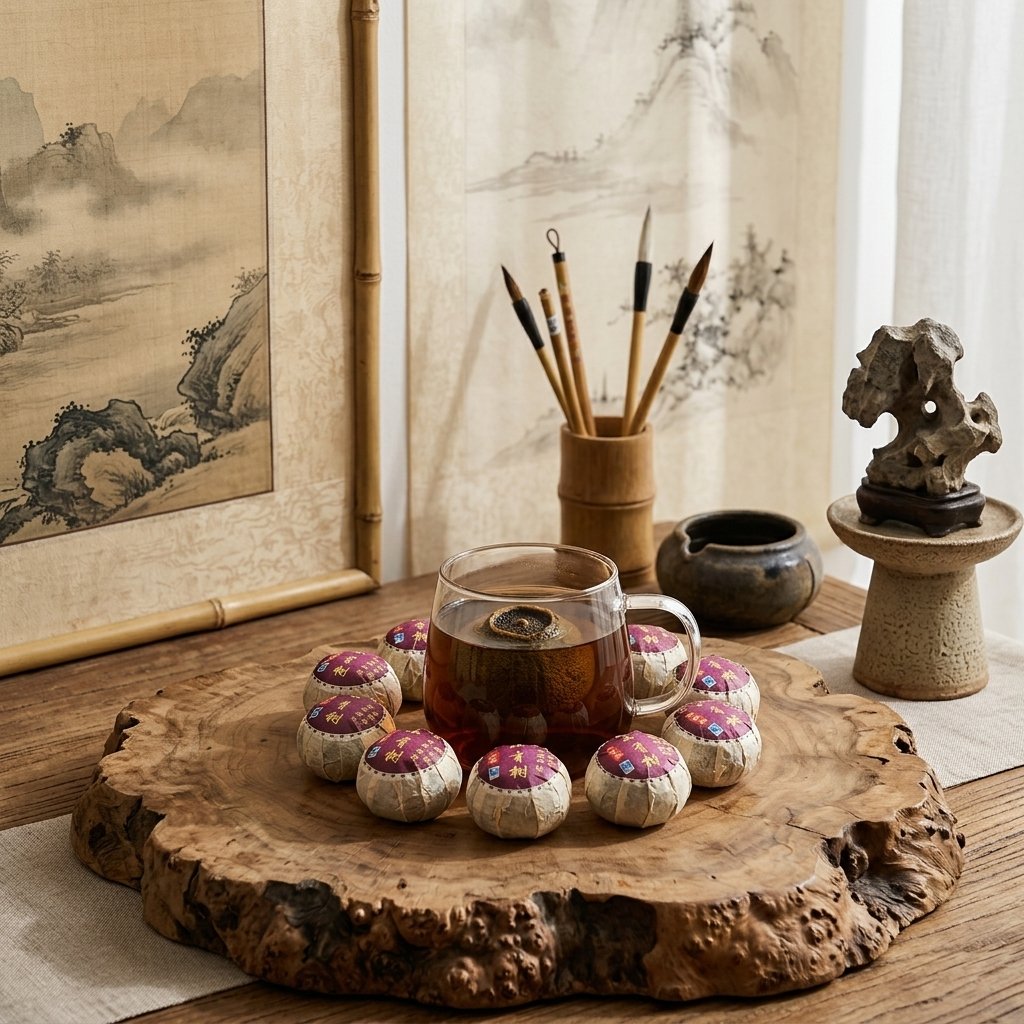
Two Aurioo teas share a ripe pu-erh base, but one includes another ingredient: citrus peel. That is the useful starting point when choosing between Xinhui Citrus Ripe Puerh Tea and the Ripened Puer Tea Cake. Choose the citrus tea when you want that added citrus character; choose the plain cake when you want to explore ripe tea without the peel.
The package sizes differ too. The citrus tea comes in 10 g and 150 g options, while the plain ripe cake is listed at 357 g. A small citrus package gives you a way to try the combination before choosing a larger amount.
What is citrus pu-erh tea?
Aurioo's Xinhui Citrus Ripe Puerh Tea lists citrus peel and ripe pu-erh tea as its composition. Its listed profile is citrus and ripe pu-erh. The peel is part of what you brew, rather than a garnish you must add to a plain cake yourself.
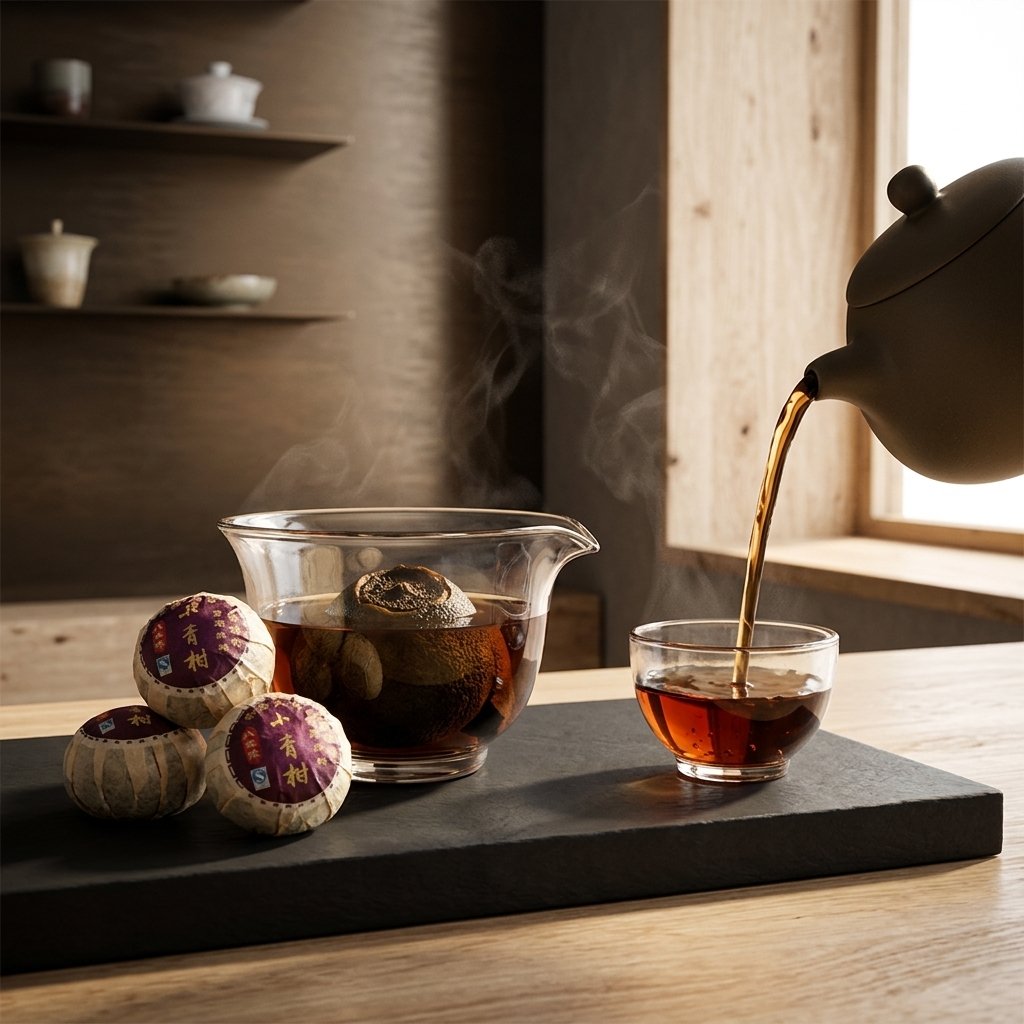
The product photographs show tea held inside citrus shells. They help explain the combination, but package weight alone does not tell you how many whole fruits an option contains. Use the current product and package information when deciding how to portion your tea.
There is a useful distinction between the ingredient and the preparation method. A guide written for a particular whole-citrus tea may specify a whole fruit and a detailed sequence of infusions. That recipe depends on the tea being used. It does not establish a universal dose for every citrus pu-erh package.

How the two Aurioo teas compare
| Tea | Composition | Listed profile | Package options | A reason to choose it |
|---|---|---|---|---|
| Xinhui Citrus Ripe Puerh Tea | Citrus peel and ripe pu-erh tea | Citrus and ripe pu-erh | 10 g or 150 g | You want citrus alongside the ripe tea. |
| Ripened Puer Tea Cake | Compressed ripe pu-erh cake | Earthy aroma | 357 g | You want ripe tea without added peel. |
These are the current listing descriptions, rather than tasting results from a side-by-side test. The difference in ingredients is a firmer guide than a promise that one will taste sweeter, smoother or stronger to everyone.
For the plain cake, separate a small portion carefully before brewing. For the citrus option, start with a small portion as directed by Aurioo. Neither package weight is a serving instruction. A 357 g cake is not a single brew, and the 10 g option does not mean every teapot needs all 10 g at once.
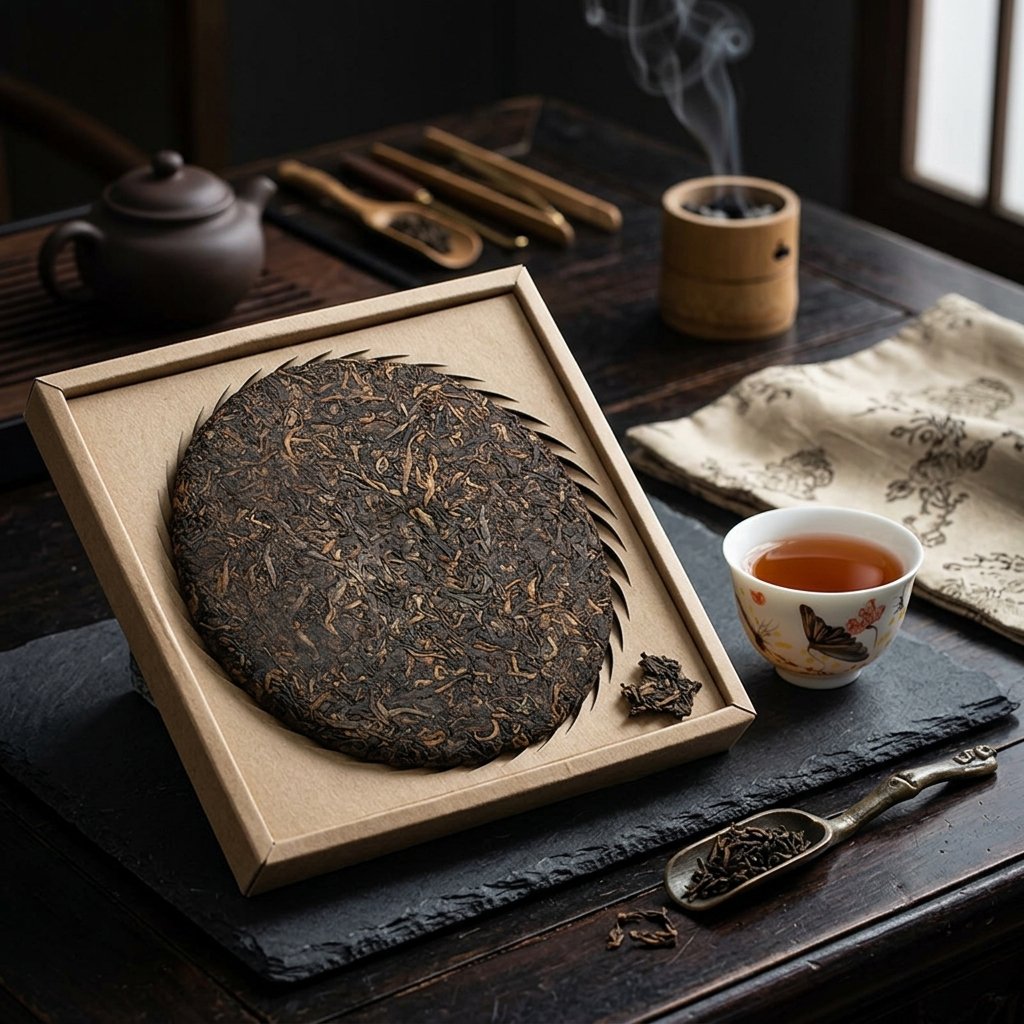
A first portion in a teapot or gaiwan
Both product listings support brewing a small portion in a teapot or gaiwan, then adjusting to taste. Start with a vessel you can handle comfortably. When using an unfamiliar gaiwan, practise the grip with cool water first, and work on a stable, heat-resistant surface.
Follow any directions supplied with your tea for the water and steeping. When the infusion is ready, pour the brewed liquid into a serving vessel or cups so you can taste that infusion separately from the tea still steeping. Keep your first notes simple: how much tea you used, the water amount, the steeping time and whether the citrus character suited you.
If the next cup is stronger than you want, try a shorter steep while keeping the other choices the same. Changing one thing at a time makes the result easier to understand. Aurioo's listings do not set a fixed temperature, peel-to-tea ratio or promised number of infusions, so a precise universal recipe would add more certainty than the product information supports.
Choosing the package you will use
The 10 g citrus option makes sense for trying the peel-and-tea combination. The 150 g option gives you more of that same listed product once you know it suits you. The plain 357 g cake answers a different preference: a supply of ripe pu-erh without the added citrus ingredient.
If you already have a teapot or gaiwan, begin there. You can learn whether you like the citrus combination before changing your brewing setup. For the broader difference between raw and ripe tea, read Aurioo's separate raw-versus-ripe guide; that processing question is distinct from the added peel discussed here.
FAQ
Is citrus pu-erh the same as plain ripe pu-erh?
They share a ripe tea base in these Aurioo listings, but the citrus product also contains citrus peel. The plain ripe cake does not list that added ingredient.
Does the name tell me how old the citrus peel is?
No. The Xinhui Citrus Ripe Puerh Tea listing does not establish a peel age or vintage. Choose it for its stated composition and profile rather than assuming an ageing year.
Should I brew the entire 10 g package at once?
The listing says to brew a small portion and adjust to taste. It does not prescribe the entire package for one infusion. Check the supplied directions and consider your vessel's water amount.
Can I use a gaiwan for citrus pu-erh?
Yes. Aurioo lists a teapot or gaiwan for this tea. Use a comfortable portion, follow the supplied directions and adjust the amount and steeping time to your preference.
For a whole-citrus preparation example, see Teasenz’s Xiao Qing Gan brewing guide. Its detailed timings are calibrated to its own tea; the Aurioo guidance above follows the linked Aurioo listings.