
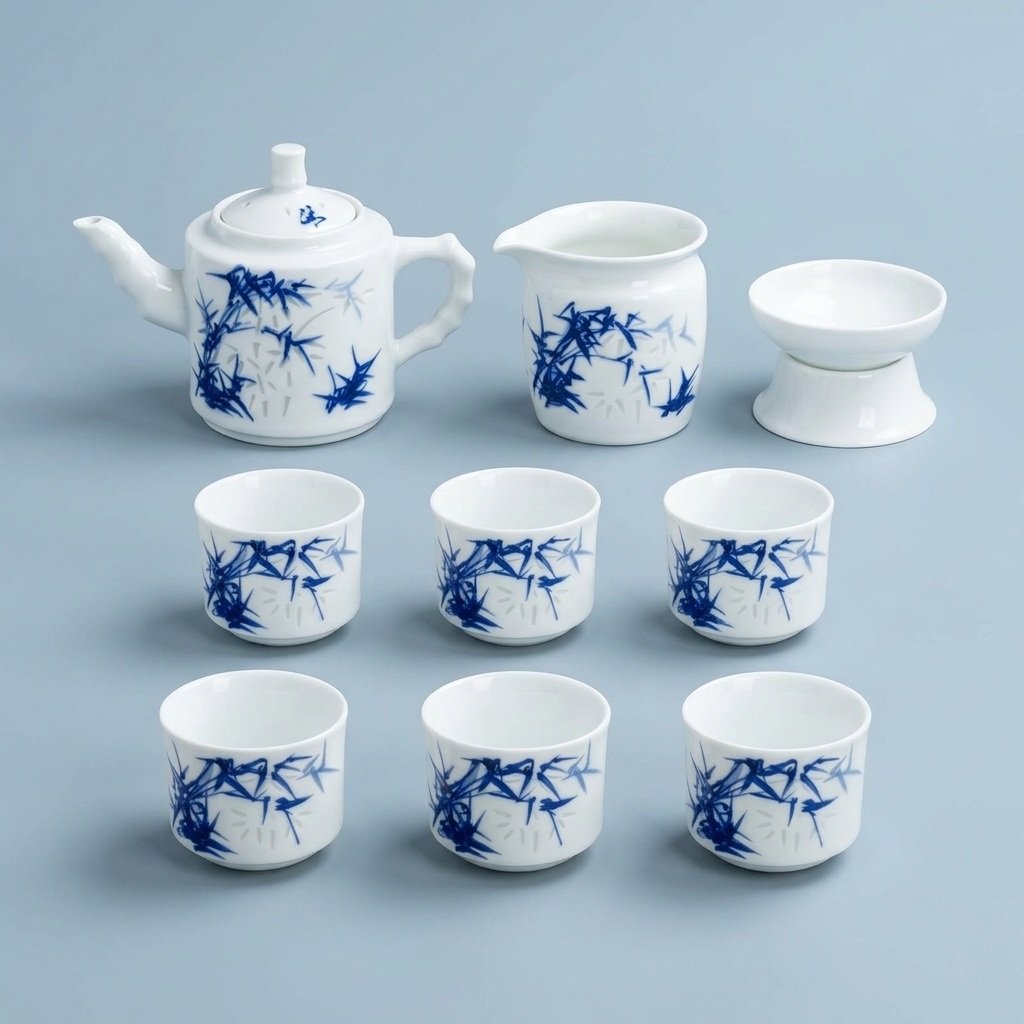
The ceramic filter in an Aurioo gongfu set has a specific place in serving: tea brews in the teapot or gaiwan, then passes through the strainer into the fairness pitcher. If you expected a basket to fill with dry leaves and lower into a cup, these sets work differently.
The distinction becomes clearer when you look at the Bamboo, Mountain Landscape and Orchid sets together. All three include a ceramic strainer, but their brewing vessels hold more than their pitchers. Understanding that relationship helps you plan the pour as well as identify the filter.
Tea strainer vs infuser: where the leaves go
A basket infuser holds leaves in contact with water during steeping; lifting it out separates the leaves from the drink. A pour-through strainer receives tea after brewing and catches loose leaf pieces as the liquid passes through.
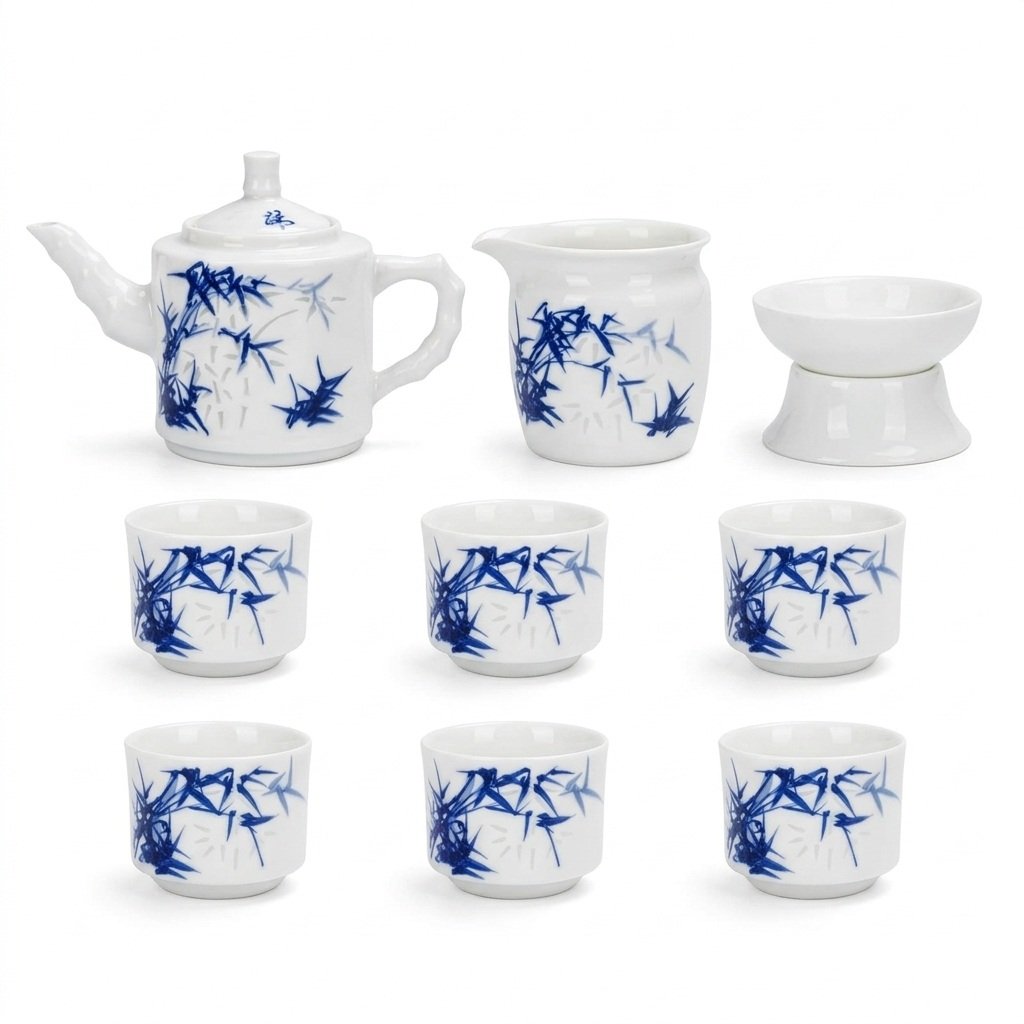
In the Bamboo Teapot Set, the leaves go into the porcelain teapot. Its complimentary ceramic strainer is used on the way to the fairness pitcher. The set also includes the strainer’s stand; it is not listed as a separate brewing basket.
The bamboo motif appears in the painting and in the modeled spout and handle. For a buyer drawn to those details, the practical question remains the same: how much brewed tea can the receiving pitcher comfortably accept?
Compare the included pieces before choosing
The table lists the components individually, so lids, saucers and complimentary accessories do not get hidden inside a total piece count. All capacities are nominal product specifications, not recommended working fills.
| Aurioo set | Brewing vessel | Fairness pitcher | Tea cups | Complimentary filter pieces |
|---|---|---|---|---|
| Bamboo | 1 teapot with fitted lid; 300 mL | 1 pitcher; 180 mL | 6 cups; 50 mL each | 1 ceramic tea strainer and its stand |
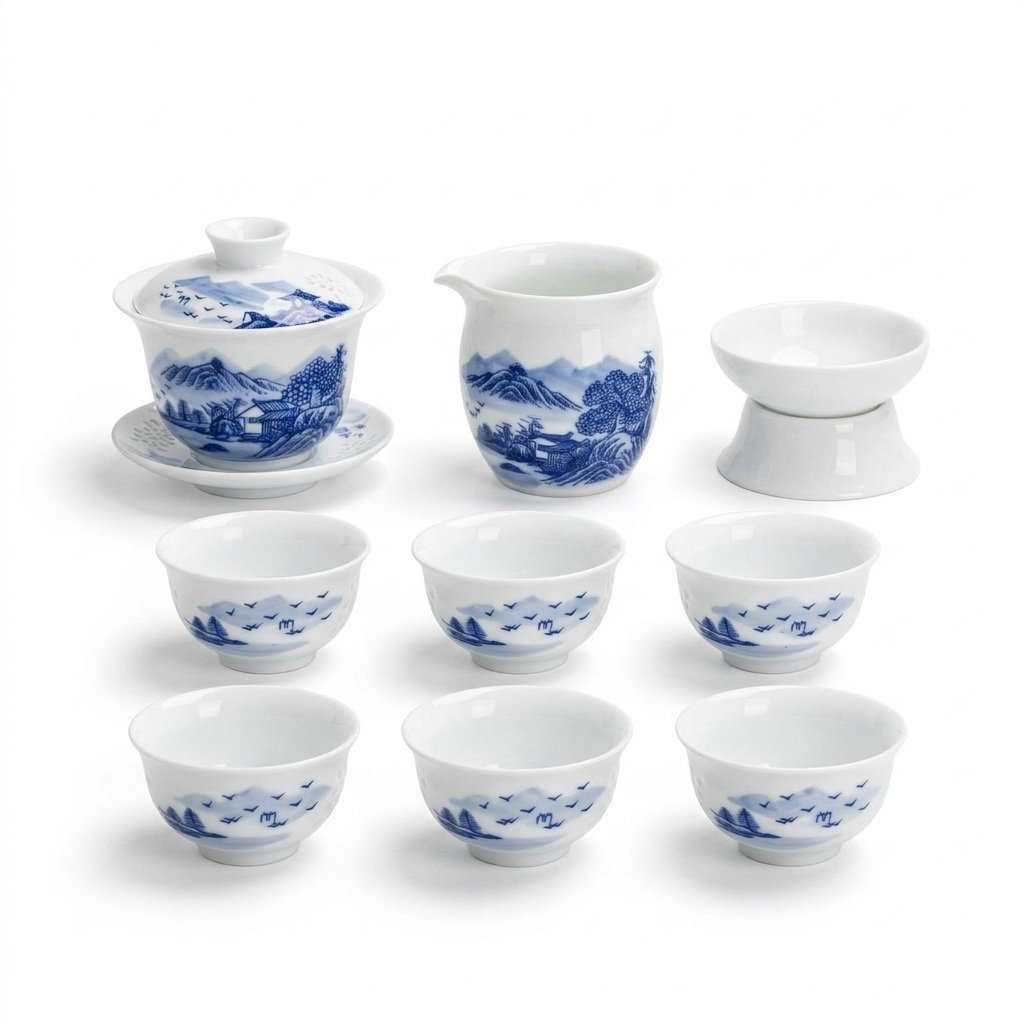
| Mountain Landscape | 1 gaiwan bowl with fitted lid and matching saucer; 240 mL | 1 pitcher; 180 mL | 6 cups; 50 mL each | 1 ceramic tea strainer and its stand |
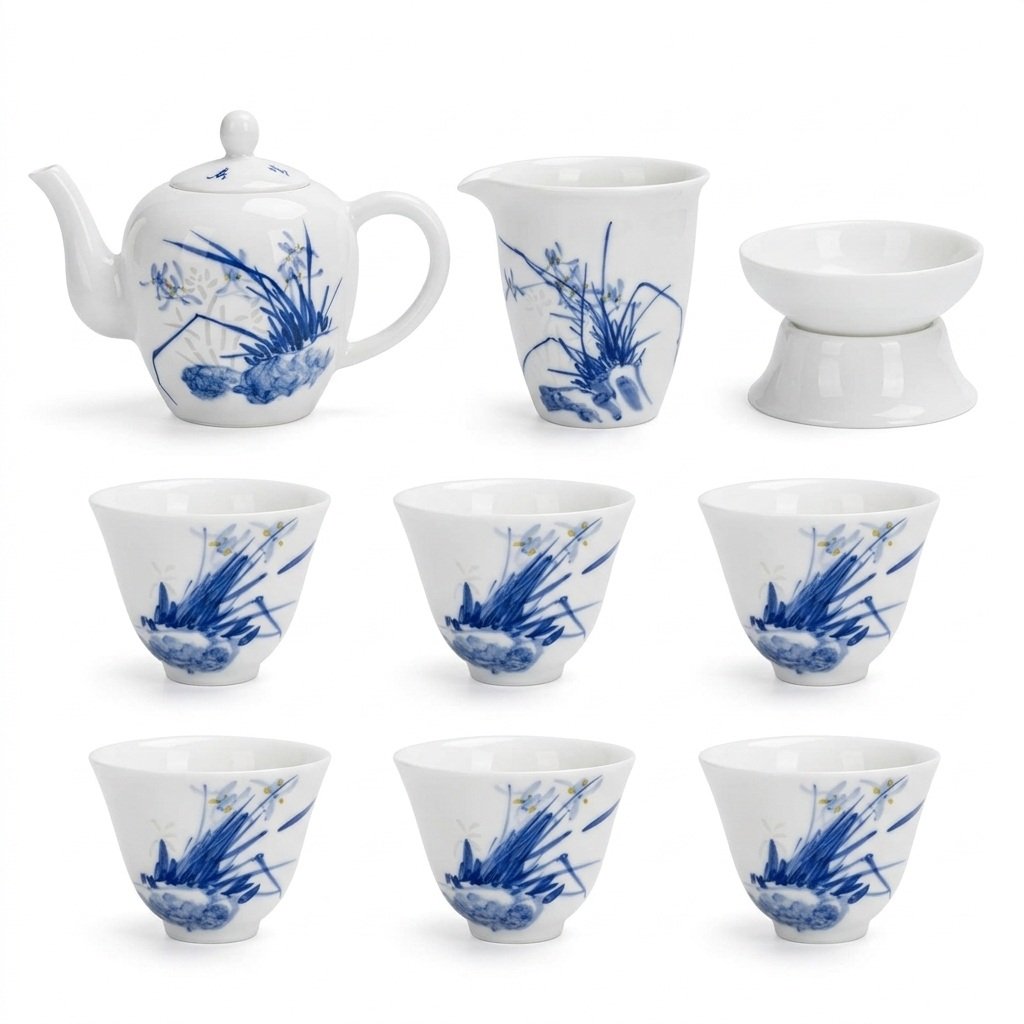
| Orchid | 1 teapot with fitted lid; 300 mL | 1 pitcher; 180 mL | 6 cups; 50 mL each | 1 ceramic tea strainer and its stand |
The Mountain Landscape Gaiwan Set changes the brewing vessel while keeping the same listed pitcher and cup capacities. Leaves brew in the gaiwan bowl; tea is decanted through a gap at the lid and then through the ceramic strainer into the pitcher.
Its blue landscape painting and translucent rice-grain details offer a different visual choice from the Bamboo set. Choosing that decoration does not remove the capacity mismatch: a 240 mL gaiwan is still larger than its 180 mL pitcher.
Let the receiving pitcher set the limit
With these sets, start by planning a brew volume below the pitcher’s comfortable receiving capacity, leaving room below its rim. The 180 mL specification is not an instruction to pour exactly 180 mL into it. Leaves also occupy space in the brewing vessel and retain some water, so the vessel’s label does not predict the amount you will decant.
The Orchid Teapot Set illustrates the issue particularly clearly: a 300 mL teapot accompanies a 180 mL pitcher. Filling the teapot to its nominal capacity and trying to empty it into the pitcher in one uninterrupted pour would be the wrong plan.
If you decant in stages, stop with room still available, serve tea from the pitcher to create receiving space, then continue. Keep checking the actual level. Separate portions can differ in strength, so staged pouring should not be presented as a guarantee of identical tea in every cup.
Share smaller pours and clean each piece
Each set includes six cups labeled 50 mL. Six nominally full cups would require 300 mL, more than a single 180 mL pitcher holds. Plan smaller servings when sharing among six people, with room below every cup’s rim. Having six cups gives you serving options; it does not promise six full servings from one pitcher.
The Bamboo, Mountain Landscape and Orchid sets are hand-painted porcelain. Their care instructions recommend gentle hand washing and drying before storage. Apply that care to the included serving pieces rather than borrowing dishwasher advice intended for a different filter material.
For help deciding which other components matter to your table, see the Chinese tea set guide. Here, the useful pairing is the included strainer and pitcher, with a brew volume that fits them.
Frequently asked questions
Do I put dry tea into the ceramic strainer to steep it?
For these three Aurioo sets, brew the leaves in the teapot or gaiwan. Use the ceramic strainer when transferring brewed tea into the fairness pitcher; it is not specified as an immersion infuser basket.
Can I pour the entire brewing vessel into the pitcher?
Only if the actual brewed amount fits with headroom. The teapots are labeled 300 mL and the gaiwan 240 mL, while each pitcher is 180 mL. Plan a smaller brew or create receiving space between staged pours.
Can one pitcher fill all six cups completely?
No. Six 50 mL capacities total 300 mL, exceeding the pitcher’s nominal 180 mL. Serve smaller portions and leave space below the rims instead of treating the listed capacities as fill targets.