

You open a tea you enjoyed last month, brew another cup, and wonder where the aroma went. Before changing your brewing method, look at what happened between those two sessions. Where did the leaves sit? Did the packet close properly? Was it open beside a steaming kettle?
A useful storage routine starts with the tea you actually drink and a place you can return it to every time.
Why the second cup can seem less lively
Light, heat, moisture, air and surrounding smells can reduce the quality of stored tea. A sunny kitchen shelf may be convenient, but it leaves several of those problems unresolved. Teabloom’s storage guide explains these everyday exposures.
Start with an observation rather than a deadline. When opening a new tea, write down a few words about its aroma and the cup you brewed. “Floral, soft, short first steep” is enough. Keep the brewing notes with the tea’s name so you can make a reasonably similar cup later. A disappointing brew alone does not tell you exactly what changed.
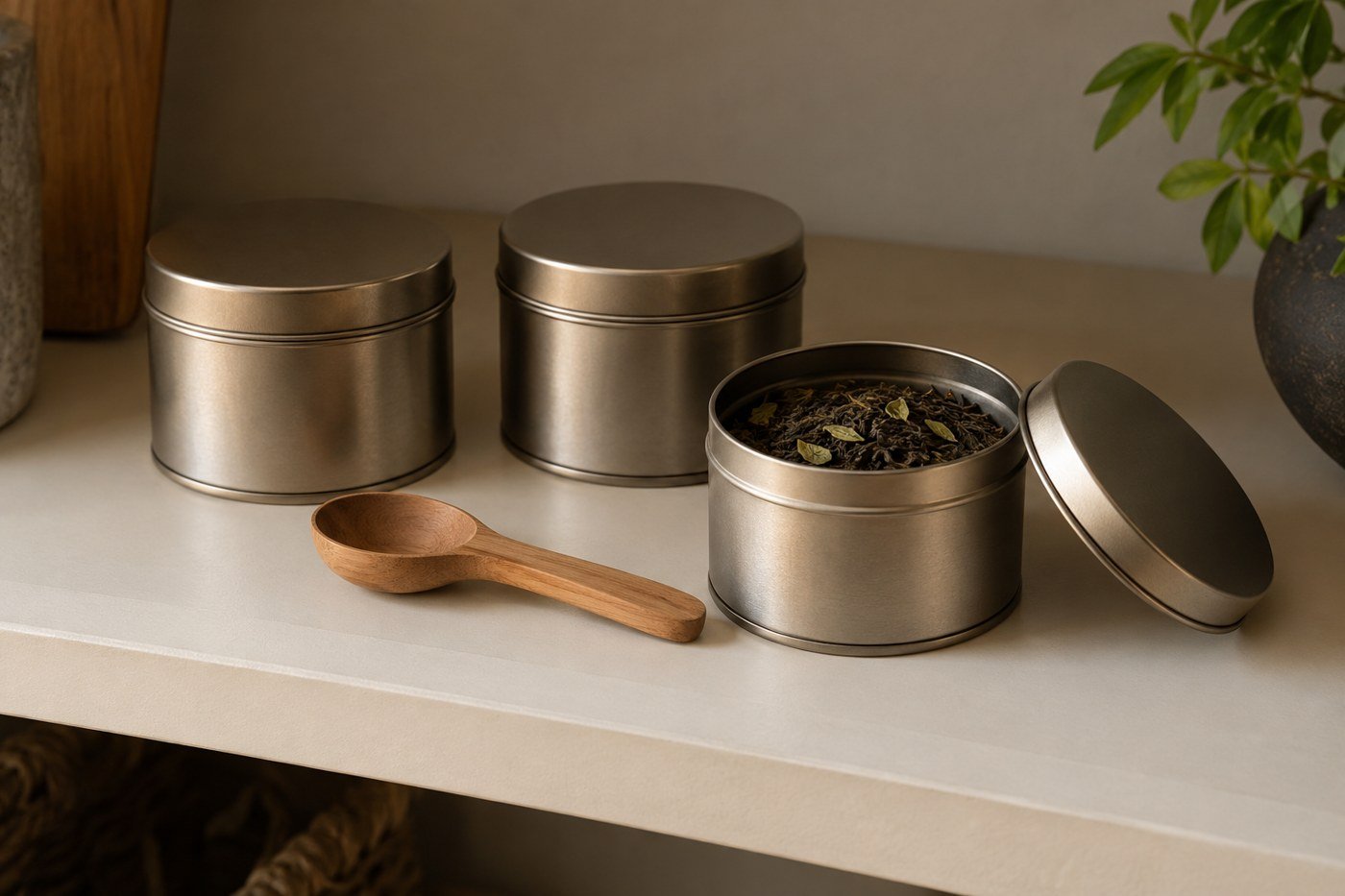
Choose a container you can close properly
For everyday loose-leaf tea, a clean, dry, food-safe container with an airtight closure is a practical choice. An opaque container also blocks light; clear glass needs a dark storage spot. Check for lingering smells before refilling anything previously used for another food or strongly scented tea.
Inspect the packaging you have before buying a replacement. Can you close it as intended after opening? Is the closure damaged? Keep the original label even if you transfer the leaves, including any storage instructions and best-before information. A decorative jar without those details can make two similar-looking teas surprisingly hard to tell apart.

Find a place away from cooking
A cupboard away from the stove, kettle and spices is a sensible starting point. For the tea you open each day, avoid the refrigerator: surrounding food odors and condensation when opening a cold container are concerns. Harney & Sons’ storage advice covers these issues and the benefits of opaque, airtight tins.
Walk through one normal brewing session before deciding where everything belongs. Put the tea somewhere you can reach before switching on the kettle, then return it there before pouring water. If you need to move three pans to put the tea away, choose a more convenient shelf. The routine should be easy enough to follow on a rushed morning.
Measure the leaves, then put the tea away
Set out a clean, dry scoop and the vessel you will brew in. Measure what you need and close the container before working with hot water. This keeps the open supply away from the wet part of brewing.
If you share a kitchen, give the tea scoop a specific home. A small note inside the cupboard can be more useful than expecting everyone to remember which spoon belongs where. When comparing two teas, put each label beside its cup, then return the containers to storage. You can leave the notes on the table while you taste.
Buy the amount you expect to drink
Small quantities make sense when you are still deciding what you like. Aurioo’s Tie Guan Yin comes in 10 g and 180 g options; Bai Hao Oolong comes in 10 g and 120 g options. Try the smaller size before choosing a larger amount for regular use.

Write the opening date beside the tea’s name. Keep one short list of what is open, and consult it before ordering more. The date helps you remember your own drinking habits; it is not a universal expiry rule.
This routine concerns loose-leaf tea bought for everyday drinking. Deliberate aging needs separate guidance; our article on compressed and loose-leaf tea introduces that distinction. For your daily shelf, start with a secure closure, a suitable place and an amount you look forward to finishing.