
A raw pu-erh nest and a ripe pu-erh cake can look like two versions of the same purchase. Before choosing one, look past the shape. The useful distinction in raw vs ripe pu-erh is processing: sheng is raw pu-erh, while shou, also spelled shu, undergoes a deliberate fermentation step called wet piling.
For a first purchase, start with the kind of cup you want to explore, then check what the seller actually tells you about that tea. You do not need to become a collector, buy an old cake, or commit to years of storage before tasting either style.
Read the processing label before the wrapper
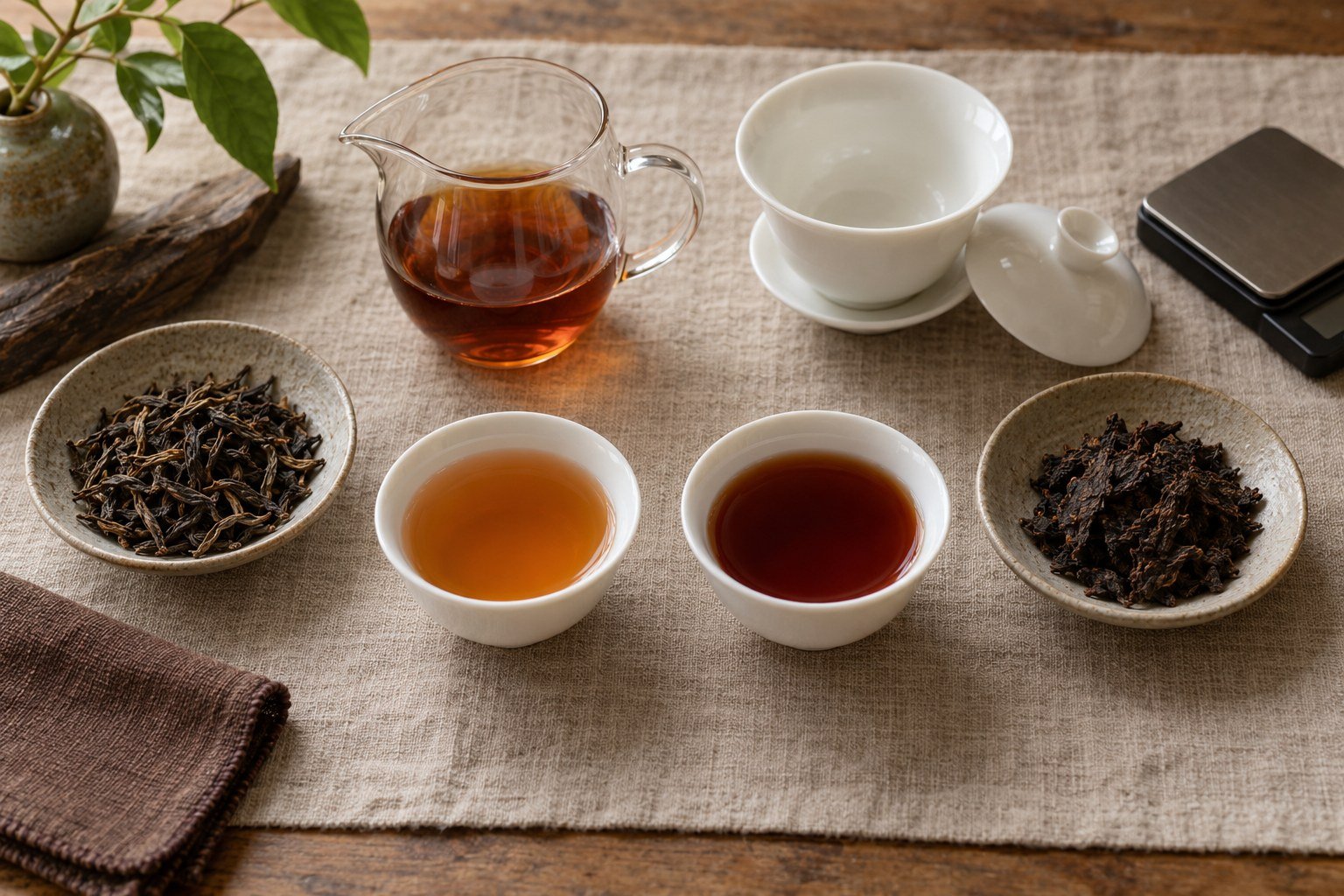
Both styles start with leaves that are heated, rolled and sun-dried. For shou, producers add a controlled wet-piling stage, managing moisture and warmth to encourage microbial fermentation. Sheng does not undergo that stage. TeaVivre’s explanation of pu-erh processing shows where the two production routes separate.
“Raw” therefore does not mean freshly plucked, untreated leaves. “Ripe” describes a production method, not a raw tea that has simply spent more years on a shelf. An aged sheng remains sheng.
Check for the words raw, sheng, ripe, ripened, shou or shu in the product description. If a listing says only “aged pu-erh,” ask which type it is before ordering for a comparison. Age and processing answer different questions.
Use flavor descriptions as a starting point
Young sheng can have a fresh aroma, noticeable bitterness and a sweet aftertaste. Shou often has an earthier aroma and a mellow, fuller texture. These are broad expectations, consistent with TeaVivre’s raw and ripe tea descriptions, rather than tasting promises for every product.
Read a named tea’s own description before applying those expectations. A general description of young sheng cannot establish the age or flavor of an unspecified raw tea. Likewise, “ripe” alone does not tell you how much you will enjoy a particular cake.
It helps to separate aroma, texture and aftertaste when reading reviews. Someone might enjoy an earthy scent but prefer a lighter-feeling drink. Another person may welcome a little bitterness if the finish appeals to them. Neither preference requires choosing a permanent favorite between the two styles.
Match the purchase to your question
Use this comparison as a shopping worksheet. It keeps the choice tied to what you want to learn and what a listing can confirm.
| Your question | When looking at sheng | When looking at shou |
|---|---|---|
| Which processing term should I find? | Raw or sheng | Ripe, ripened, shou or shu |
| What broad character am I curious about? | Freshness, bitterness and the aftertaste of young examples | Earthy aroma and a mellow texture |
| What should I check separately? | The specific tea’s age and tasting description | The specific tea’s production and tasting description |
| Does a cake or nest identify the type? | Read the label; shape is insufficient | Read the label; shape is insufficient |
| What makes the purchase useful? | A manageable quantity of a clearly identified raw tea | A manageable quantity of a clearly identified ripe tea |
For an everyday purchase, consider the amount of tea you are comfortable buying as well as the style. A larger package is a bigger commitment before you know whether you like that particular tea. Compare net weights and product details rather than treating the package price as a verdict on quality.
Compare two clearly identified Aurioo teas
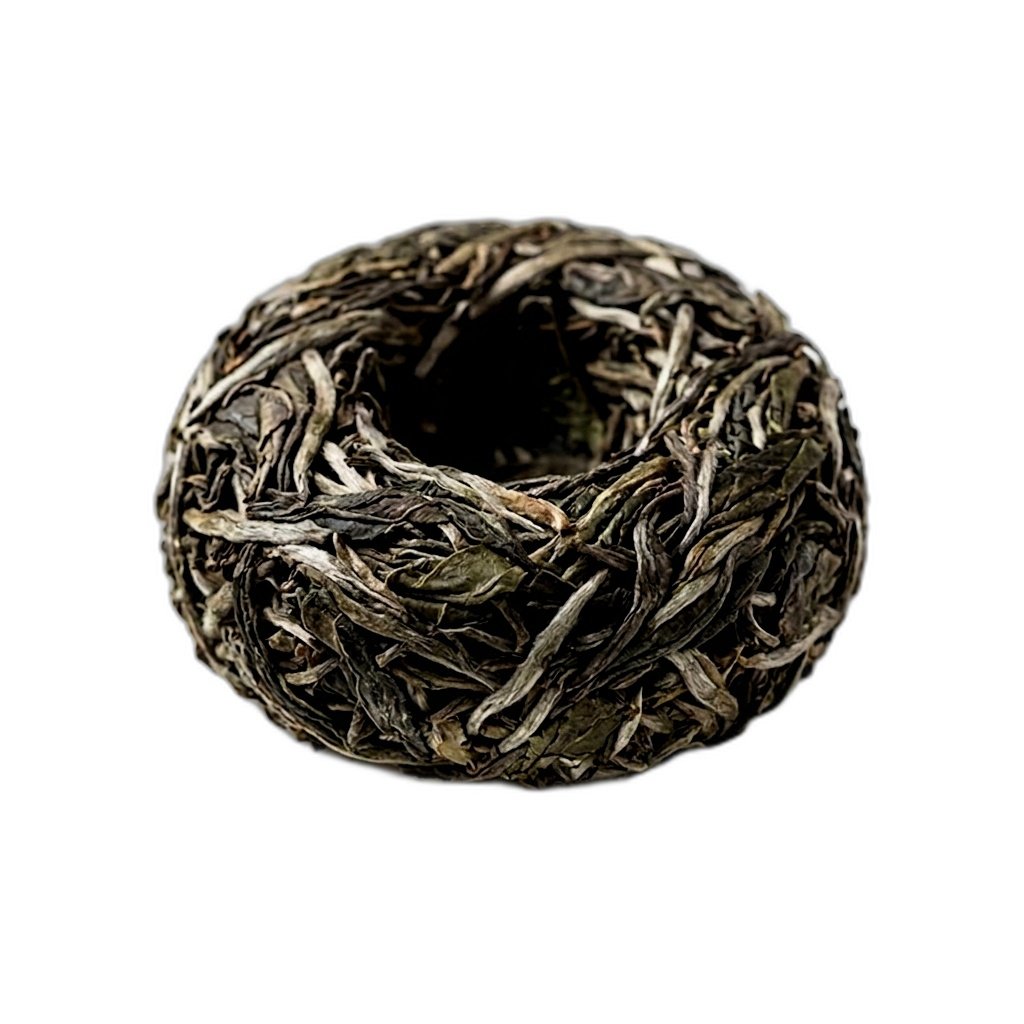
Aurioo’s Raw Toucha is a 100 g compressed raw pu-erh nest. A nest-shaped tea is commonly called tuocha; the product’s listed name is Raw Toucha. Its description confirms the tea type, form and weight. It does not establish a harvest year, age or particular flavor notes, so those details should remain open questions.
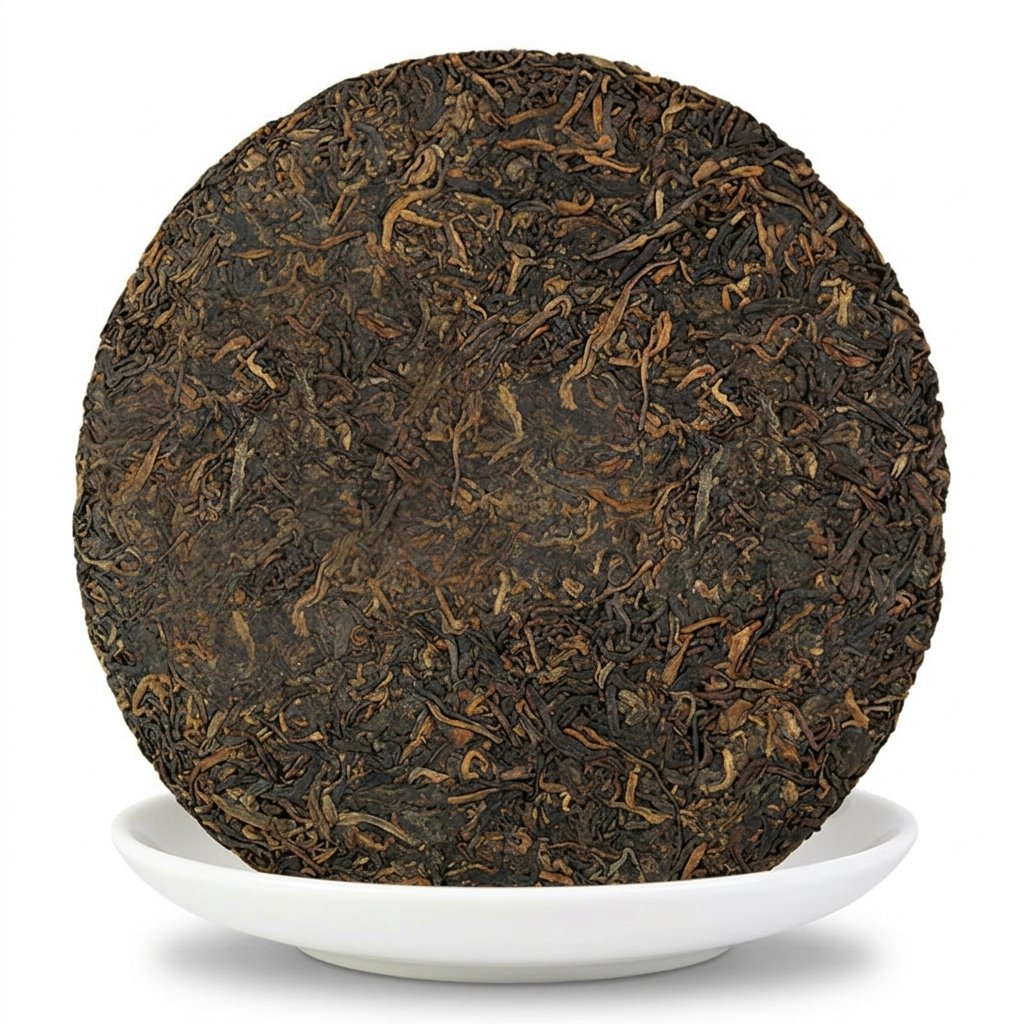
The Ripened Puer Tea Cake is a 357 g compressed ripe pu-erh cake, described as having an earthy aroma. This gives you a clearly labeled ripe counterpart, although the two packages contain different quantities.
Here the nest happens to be raw and the cake ripe. That pairing is specific to these products: both raw and ripe pu-erh can come in compressed forms. Choose by the stated tea type, then decide whether the package size suits your plans.
Taste both with familiar teaware
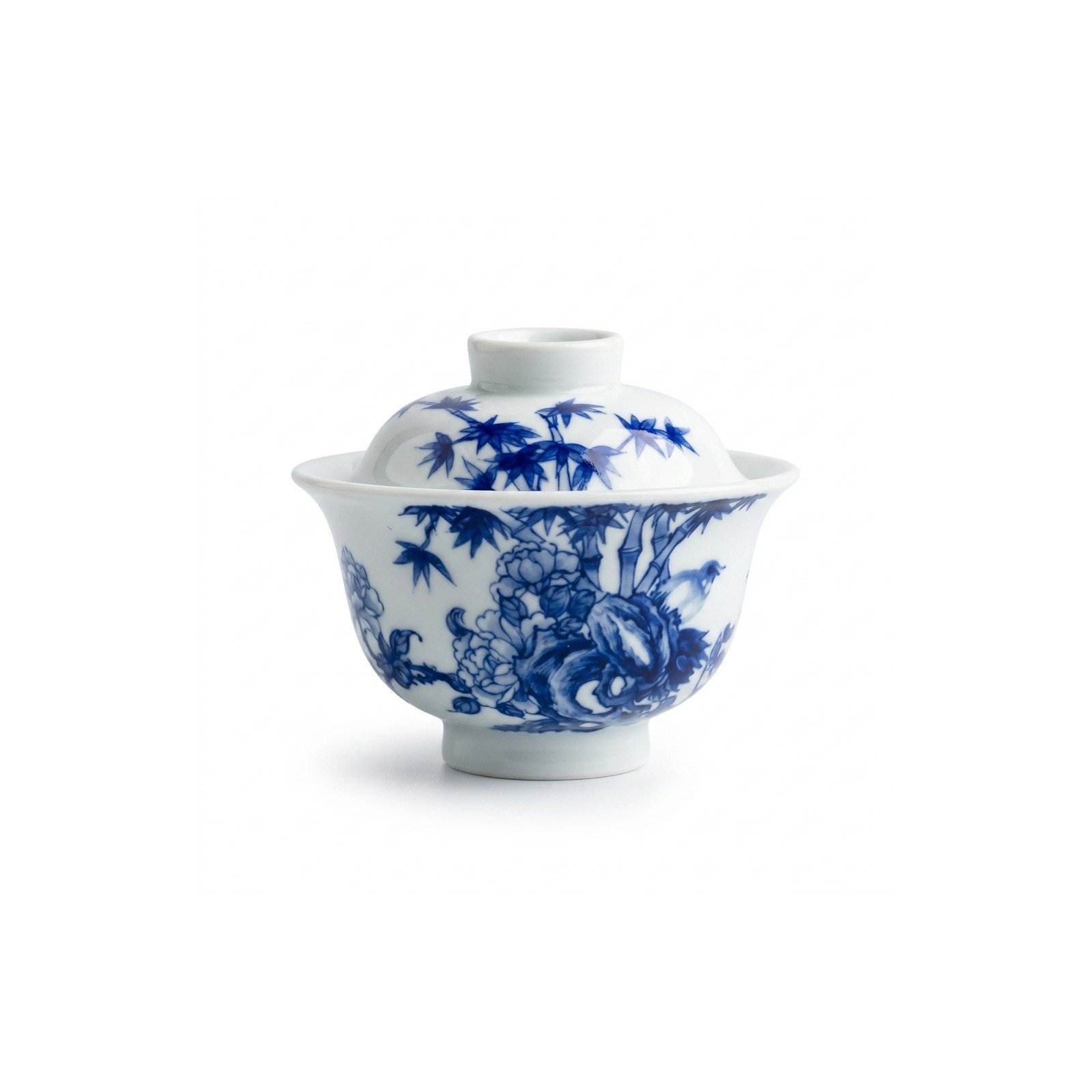
Use the same teaware for separate sessions so that you have fewer new things to learn at once. Aurioo’s Blue White Bamboo Gaiwan has an approximate listed capacity of 150 mL and includes a bowl and lid. The Blue White Floral Bowl Tea Cup holds approximately 120 mL; the single option includes one cup.
Those capacities do not mean a full gaiwan pour will fit in that cup. Leave comfortable headroom and have a suitable serving vessel available. If the gaiwan grip is unfamiliar, practice with cool water first.
Follow each tea’s directions, adjusting the amount and infusion time to taste. Keep a brief note of what you used so you can repeat a cup you enjoyed. For each tea, record three things: the aroma, how the liquid feels in your mouth, and what remains after swallowing. Plain descriptions are useful: “dry finish” tells you more about your preference than a long list of flavors you cannot recognize.
Clean the teaware between sessions and give each tea its own notes. This is a comparison of two individual teas, so leave room to try another example before deciding an entire style is for you.
Questions before your first order
Must raw pu-erh age for five or ten years before drinking?
No. Global Tea Hut explicitly describes sheng as suitable for drinking young or aging. Aging is a separate interest, not an entry requirement. Ask about the particular tea you are buying rather than applying a fixed waiting period.
Will raw pu-erh eventually become ripe pu-erh?
Aging sheng does not turn it into shou. Shou is identified by its deliberate pile-fermentation process. The two labels describe how the tea was made, even when both teas have spent time in storage.
Which should a beginner choose?
Choose the clearly described tea whose profile interests you, in a quantity you want to own. If both appeal, compare them in separate sessions and keep your notes. The most useful result is finding a tea you want to brew again.