
A tin of green powder and a packet of flat green leaves can both contain green tea. The difference becomes clearer when you prepare them. With matcha, you mix the powder into the water and drink it. With loose green tea, you steep the leaves, then pour or strain the tea away from them.
If you are comparing matcha vs green tea before buying, start with the preparation you want. Do you enjoy whisking a bowl, or would you rather brew leaves in a pot? That choice tells you more about the equipment you need than the color of either drink.
Matcha belongs to the green tea family
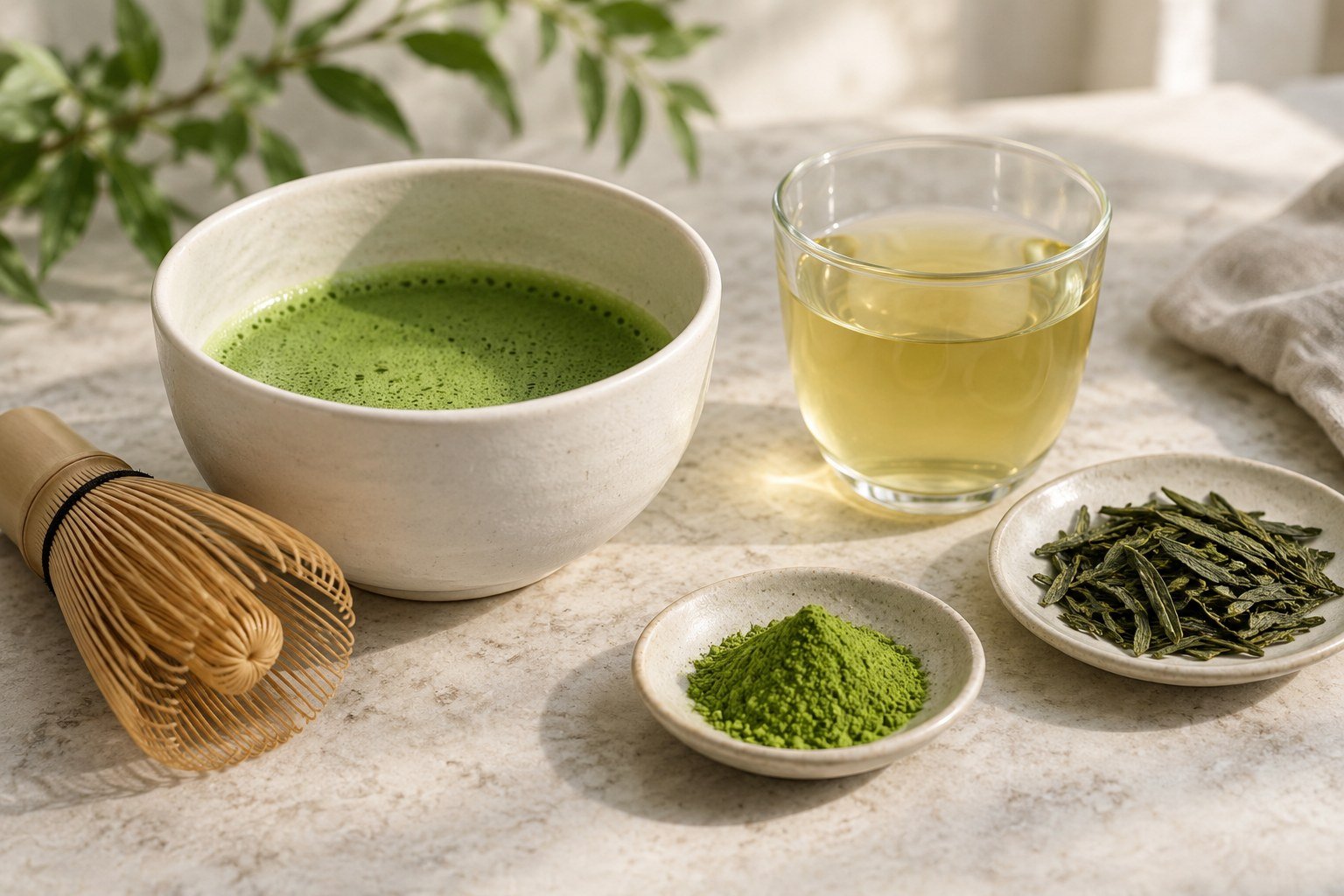
“Green tea” is the broader category. Matcha is one kind within it, so the useful comparison is matcha versus brewed leaf green tea. The names do not describe two separate tea families.
Matcha also means more than any green leaf ground into powder. Japanese producer Marukyu Koyamaen describes its process: shaded leaves are steamed and dried as tencha, then processed to remove stems and veins before milling. That production method matters when reading a packet labeled “green tea powder.”
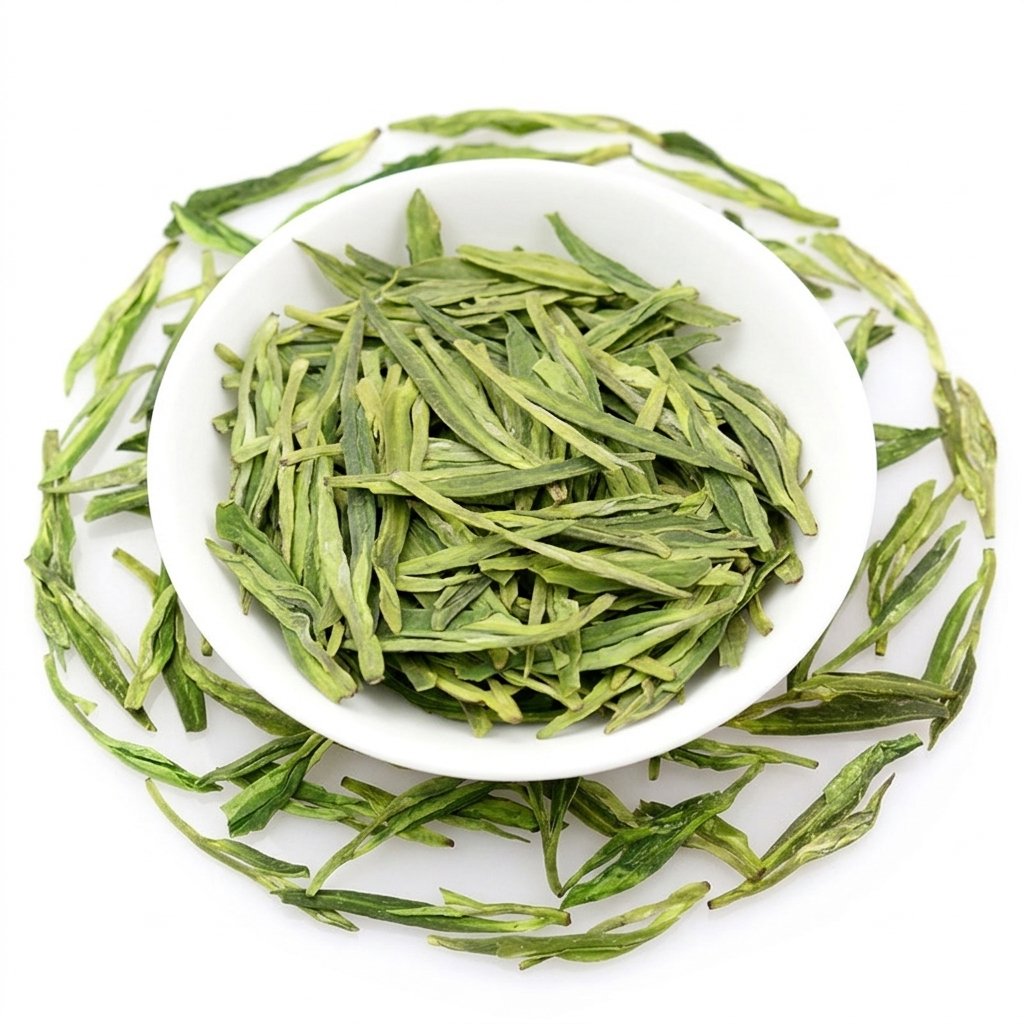
For a shopper, the immediate distinction is visible before any water is added. Matcha is powder. A loose green tea such as Dragon Well has identifiable leaves that you can place in a brewing vessel and remove after steeping.
What changes at the kitchen counter?
Think through one serving, from opening the packet to washing up. This comparison concerns plain matcha prepared with water and loose green tea brewed with water.
| Practical question | Matcha | Brewed leaf green tea |
|---|---|---|
| What goes into the vessel? | Fine tea powder | Dry tea leaves |
| What is the main preparation task? | Disperse the powder evenly | Infuse the leaves, then separate them from the drink |
| What remains in the drink? | Suspended tea particles | The infusion, with most leaves held back |
| What should the vessel allow? | Space to move a whisk | Space for brewing and a way to pour or strain |
| What do you clear away afterward? | Powder residue and the mixing tools | Wet leaves and the brewing vessel |
Picture making each one on an ordinary morning. If you already have a leaf-tea pot, brewing leaves may fit your setup. If you want to learn whisking, allow space for a bowl and the tools that go with it.

Why whisking is different from steeping
Matcha does not fully dissolve like sugar. Its small leaf particles are dispersed through the water, and some can settle if the drink stands. Matcha.com’s explanation of settling distinguishes that suspension from complete dissolution.
That changes what you are trying to accomplish. Leaving matcha powder in water for longer does not replace mixing it. Sifting helps break up clumps before whisking; it is preparation for mixing, rather than the final straining step used to hold back brewed leaves.
For loose tea, your task is to manage the infusion and separate the liquid when ready. The packet’s instructions are the starting point. There is no single temperature and steeping time that should be copied across every green tea and every serving size.
Choose a vessel for the job
For matcha, look for a bowl with room to whisk comfortably. Ippodo’s utensil guide explains the roles of a fine strainer for sifting, a bamboo whisk for mixing, and a wide bowl for whisking and drinking. Check the bowl’s opening and shape as well as its listed capacity.
For leaf tea, keep the brewing vessel and drinking cup distinct in your shopping list. You might brew in a teapot or gaiwan, then pour into a smaller cup.
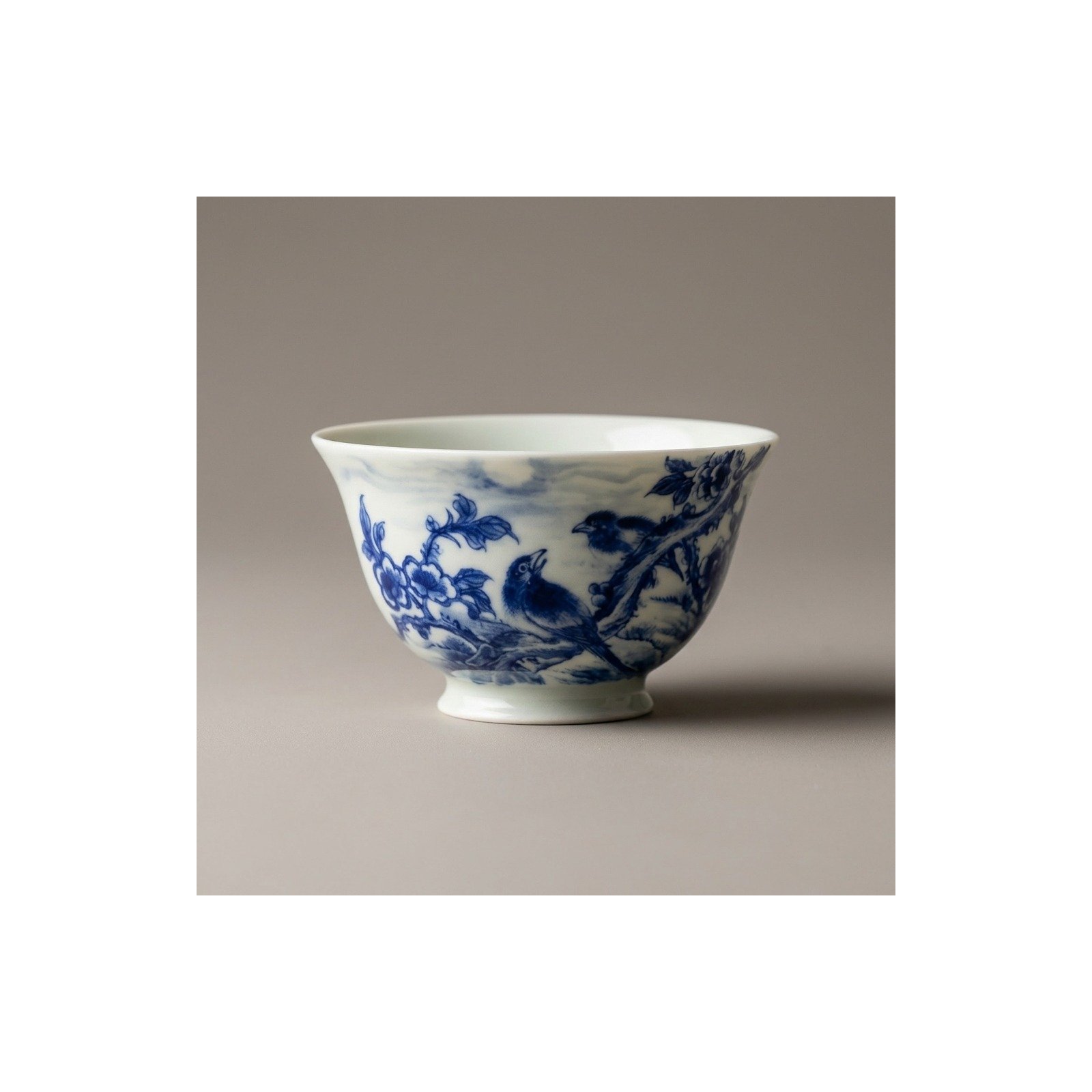
Aurioo’s Blue White Floral Bowl Tea Cup is listed at approximately 120 mL and is intended for serving brewed gongfu tea. The single option contains one cup. Its bowl-shaped profile does not establish that it is suitable for whisking matcha. Choose it for small pours of brewed leaves.
Two leaf teas to compare on their own terms
Aurioo’s Dragon Well Lung Ching Green Tea has broad, flat leaves and comes in 10 g and 120 g options. Its product instructions specify water at about 80 to 85°C and leave the steeping time to adjustment. It is a leaf-tea option for someone who wants to brew and pour.
If a floral cup appeals more, Jasmine Green Tea combines green tea with jasmine aroma and comes in 10 g and 150 g options. Its own instructions specify 3.5 g in 200 mL of water at about 87°C for two minutes, followed by straining. Those figures belong to that product; they are not a recipe for matcha or every green tea.
The small packs offer a way to compare the two leaf teas before choosing a larger quantity. For help arranging a separate brewing vessel and serving cups, see our first gongfu tea session guide.
Questions that come up before buying
Can I turn my Dragon Well into matcha by grinding it?
Grinding would change its physical form, but it would not reproduce the tencha production described above. Brew Dragon Well according to its own instructions; buy a clearly identified matcha when you want that style of tea.
Should matcha be strained after whisking?
For a plain bowl of matcha, the powder is intended to remain in the drink. Sift it before adding water to deal with dry clumps. This is different from filtering out leaves after an infusion.
Does a tea cup labeled “bowl” work for matcha?
The name alone is not enough. Check whether the maker describes it as a whisking bowl and whether its opening gives the whisk space to move. A small serving cup can suit brewed tea without serving that preparation role.