
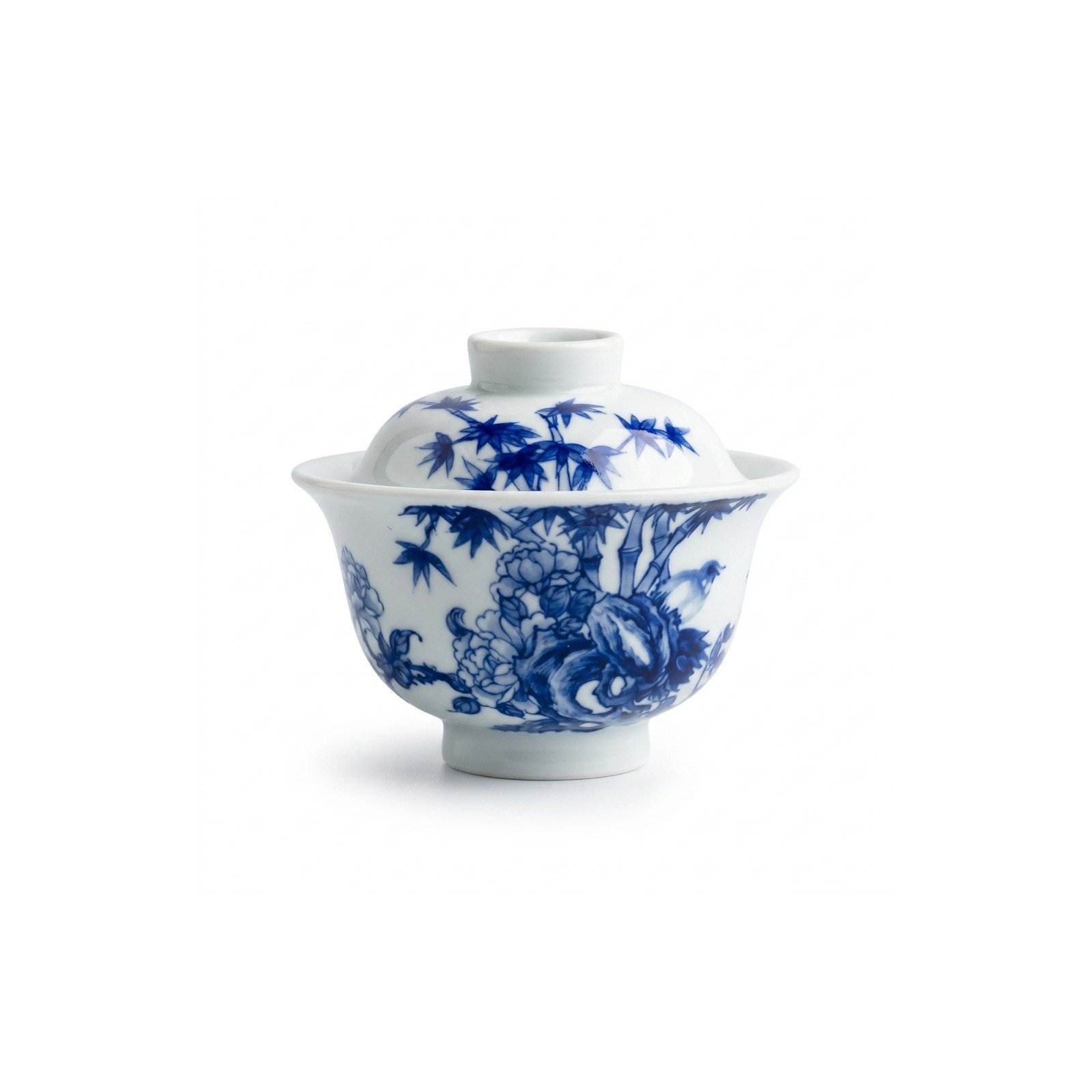
For your first session of gongfu tea brewing, give yourself one manageable job: brew a small amount of tea, pour it comfortably, and decide what you would change in the next cup.
Gongfu brewing uses a relatively high proportion of leaf to water and repeated short infusions. A gaiwan is a covered bowl that lets you brew the leaves and strain them with its lid. Once the pouring motion feels familiar, you can pay more attention to the tea.
This guide is for a quiet session at home, with room to practice before anyone is waiting for a drink.
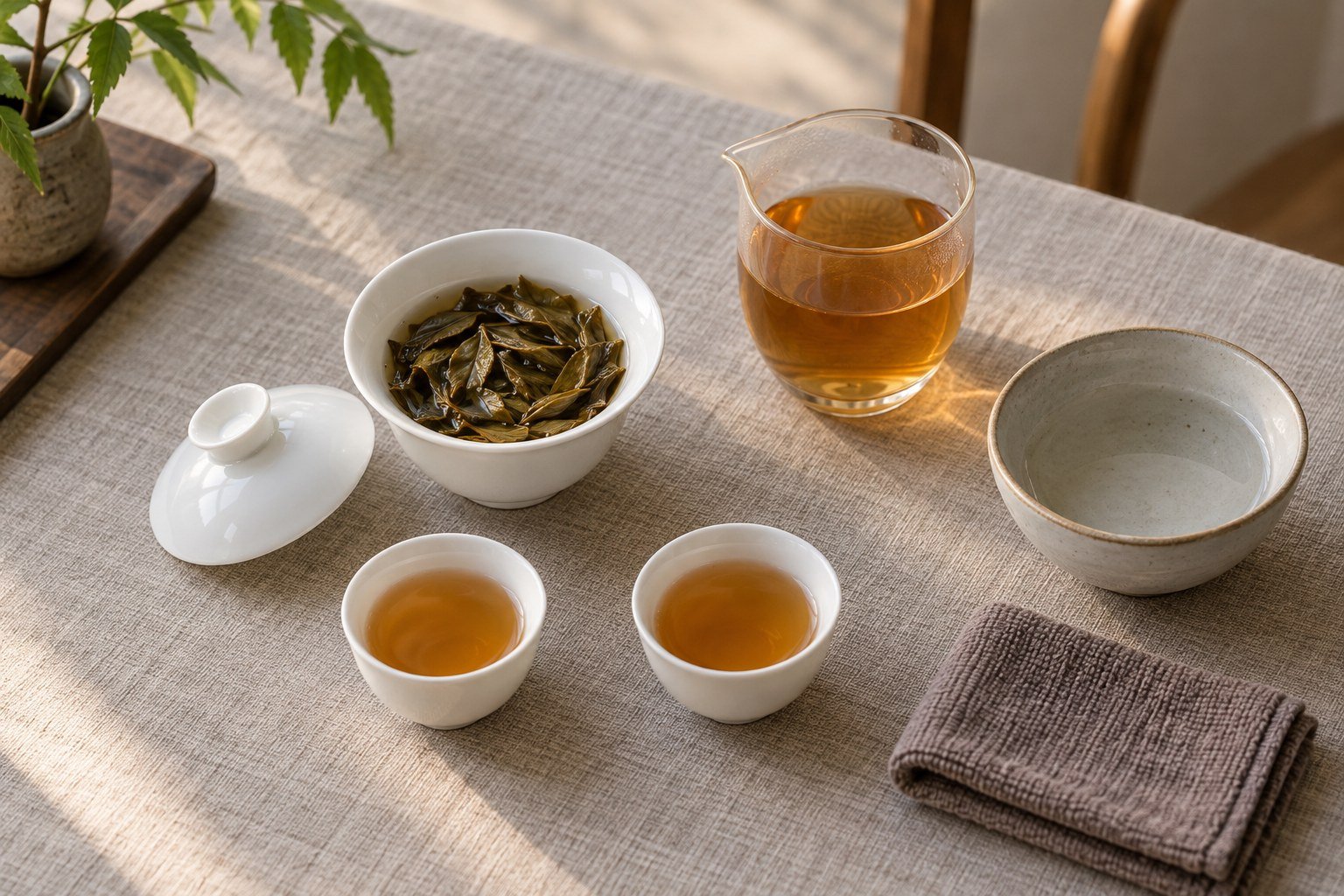
Set up a small, dry tea table
Clear a stable surface and put your kettle where its cable cannot catch your arm. Set out a clean gaiwan, a heat-safe serving pitcher large enough for the whole infusion, drinking cups, a bowl for discarded water, and a cloth for drips. Keep the route from gaiwan to pitcher short and unobstructed.
A kitchen scale and timer help you repeat a brew you enjoy. Put them within reach before heating the water. A phone timer works, but move the phone away from the pouring area.
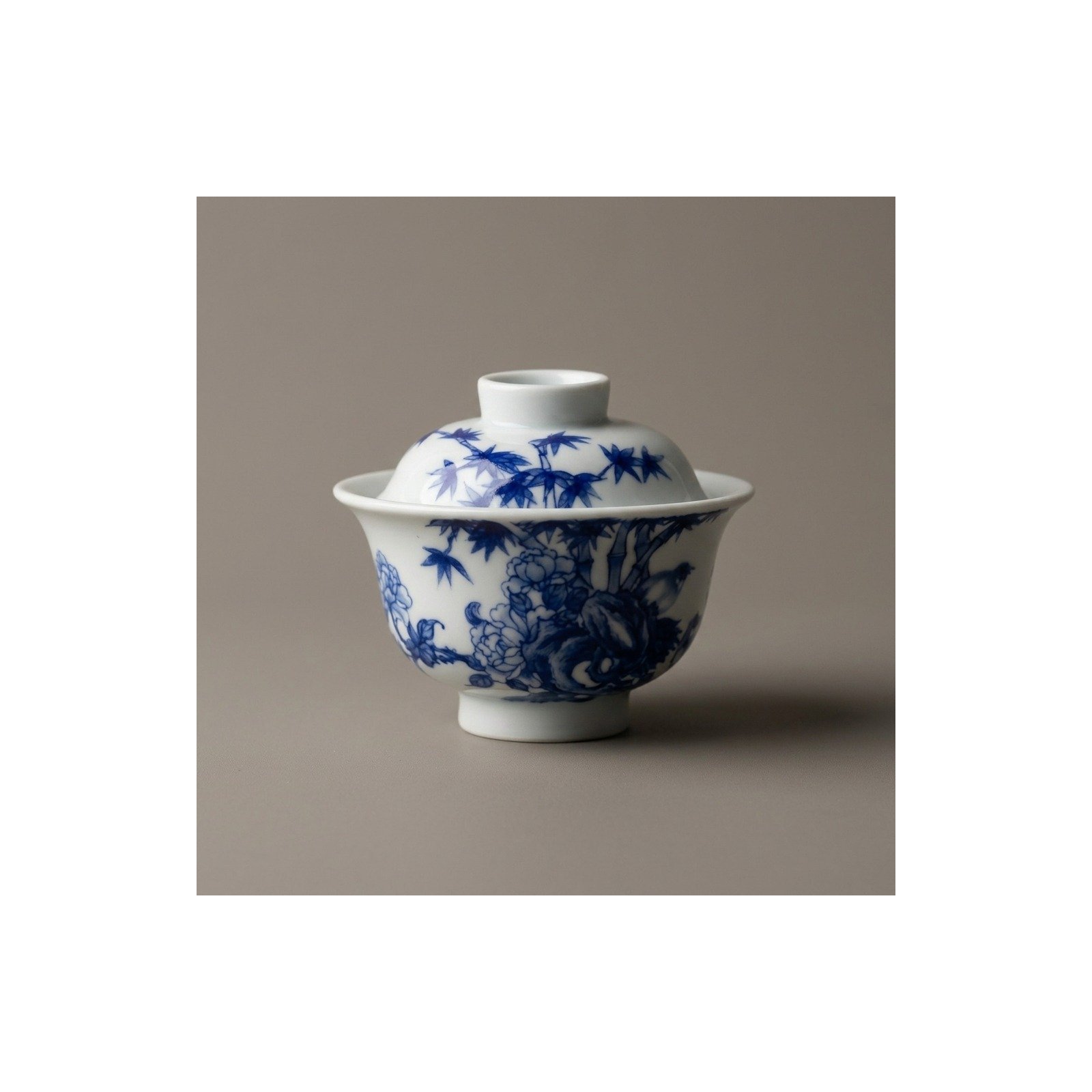
Aurioo’s Blue White Bamboo Gaiwan has an approximate capacity of 150 mL and includes the bowl and lid. A saucer is not included. Place it on a suitable heat-resistant surface.
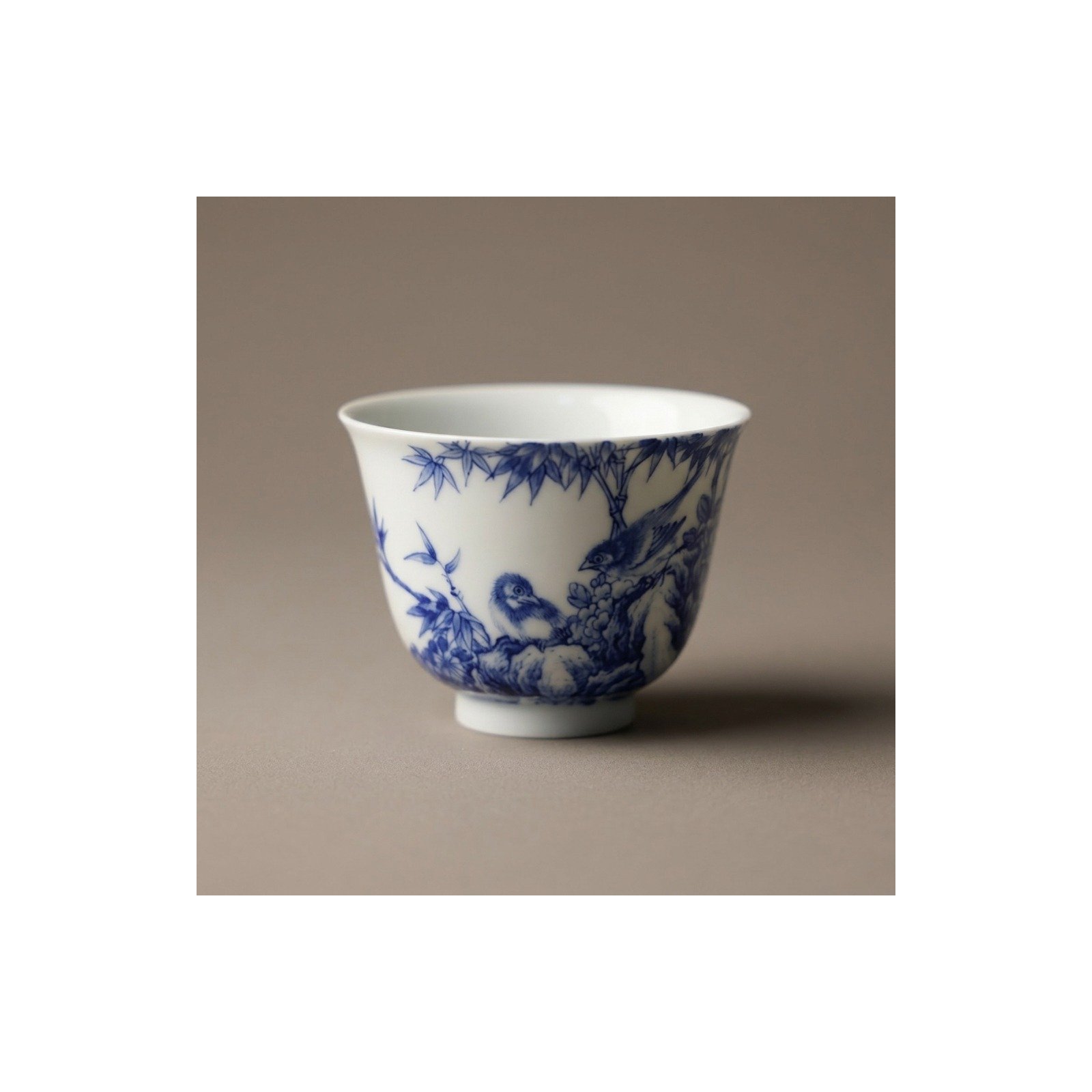
For serving, the Blue White Floral Tall Tea Cup holds approximately 60 mL. Treat those figures as vessel capacities, not a promise of how many full cups each brew will produce: leaves occupy space, and you need room below the gaiwan’s rim.
If you are still choosing the pieces, our Chinese tea set guide explains the broader setup.
Learn the pour before adding heat
Start with cool water over a sink. Fill below the rim, rest your index finger on the lid knob, and hold opposite sides of the flared rim with your thumb and middle finger. Move the lid slightly to leave a pouring gap. Tilt toward your receiving vessel and keep the lid secure.
Tea Chapter’s gaiwan guide recommends this grip and practicing with cool water. Keep your fingers away from the bowl’s body and the stream. The rim and knob can still become hot; stop if the grip feels uncomfortable.
Repeat until you can lift, pour, and set the bowl down without changing your grip halfway through. Check that the receiving vessel holds the entire pour. If the bowl feels too wide or unstable in your hand, choose a smaller gaiwan or a handled brewing vessel before trying hot water.
Start with the instructions for your tea
Choose a tea whose seller supplies gongfu brewing directions. Read the leaf weight, water quantity, temperature, and first infusion time together. A recipe intended for a large mug is a different starting point from a recipe for a small gaiwan.
Weigh the leaves when possible. Rolled and loosely twisted leaves take up different amounts of space, so judging by a spoonful can be misleading. Red Blossom Tea Company’s brewing guide explains how leaf-to-water ratio, temperature, and infusion time affect the cup.
Use the temperature recommended for the specific tea. A gaiwan does not make boiling water suitable for every leaf. Follow any tea-specific rinse instruction, too; rinsing is not a compulsory first step for every tea.
Write your starting recipe down before brewing. Leave space beside it for one plain observation, such as “too strong” or “would like a fuller cup.” You can add more detail later.
Make the first infusion
Warm your gaiwan with water appropriate for the vessel, then empty it into the discard bowl. Add the measured leaves. Prepare the tea according to its rinse instructions, if any, before starting the drinking infusion.
Add water to your chosen fill level, replace the lid, and time the steep according to the tea’s directions. When it is ready, pour into the serving pitcher using the motion you practiced. Drain the infusion rather than leaving a pool around the leaves.
The pitcher gives you somewhere to collect the whole brew before dividing it among cups. This is especially helpful when learning: you can finish the gaiwan pour first, then concentrate on serving. Teasenz’s gongfu guide also explains the pitcher’s role in sharing an infusion evenly.
Let the tea cool to a comfortable drinking temperature before tasting.
Make the next cup more useful
Ask whether you want the next infusion lighter, fuller, or much the same. Change one setting at a time so you can follow the effect. A shorter infusion is a useful first adjustment when the tea tastes too bitter; a modestly longer one can help when it tastes weak. MoriMa Tea’s brewing guide discusses these adjustments and the importance of emptying the brewing vessel.
| What happened? | What to try |
|---|---|
| The cup tastes too bitter | Shorten the next infusion before changing other settings. |
| The cup tastes thin | Increase the infusion time a little and taste again. |
| Your notes no longer match the brew | Record the current settings before making another adjustment. |
| You feel rushed between pours | Move serving tasks after the full infusion is in the pitcher. |
Write down the change beside your tasting note. “Shorter steep, preferred this cup” is enough to make the next session easier to plan. Stop when you have had enough tea; there is no need to reach a particular number of rounds.
Put the pieces away dry
Let the teaware cool enough to handle, remove the spent leaves, and follow each piece’s care instructions. For the bamboo gaiwan and floral cups shown here, Aurioo recommends gentle hand rinsing and drying fully before storage. Set the lid separately while the bowl dries.
Leave your brewing note with the tea packet. Next time, begin with the settings you preferred.
Questions before your first session
Can I use a teapot instead?
Yes. A small handled teapot is an alternative if you prefer pouring through a spout. Aurioo’s Sword Kiln Blue Landscape Round Teapot has a listed capacity of 160 mL. Check its comfortable working fill rather than assuming it will hold the same water quantity as your gaiwan.
Do I need a matching set?
You can choose the pieces separately. Check the brewing vessel, pitcher capacity, and cup sizes together, then arrange them for a comfortable pour. Matching decoration can come later.