

6 US fluid ounces equals ¾ of a US customary cup, or about 177 mL. If you are looking at a tea cup described as “6 oz,” that is the volume to picture. It does not mean the cup will hold six ordinary cups of tea.
The arithmetic is quick: 6 ÷ 8 = 0.75. Choosing tea ware takes one more step, because the capacity on a product page and the amount you comfortably pour can differ. A 180 mL gaiwan, a small tasting cup, and a larger handled cup each put that same six-ounce serving into a different context.
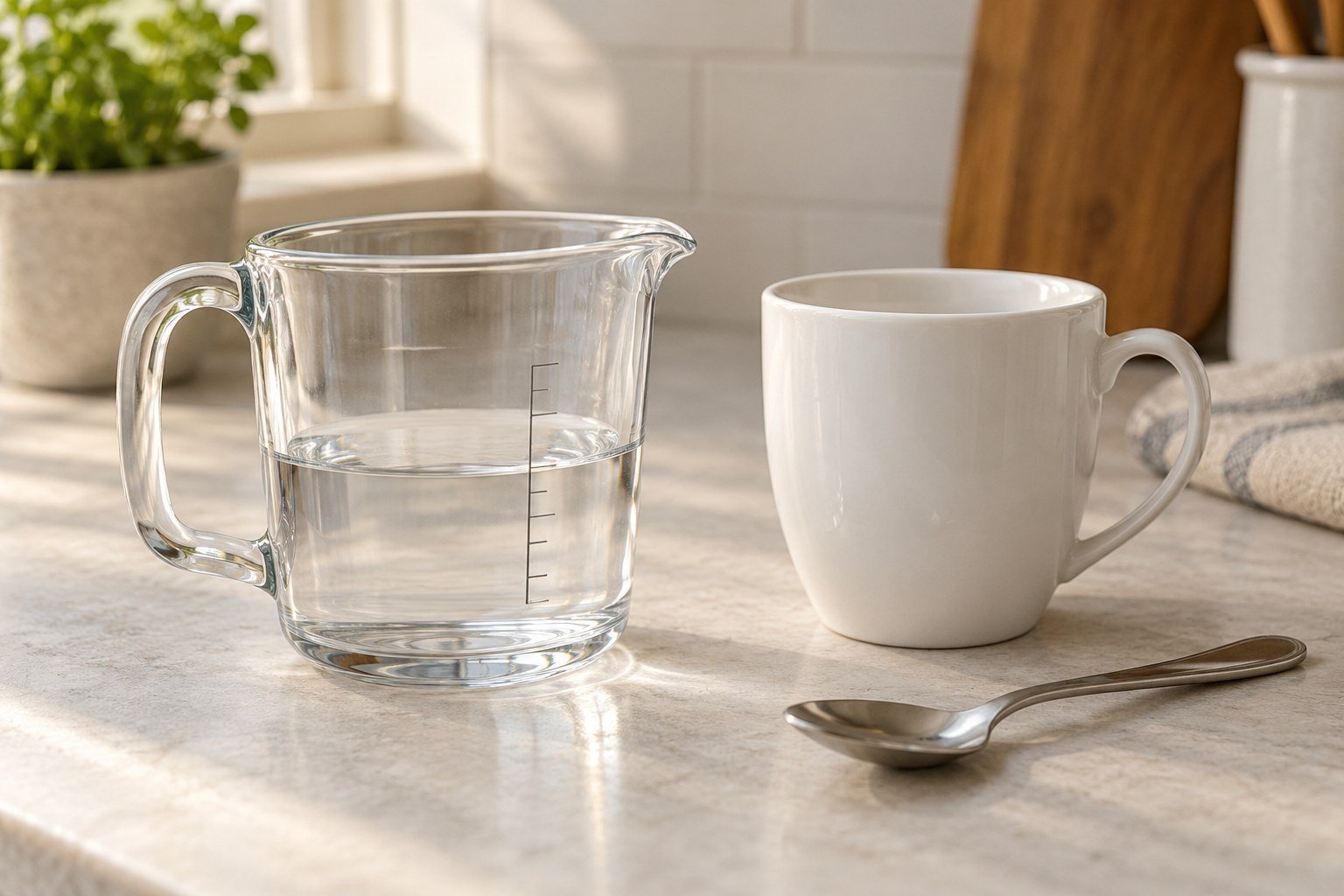
Start with the measuring cup, then look at your tea cup
A US customary measuring cup holds 8 US fluid ounces. Using the US fluid-ounce conversion, six fluid ounces is approximately 177.44 mL. These definitions and the fluid-ounce conversion factor appear in NIST’s guide to SI conversion factors, on printed page 10.
For everyday tea making, about 177 mL is a useful rounded figure. A vessel listed at 180 mL is close, although those numbers are not identical.
Check the markings on your measuring jug before using its cup scale. A 250 mL metric cup differs from a US customary cup. When a recipe and your tea ware use different cup conventions, measure in milliliters to keep the comparison clear.
Also check whether “oz” describes liquid volume or weight. Six ounces of dry tea leaves is a weight; it cannot be converted to ¾ cup using this calculation. Look for “fl oz” when comparing how much liquid a vessel holds.
What six ounces looks like in Aurioo tea ware
The table below uses capacities listed on Aurioo’s product pages. Fluid-ounce figures are calculated and rounded to two decimal places. They describe the listed volume, rather than a measured serving from an individual piece.
| Aurioo piece | Listed capacity | Approximate US fl oz | How it compares with 6 fl oz |
|---|---|---|---|
| Blue White Floral Tall tea cup | Approx. 60 mL | 2.03 | About one-third of the volume |
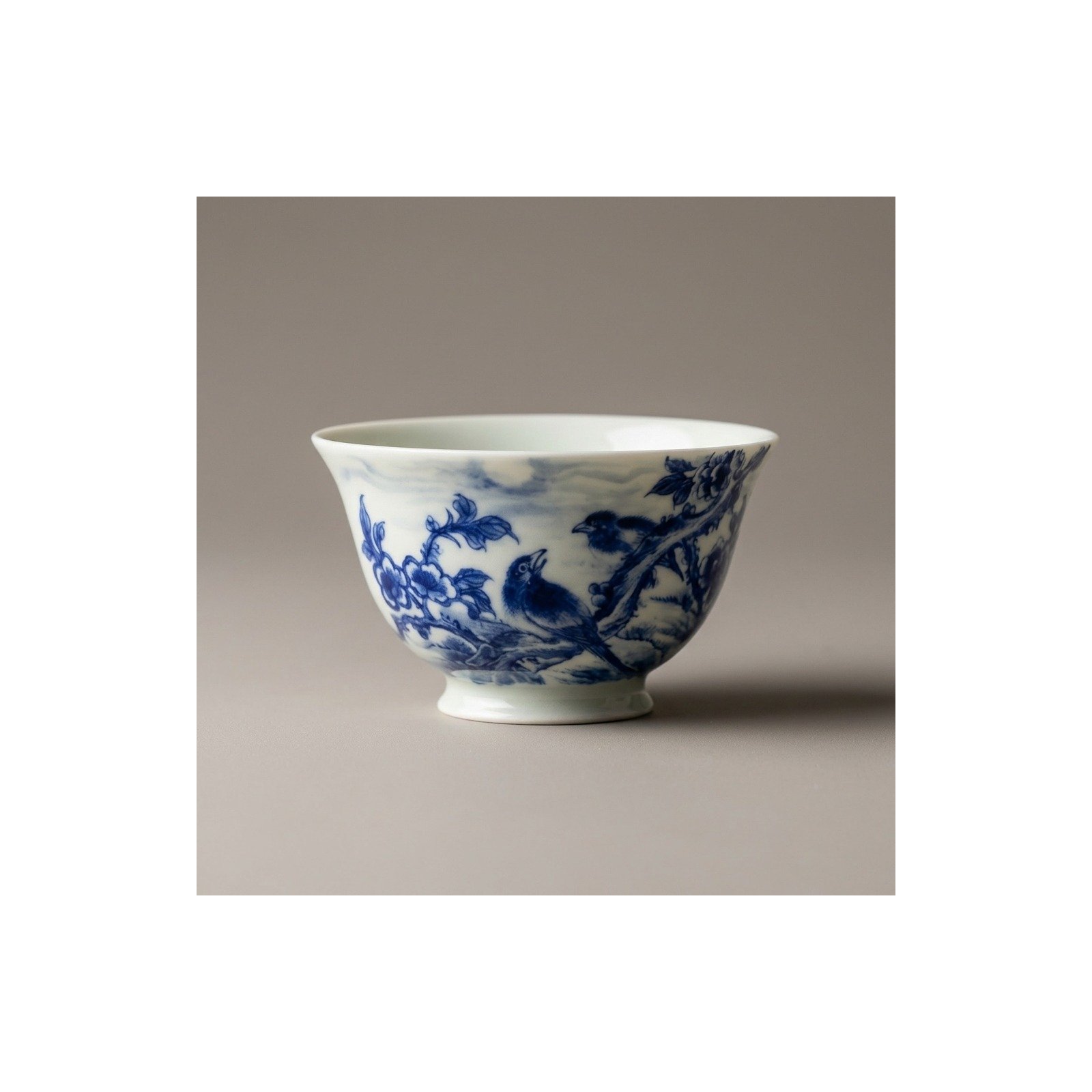
| Blue White Floral Bowl tea cup | Approx. 120 mL | 4.06 | About two-thirds of the volume |
| Osmanthus Floral Relief gaiwan | 180 mL | 6.09 | Close to the same volume |
| Linglong Floral Heart cup | 350 mL | 11.83 | Almost twice the volume |
Aurioo’s Blue White Floral Tall tea cup is listed at approximately 60 mL. It gives you a concrete small-cup reference when a brewing instruction mentions a six-ounce serving. The listed capacity is roughly a third of that amount, before allowing room below the rim.
The Blue White Floral Bowl tea cup is listed at approximately 120 mL. Its stated capacity is double the tall cup’s, even though both belong to the blue-and-white floral range. Names and photographs can make that difference easy to miss; the capacity line is worth checking.
For a brewing vessel close to six ounces, the Osmanthus Floral Relief gaiwan has a listed capacity of 180 mL. That figure helps you compare its size, but it does not promise a 180 mL finished pour once tea leaves are inside.
At the larger end, the Linglong Floral Heart cup and saucer has a listed cup capacity of 350 mL. A six-ounce portion would occupy roughly half its stated volume. If you want room around that serving, this is a useful size reference. You do not have to fill a larger cup to its listed capacity each time.

Leave room for the way you actually pour
A product listing may give capacity without specifying the fill line used to measure it. Avoid assuming that every seller measures to the same point, or that the number represents a comfortable drinking portion.
For a serving cup, room below the rim matters when you lift it or carry it to the table. For a gaiwan, the lid position and your grip also affect where you stop filling. Tea leaves occupy space inside the vessel, and wet leaves retain some water. The volume you pour out can therefore be smaller than the empty vessel’s capacity.
That is why dividing 180 by 60 does not guarantee three full cups from a 180 mL gaiwan. The arithmetic compares listed capacities. Your actual tea service depends on the brewing fill level and how generously you fill each cup.
Check your usual serving with cool water
You can make a useful comparison before brewing anything:
- Set your clean tea cup on a level surface and fill it with cool water to a comfortable drinking level.
- Pour that water into a graduated measuring jug with markings fine enough for the amount you are measuring.
- Read the volume at eye level and note it as your usual serving.
- Repeat with your brewing vessel at the fill level you intend to use.
For a gaiwan, this empty-vessel check gives you a starting point. Leaves will change the available space during brewing. Use the measurement to understand your setup, without treating it as a guaranteed finished yield.
If your measured cup serving is smaller than you expected, that is useful information. You can plan shorter pours, choose a larger cup, or keep a sharing pitcher nearby. There is no need to make every piece on the table hold the same amount.
Common questions about six-ounce tea servings
Can I measure 6 fl oz without a six-ounce mark?
With US customary measuring cups, combine ½ cup and ¼ cup. Alternatively, use the milliliter scale on a liquid measuring jug and measure about 177 mL. Check which cup convention your measuring equipment uses.
Is a 180 mL gaiwan exactly six ounces?
No. Its listed capacity converts to approximately 6.09 US fluid ounces. It is close enough for a broad size comparison, but the comfortable brewing volume needs a separate check.
Does a six-ounce serving need a six-ounce cup?
Choose a cup that accommodates the serving with room below the rim. If its stated six-ounce capacity is measured right to the top, it may feel too full for carrying or drinking. Compare your preferred fill level with the amount you intend to serve.