

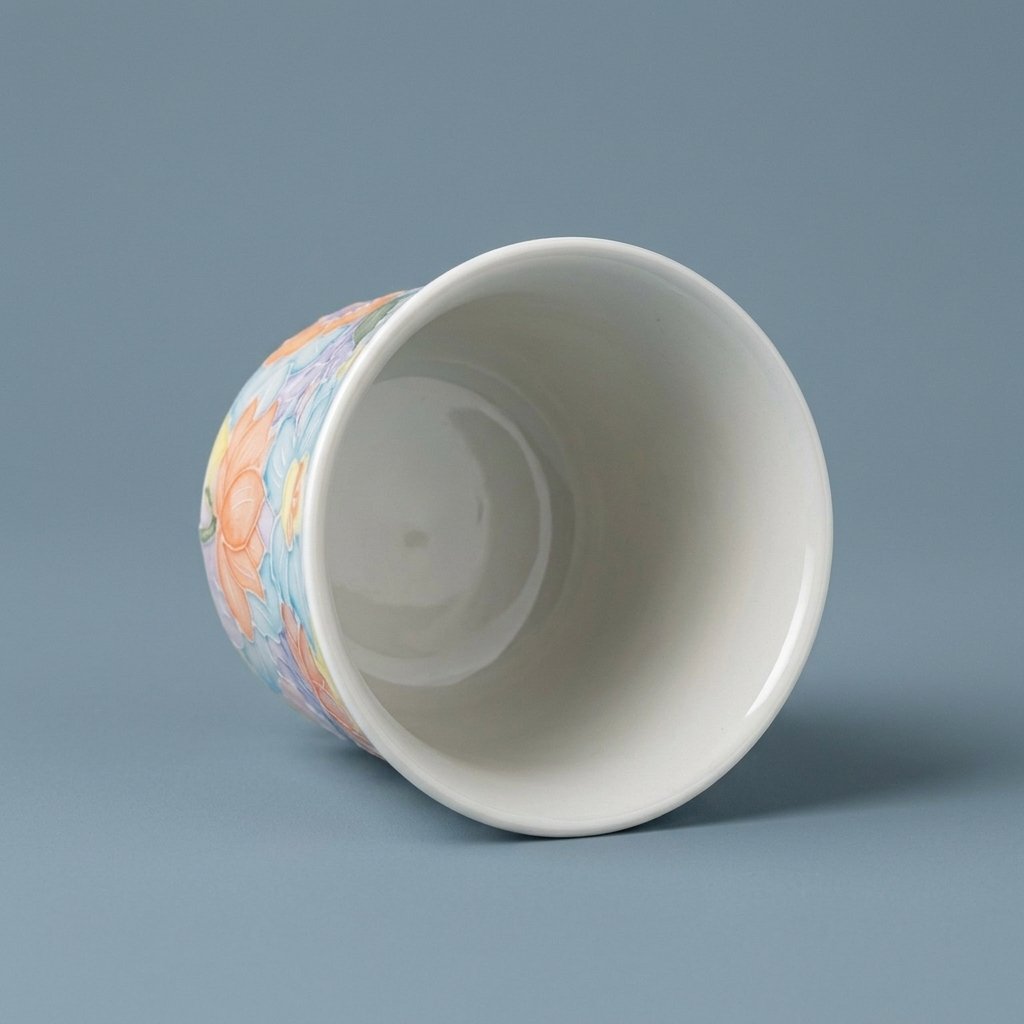
A painted cup can give you a pale background for looking at tea. The part that matters is the inside, where the liquid sits. Aurioo’s Wide and Low porcelain cup listing pairs colorful floral decoration with a light interior, so you can enjoy the painting and still look closely at your brew.
Tea color is one observation to make before taking a sip. To make that observation useful, choose a cup and keep your viewing routine steady. You need a clear view of the liquid, a few simple notes and time to taste it afterward.
Look inside the cup first
Twinings’ tea-tasting guide recommends white crockery to help people see the color and depth of brewed tea. Reading Museum’s account of professional tea tasting also describes white bowls used to appreciate the tea’s color.
For your own table, start by examining the empty interior. On Aurioo’s Fragrance and Flared porcelain cup listing, the floral pattern is concentrated outside the cup. The open-view photograph shows the pale inner surface. That contrast is useful when you want a decorated piece that also gives the tea a light background.
These are everyday drinking cups. Choose the shape you enjoy handling, then use it consistently for your observations. The Fragrance and Flared listing offers separate shapes; check the selected option rather than assuming every picture is included in one order.
Keep one cup and one place for your notes
Choose a comfortably lit place where you can look down into the resting cup. Keep it away from a strong reflection that hides the surface. Use the same spot for later observations, rather than moving between a window and a different lamp.
Prepare the tea according to its own directions, then separate the finished infusion from the leaves. Pour a modest amount into your chosen cup and note the serving level. For later rounds, return to that cup and a similar level.
The Wide and Low listing has an approximately 80 mL Wide Cup and a 120 mL Low Bowl Cup. Those figures describe capacity, not a required tasting portion. Equal amounts in different shapes need not form the same depth of liquid. Keep one shape for your notes instead of treating the two options as interchangeable measuring vessels.

Write what you can see
Start with ordinary descriptions such as pale yellow, amber or reddish brown. They are possible note words, not promised colors for a particular tea. Add whether you can see small leaf fragments or a clear area of liquid.
| What to record | Keep this consistent | A useful note |
|---|---|---|
| Cup | The same selected shape and interior | Wide Cup, rather than switching to Low Bowl |
| Pour | A similar serving level below the rim | First infusion, usual small pour |
| Viewing place | Lighting and where the cup rests | Same place beside the window |
| Appearance | Describe before adding anything | Amber; a few fragments at the bottom |
Record the tea name and infusion round beside the description. If you change the preparation, write that down too. A photograph can accompany the note, but read the cup in front of you before relying on a screen image.
Leave room for aroma and taste
The painted exterior and pale interior serve different parts of the experience. You can admire the floral surface while the cup is empty, then look into it once the tea is poured. Let the cup and drink reach a comfortable temperature before lifting and sipping.
Color does not tell you everything about a tea. Follow the observation with aroma, flavor and how the drink feels in your mouth. For a separate exercise centered on those qualities, Aurioo’s two-tea tasting with a matched cup pair uses dark Jizhou cups. If temperature is your question, the wide-and-tall cup cooling comparison keeps that exercise separate from reading color.

Frequently asked questions
Must the whole tea cup be white?
The inner surface supplies the background beneath the tea. An exterior floral pattern can remain part of the design while a pale inside helps you observe the liquid.
Can I fill the Wide and Low Bowl cups equally to compare color?
For a consistent observation, use one selected shape and a similar serving level. Equal volumes in cups with different proportions do not guarantee equal liquid depth.
Does a darker infusion mean a better tea?
A darker appearance alone does not establish quality or what you will enjoy drinking. Note the tea and its preparation, then consider its aroma and taste as well.