
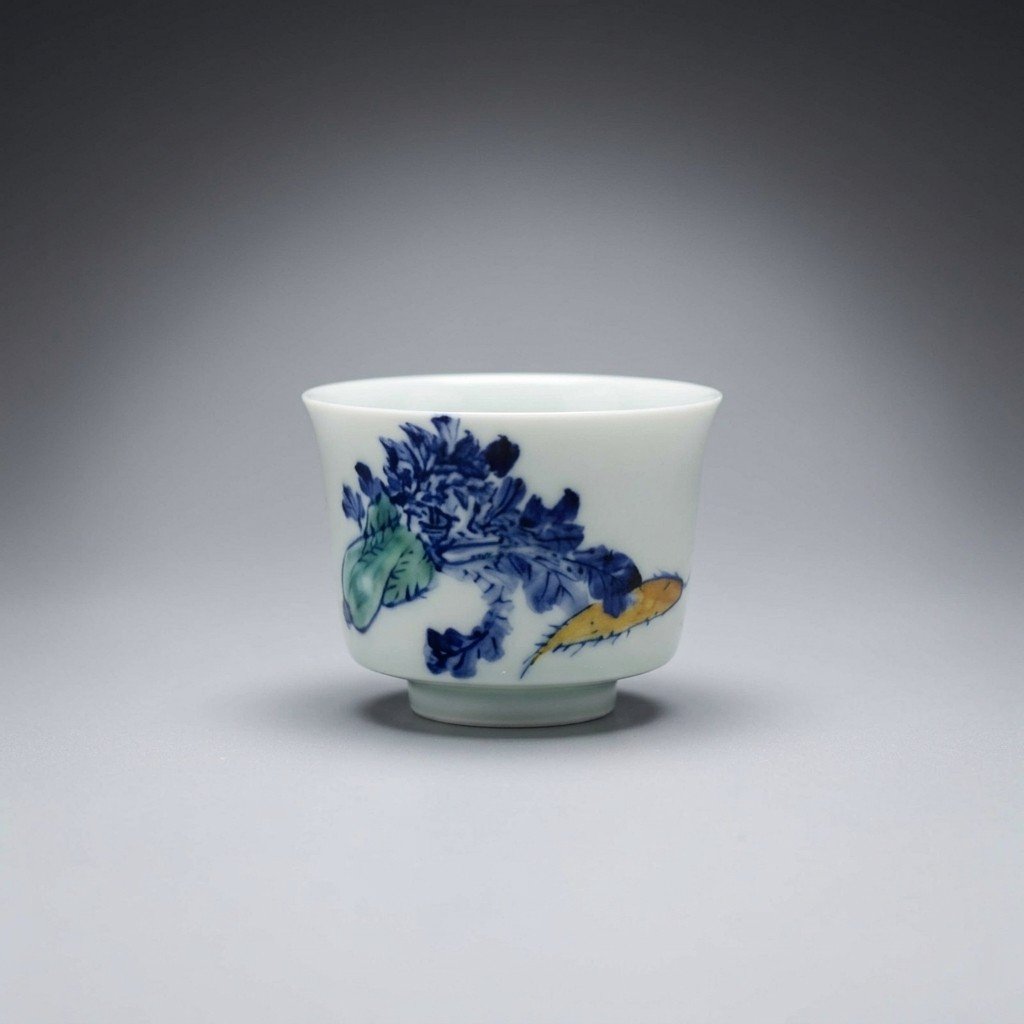
Blue leafy forms spread across Aurioo's Vegetable Motif porcelain tea cup, alongside green areas and elongated ochre shapes. The subject feels close to ordinary life: familiar produce translated into a small painted object you can use for tea.
The catalogue calls the decoration Vegetable Motif. That broad name is a useful starting point. You can follow leaves, stems and rounded forms without deciding that every plant must carry a particular symbolic message.
Ordinary things can be a painting subject
The Museum of Fine Arts Boston's Qi Baishi: Inspiration in Ink presents a historical example of an artist drawing on everyday subjects. Its 2025 exhibition essay describes mundane objects, lively plants and animals, and the contrast between vibrant colour and rich ink tones.
The Hungarian National Gallery's account of Qi Baishi's familiar motifs is more explicit: vegetables and fruit appear alongside flowers and small animals. The ordinary things around the artist could become subjects worth observing closely.
These examples provide context for enjoying vegetables in decorative art. They are not an attribution of the Aurioo cup to Qi Baishi or evidence that it reproduces one of his paintings. The product's own listing identifies its material, making process and hand-painted vegetable subject, without naming a historical artist or model.
Look at the leaf and stem forms before naming the plant
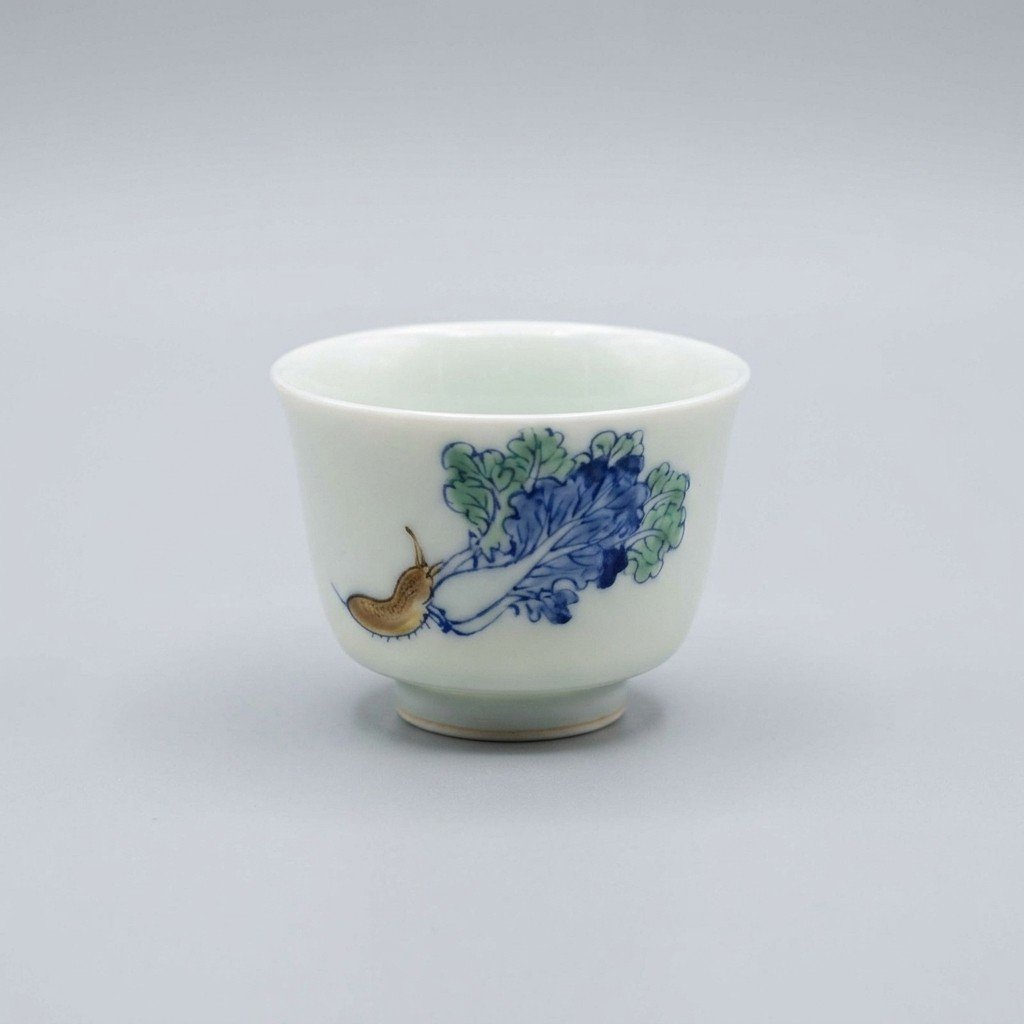
In the front view, a dark blue mass of leaves rises above greener areas and an ochre form extending across the lower part of the cup. The detail view reveals another side of the arrangement, with a smaller brown stem-like curve beneath blue and green marks.
Start by following how those parts connect. Which lines suggest a stem? Where do broad areas gather into something leaf-like? Which shapes extend along the bowl and which turn upward? These are useful things to notice even when the species remains unidentified.
The listing's broad vegetable label leaves room for that uncertainty. A precise cabbage, radish or other identification should not be supplied simply because one form resembles something familiar. Describe the visible forms first, and ask the seller for more specific design information if the exact plant matters to your choice.
| Visible detail | Useful description | What to follow |
|---|---|---|
| Leafy areas | Groups of dark blue marks above greener forms. | How the leafy mass joins the lower shapes. |
| Green areas | Rounded and broader areas beside the blue. | Where their edges meet other marks. |
| Ochre forms | Elongated yellow-brown and curved details. | How they extend along the cup. |
| The complete pattern | Different portions appear in the gallery views. | Connections between leaves, stems and larger forms. |
A small everyday subject can carry a lively drawing
A vegetable painting gives a familiar form the attention you might otherwise give to a flower. Leaf shapes, connecting lines and a few coloured areas can create an image that remains recognisable at the scale of a cup.
The historical museum examples help explain why an ordinary subject can be worth that attention. On the ceramic itself, compare the way the blue foliage sits against pale porcelain with the green and ochre areas lower down. The contrast helps you locate the different forms without turning each colour into a fixed cultural code.
Aurioo's brand story begins with the idea that one small detail can prompt curiosity about a piece. A vegetable motif offers that sort of entry point: a daily object with a subject drawn from daily life.
Separate the painted subject from the making terms
The cup is listed as jade clay porcelain, hand-thrown and hand-painted with underglaze colour. Those descriptions concern the body and how the decoration is applied. Our underglaze and overglaze guide explains the glaze-layer distinction, while the hand-thrown teaware guide addresses forming.
Keep the two questions separate when reading the listing: what is the surface showing, and what does the catalogue actually say about making the cup? The named subject and the stated process each contribute useful information.
Choose it as a drinking cup, with its actual contents
The Vegetable Motif cup has a listed diameter of 8 cm, height of 4.5 cm and capacity of 90 mL. One unit contains one cup. Select One or Value pack(2) according to the quantity you want; a saucer, spoon or other scene accessory is not part of that stated unit.
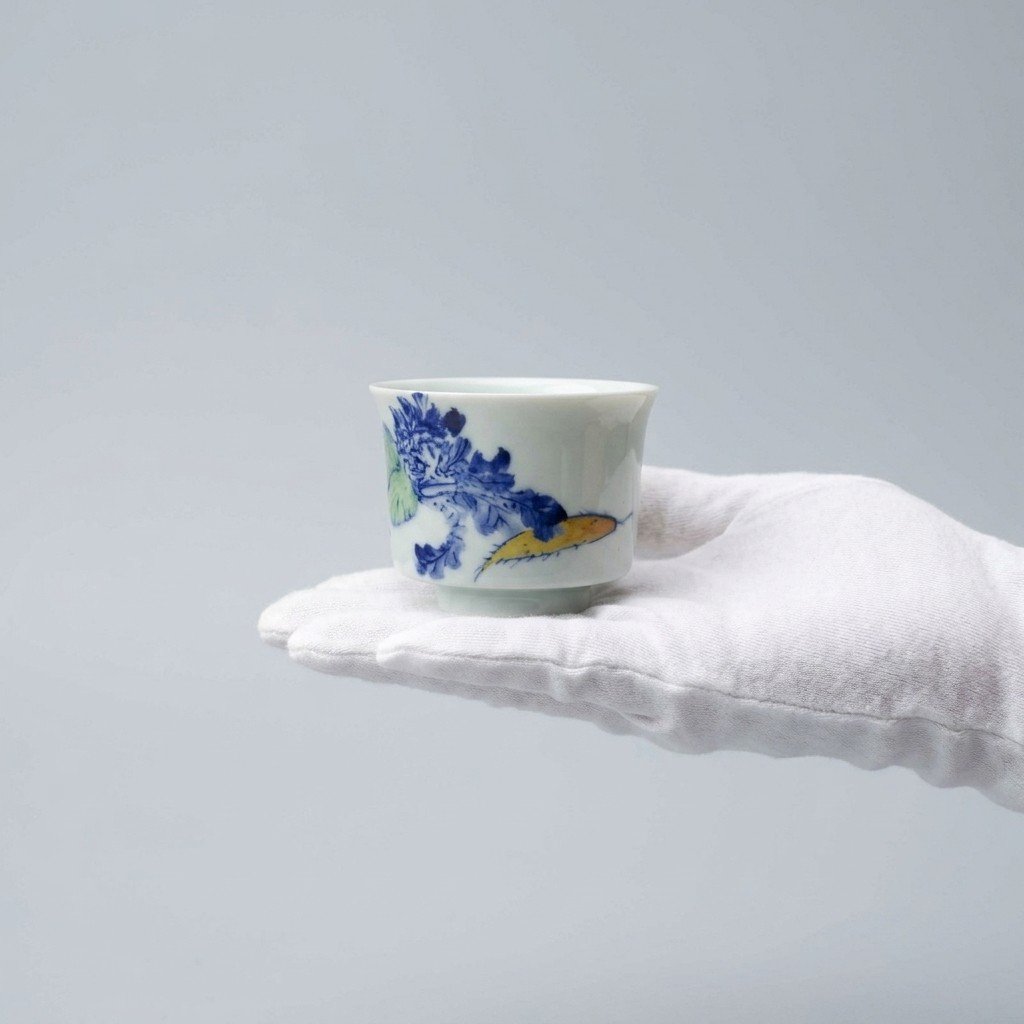
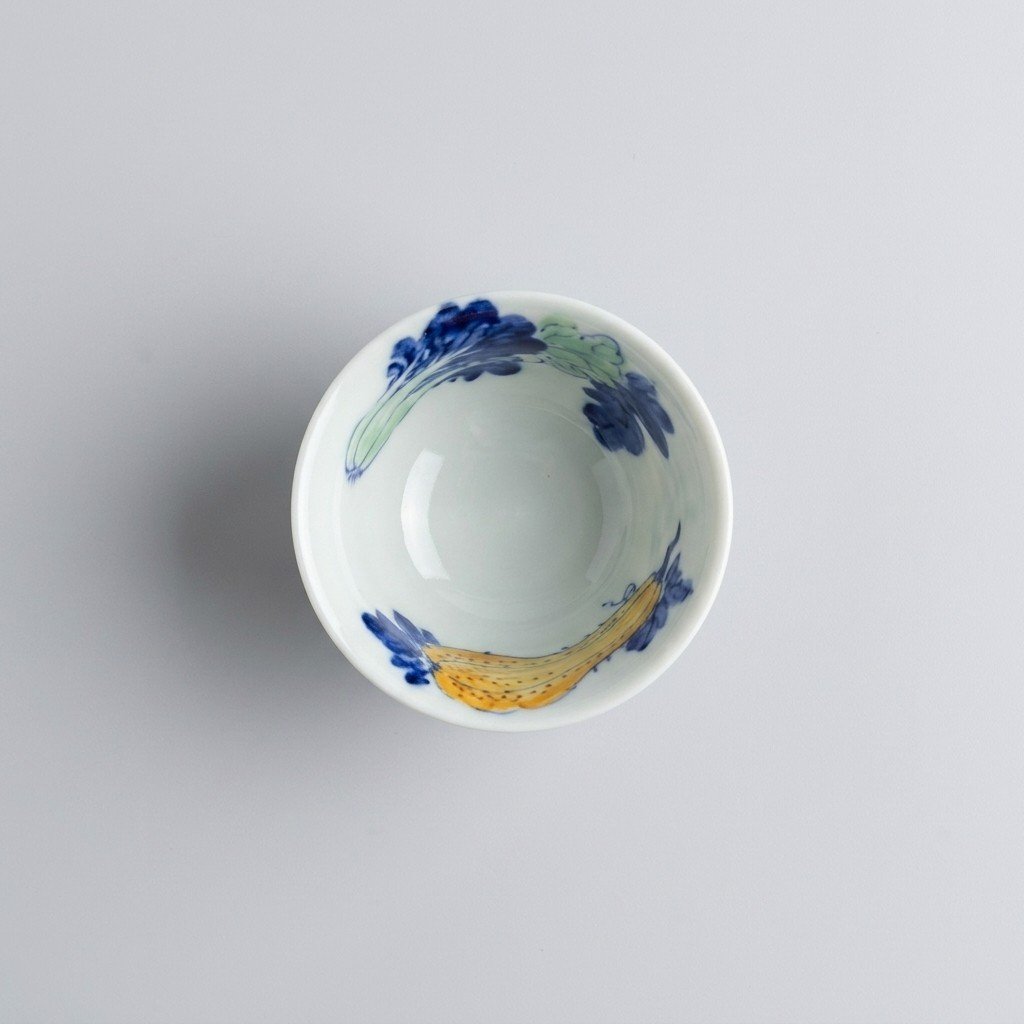
Use it for small pours of prepared tea, with comfortable headroom below the rim. The gallery shows the pattern around the outside and near the opening, so compare the complete views if the placement matters to you. Individual handmade pieces may vary in brush placement, glaze tone and small measurements, as the listing notes.
After use, rinse gently and dry fully. Our hand-painted teaware cleaning guide uses this cup among its examples and gives the fuller routine. Returning to the decoration after the cup is empty is also a chance to notice another leaf or connecting line that was less apparent during the tea session.
Frequently asked questions
Is the vegetable definitely cabbage?
The catalogue identifies a Vegetable Motif but does not name a particular vegetable. The article therefore describes visible leaves, stems and coloured forms without assigning a species or a specific wordplay meaning.
Does this cup reproduce a Qi Baishi painting?
No such attribution appears in the listing. The museum examples show vegetables and everyday subjects within a broader painting context; they do not establish a source painting or artist lineage for this modern cup.
Does one cup come with a saucer?
The stated included piece is one tea cup, with a nominal capacity of 90 mL. A saucer is not listed. Check the selected quantity option and choose any additional serving pieces separately.