
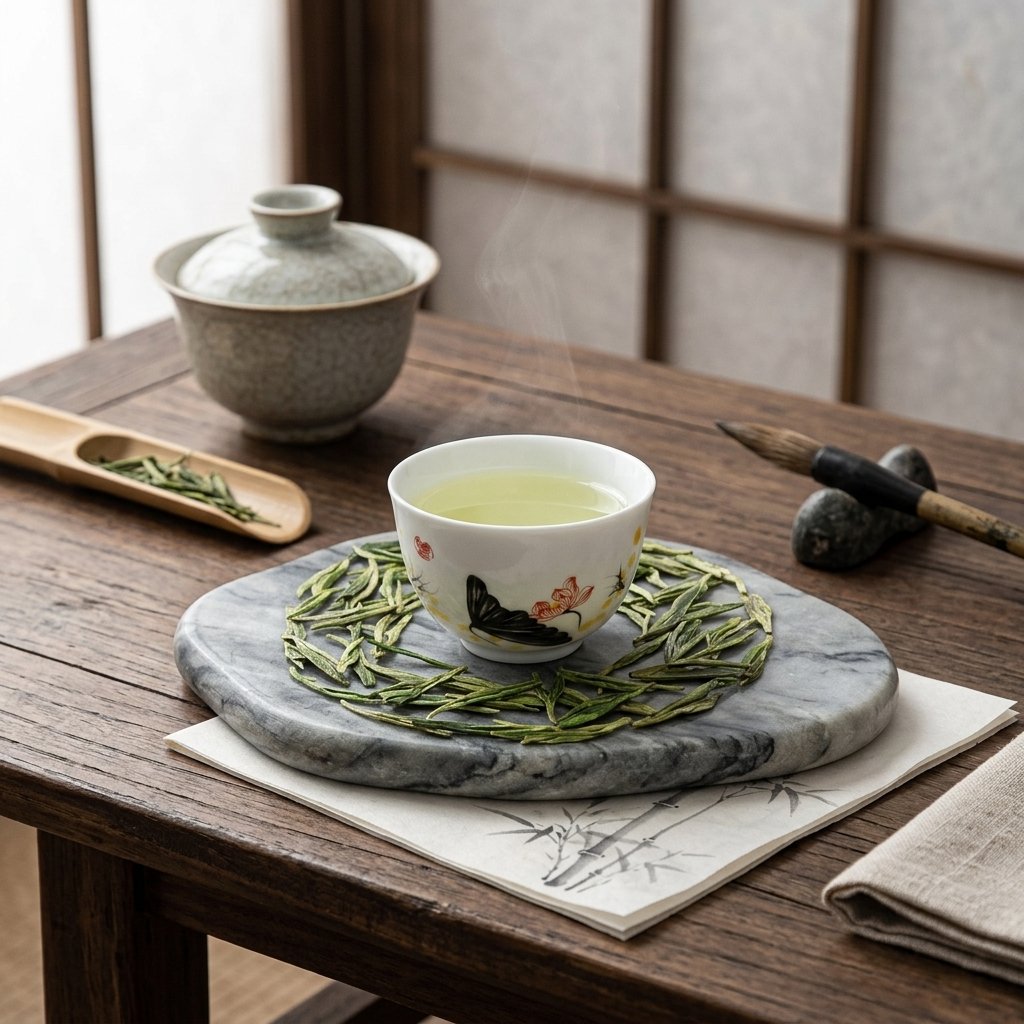
The amount printed on a tea bag tells you its weight. It does not tell you how long that tea will last in your home. A person who drinks Dragon Well each morning has a different purchasing routine from someone who rotates between several teas on weekends.
Before choosing an Aurioo pack, make a short record of the dry leaves you actually use and check what remains. This gives you a purchase estimate based on your habits, without converting every cup of liquid into a new portion of tea.
Record fresh leaves over a representative week
Keep a separate note for each tea. When you prepare a fresh portion of leaves, weigh it and add that weight to the note. Record what you use rather than changing your brewing method to reach a target.
Count the initial dry leaves once. If you make another infusion from them, you have added water, not another portion of dry tea. If you replace the leaves or switch to a different tea, record the fresh portion separately.
The Meimei guide to purchasing loose-leaf tea connects purchase quantity with drinking frequency. That is a useful starting question. A fixed number of cups or days per bag would overlook the way you actually brew and rotate teas.
For the Dragon Well Lung Ching Green Tea, for example, note your own weekly dry-leaf use before deciding between its listed 10 g and 120 g options. You do not need a new universal brewing ratio to make that comparison.

Choose a reasonably typical week. If that week includes a gathering or a long trip, record the difference rather than treating it as your usual consumption. Use a longer observation period if your routine varies substantially.
Subtract the tea already available
Next, choose a planning window that reflects when you expect to order again. Check the dry tea you still have for that particular product. Keep the same unit throughout: grams of dry leaves.
A simple estimate is:
Additional tea needed = weekly dry-leaf use × weeks planned − usable dry tea already on hand.
If the result is below zero, the estimate calls for no additional purchase. Do not subtract a different tea merely because it is in the cupboard; it only belongs in the calculation if you intend to use it in place of the one being planned.
The planning window is your ordering choice. It is not a statement about how long a tea will remain fresh.
Work through an example before choosing a pack
The figures below are illustrative inputs, not measured Aurioo customer behavior or recommended brewing doses. They demonstrate the arithmetic; replace them with your own records.
| Tea being planned | Observed use per week | Weeks planned | Dry tea on hand | Estimated additional need |
|---|---|---|---|---|
| Dragon Well | 14 g | 2 | 20 g | 14 × 2 − 20 = 8 g |
| Jin Jun Mei | 10 g | 3 | 10 g | 10 × 3 − 10 = 20 g |
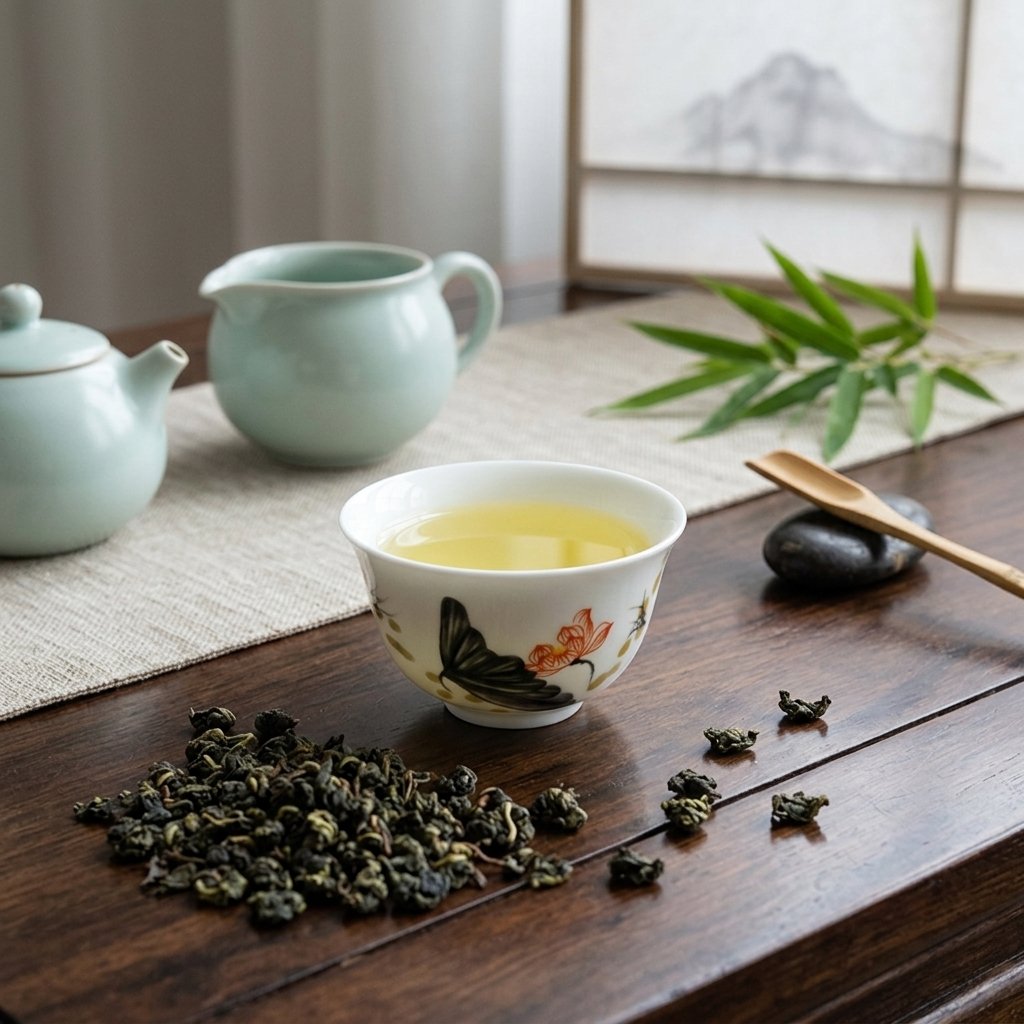
| Tie Guan Yin | 18 g | 4 | 12 g | 18 × 4 − 12 = 60 g |
In the first example, an additional 10 g would cover the calculated 8 g estimate. That conclusion belongs to the stated inputs. It does not mean a 10 g pack will last every tea drinker two weeks.
For the Golden Bud Jin Jun Mei Tea, the second example produces a 20 g requirement. The listing offers 10 g and 150 g options, so the calculated amount does not match a single listed pack exactly. Compare the quantity you plan to order with the tea already available before choosing a much larger amount.
Compare the estimate with actual Aurioo options
These three listings currently use different larger-pack weights. Read the selected option rather than treating “larger pack” as one standard size.
| Current Aurioo tea | Listed net-weight options |
|---|---|
| Dragon Well Lung Ching Green Tea | 10 g or 120 g |
| Golden Bud Jin Jun Mei Tea | 10 g or 150 g |
| Tie Guan Yin Tea | 10 g or 180 g |
The Tie Guan Yin Tea example needs another 60 g for its chosen window. Its 180 g option exceeds that estimate. A longer planning window might justify more tea if it reflects the buyer’s actual routine; the pack size itself is not a reason to extend the forecast.
If comparing costs, use the current prices and selected quantities at checkout. Weight alone cannot establish that the larger option is cheaper per gram.
Update the record when your habits change
Revisit the estimate when you start rotating another tea into the week, share more tea with visitors or change how often you prepare a fresh portion. Use the remaining stock and the revised routine, rather than repeating the previous order automatically.
For brewing quantities, see our loose-leaf tea per cup guide. For storage, use the opened-tea storage guide. Purchase planning uses those habits as inputs; it does not determine a brewing dose or an expiry date.
FAQ
Should I count every refill as another serving of dry tea?
Count fresh leaves when you add them. Another infusion from the same leaves adds water but does not consume another dry-leaf portion. Record replacement leaves separately.
Does the larger pack automatically cost less per gram?
No. Check the current price of the selected option and the quantity being ordered. This guide compares weights and estimated use, not a verified price advantage.
Will the planning formula tell me a tea’s shelf life?
No. It estimates how much you expect to use in a chosen ordering window. Follow the product’s information and suitable storage guidance separately; the calculation cannot guarantee freshness.