
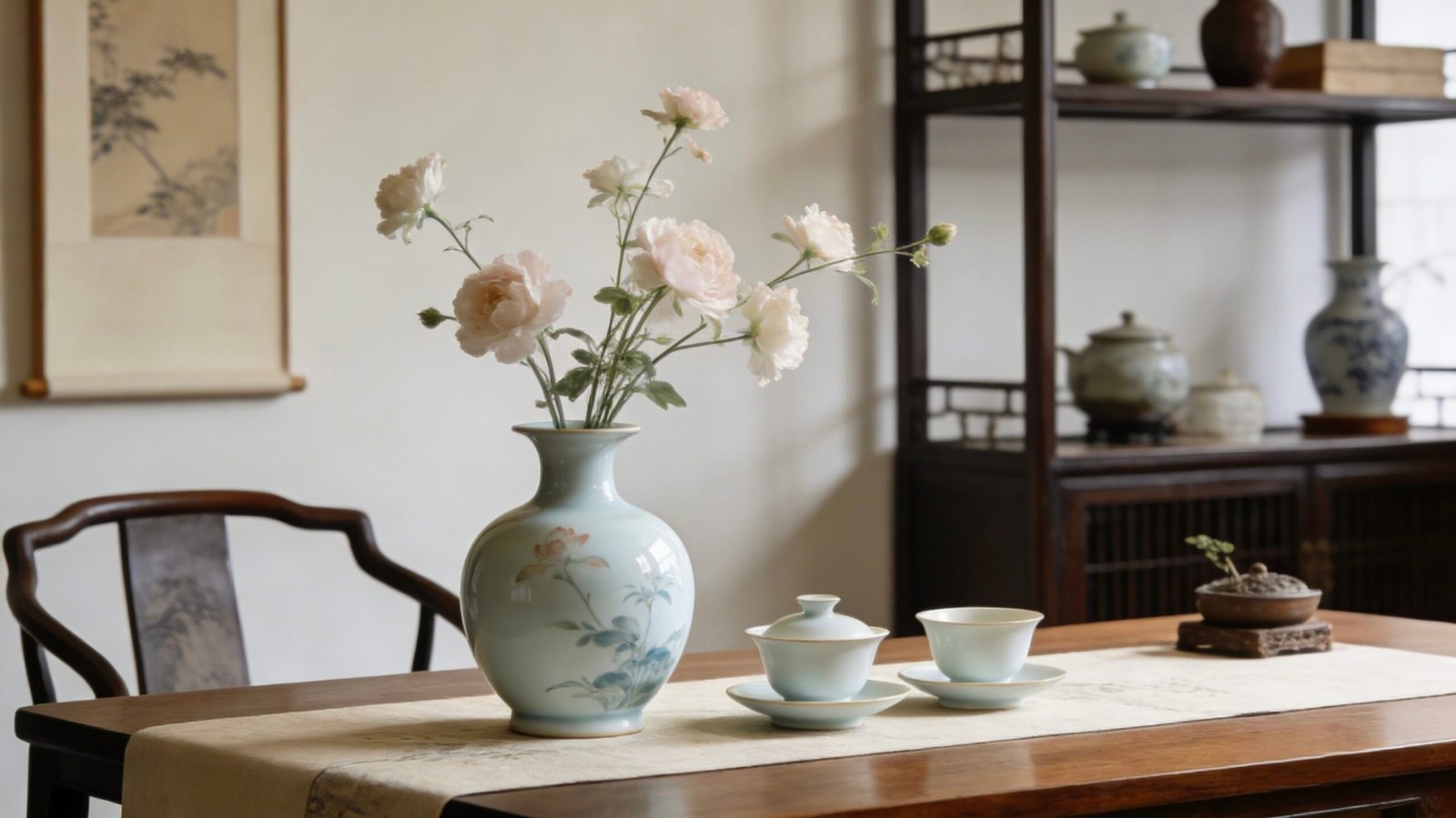
Porcelain has been enchanting the world for centuries with its smooth texture and ethereal beauty. This timeless material is used to decorate tables, decorate spaces and stand as a sign of craftsmanship from ancient Chinese dynasties up until modern homes. But for curious minds, one question remains: How is porcelain made. Let’s explore the secret behind porcelain.
Porcelain: A brief history of its origins and raw material evolution
Porcelain dates back over 2,000-years to ancient China, in 25 CE. Chinese porcelain was lighter, denser and more durable than the porous, heavy ceramic pottery that dominated the time. The rise of Chinese porcelain was not only due to its skilled craftsmanship, but also to the mastery of the raw materials. The formula for porcelain has evolved over the centuries, but its basic components have remained consistent. While porcelain spread across the globe, its uniqueness remained rooted in the original blend of ingredients. When we ask today “what is made of porcelain,” we are connecting with a material innovation legacy that spans centuries.
What are the main ingredients of true porcelain?
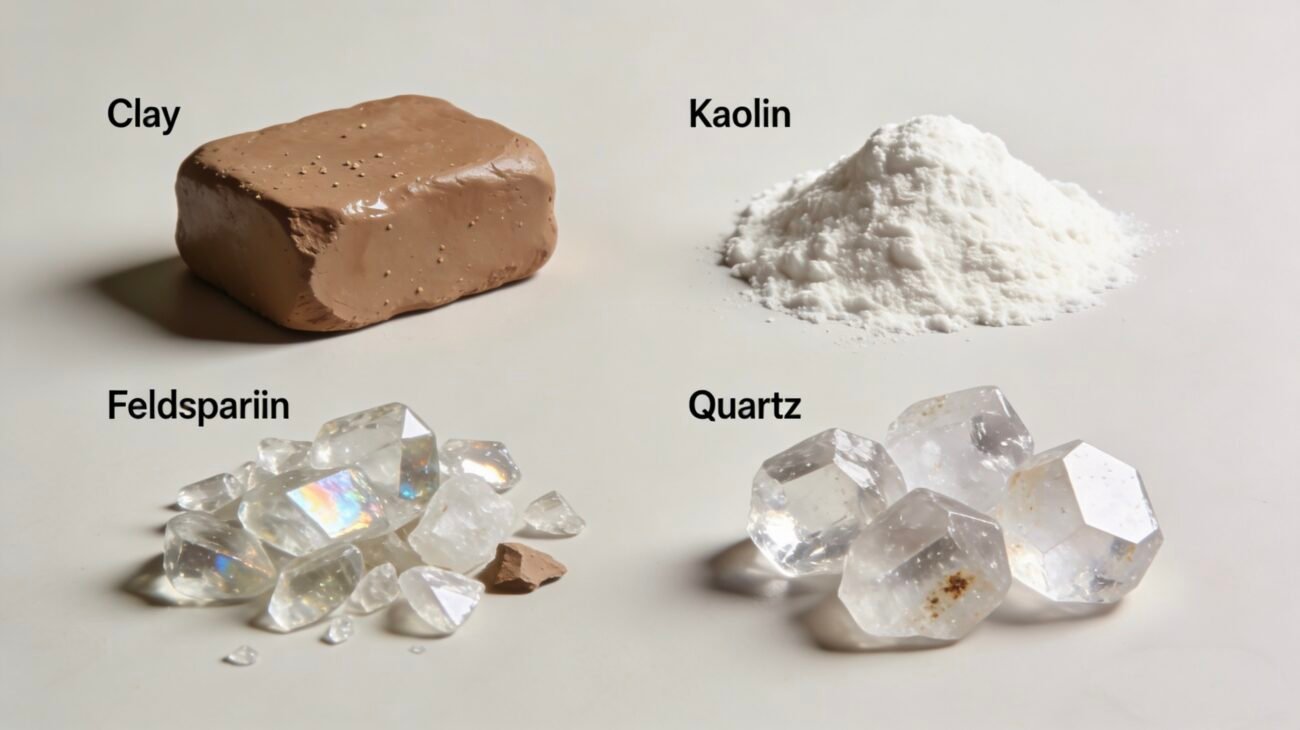
The final shape of porcelain is not a result of a single ingredient. It’s the harmonious combination four ingredients that each play a key role. We’ll break down the components that make up porcelain to answer the question: “What is porcelain made from”
1. Clay: The Foundation
The backbone of all ceramics is clay, but any dirt won’t do. Porcelain Clay is a special soil that has a unique mineral makeup, which was formed by years of weathering and erosion. What is its superpower? Unmatched plasticity. Before firing, potters can mold the clay into complex shapes. This material is the foundation of porcelain.
2. Kaolin, the “White Gold” Porcelain
Kaolin is a white, rare clay that gives porcelain its signature smoothness and brightness. This ingredient, also known as “china-clay,” is highly prized because of its high purity and low impurity levels. Kaolin not only gives porcelain its luminous base but also increases density and reduces the porosity, which are key traits for porcelain to be non-absorbent. Kaolin also gives porcelain its famous lightness, and a subtle translucency that sets it apart from heavier ceramics. Kaolin can be used as a coating for paper to give it a glossy look. But its most famous role is answering the question “what is porcelain?” with its irreplaceable textures.
3. Feldspar: Strengthening Agent
Feldspar, which makes up 60% of all rock on Earth, is a mineral that gives porcelain its strength. When feldspar is fired at high temperature, it melts to form a glassy emulsion that bonds the other ingredients, creating a rigid and durable structure. The enamel layer acts as a shield to protect porcelain from scratches, chips and other imperfections. No wonder feldspar has become a mainstay in the glass industry. Its ability to smooth and reinforce surfaces is unmatched.
4. Quartz: the Fusion Catalyst
The final ingredient in porcelain is quartz, another mineral that is ubiquitous. Flint, a dense, hard variety of quartz, is used by porcelain artisans. The unique melting point of flint is crucial: during the firing process, it fuses all other ingredients together into a cohesive and rock-solid product. Quartz increases durability and ensures porcelain can withstand high temperatures, daily use, and time. Quartz is used in everything from jewelry to countertops. In porcelain, it acts as the glue.
Porcelain Magic: The science of mixing ingredients
We’ve now answered the question “what is made of porcelain” but mixing these ingredients isn’t as easy as mixing them in a dish. The secret lies in the precise Pei Bi and careful processing. Each component is measured with great care to balance the plasticity of clay, brightness of kaolin, strength of feldspar and fusion from quartz. Modern production relies on machinery to achieve consistent results, as opposed to traditional methods that rely on hand-weighed ratios.
Porcelain’s legendary benefits are directly related to this thoughtful blending.
·Lightweight yet as strong as cement. Thanks to the feldspar, quartz and kaolin.
·Nonporous, easy to clean. Kaolin and precision firing eliminates tiny pores and prevents bacteria and stains from building up.
·Heat and scratch resistant. The enamel layer of feldspar and the durability of quartz make porcelain perfect for everyday use.
·Timeless Beauty. Kaolin’s whiteness is a great canvas for glazes, and its subtle translucency gives it depth.
What is Porcelain Made of?
Four simple minerals, clay, kaolin feldspar and quartz, come together with science, time and expertise to create something exceptional. Porcelain’s ingredients are found in ancient Chinese workshops and modern homes. They have proven to be timeless, as they have been used for centuries.
Take a moment next time you admire a vase or teacup made of porcelain to appreciate the minerals which shaped them. If someone asks, “what’s porcelain made of?” you will know that it is not just dirt or rock, but a harmonious mixture of nature’s finest, crafted into a truly magical object.
Reference
https://en.wikipedia.org/wiki/Porcelain
2、China Educational Tours. The History of Chinese Porcelain.
https://www.chinaeducationaltours.com/guide/culture-chinese-porcelain-history.htm