
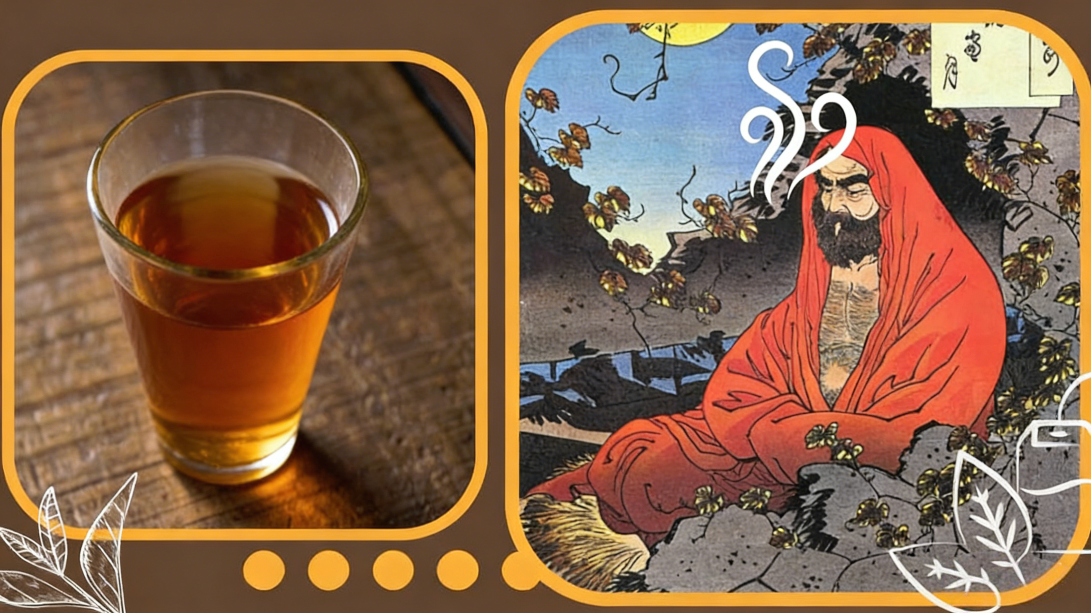
Among the many stories surrounding the origins of tea, one of the most enduring comes from India and centers on the Buddhist monk Bodhidharma, a figure revered for his discipline, spiritual insight, and profound influence on the development of Zen (Chan) Buddhism.

According to the legend, Bodhidharma traveled from India to China to pursue a life of meditation and teaching. Seeking to deepen his practice, he began an intense nine-year meditation retreat, vowing to remain awake and fully present throughout the entire period. However, even the most dedicated practitioners face moments of human frailty, and Bodhidharma soon found himself struggling against overwhelming drowsiness.
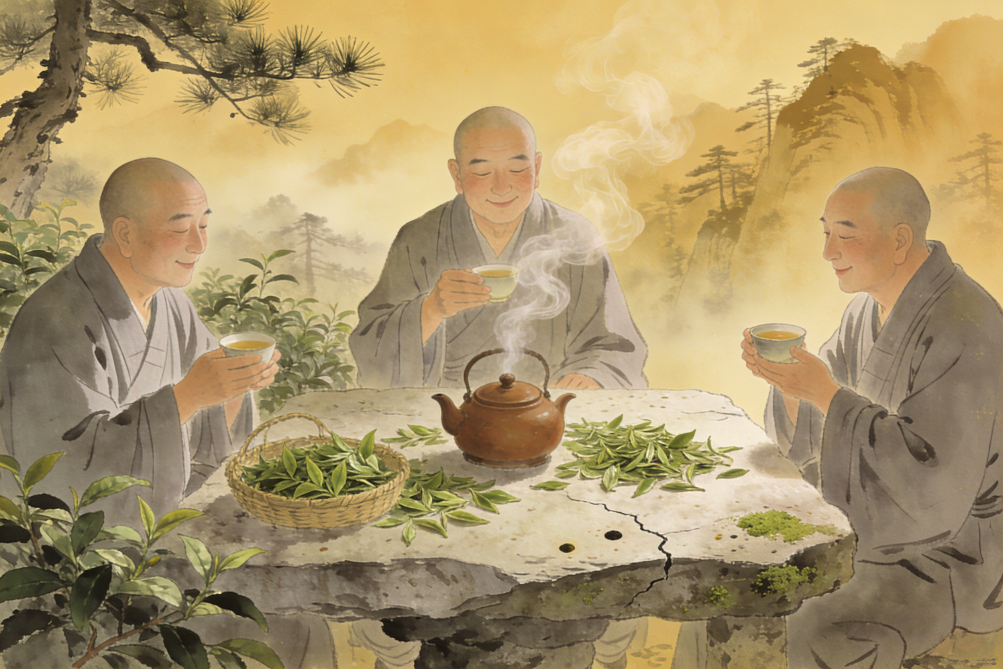
Determined not to let fatigue interrupt his meditation, Bodhidharma chose a drastic measure. In a moment of fierce resolve, he tore off his own eyelids to prevent himself from ever falling asleep again. The legend says that where his discarded eyelids touched the ground, tea plants sprouted—their leaves vibrant, fragrant, and full of energy.
When Bodhidharma tasted the leaves as an infusion, he discovered a drink that refreshed his mind and renewed his concentration. The beverage helped him maintain clarity and wakefulness during long hours of meditation, and thus tea became closely intertwined with Buddhist practice. Over time, monks throughout China adopted tea not only as a soothing daily drink but as a spiritual companion that supported discipline and mindfulness.

Though symbolic rather than historical, the story conveys a powerful message: tea is more than a simple beverage. It represents alertness, inner strength, and the pursuit of clarity—qualities that continue to shape tea culture throughout Asia today.