
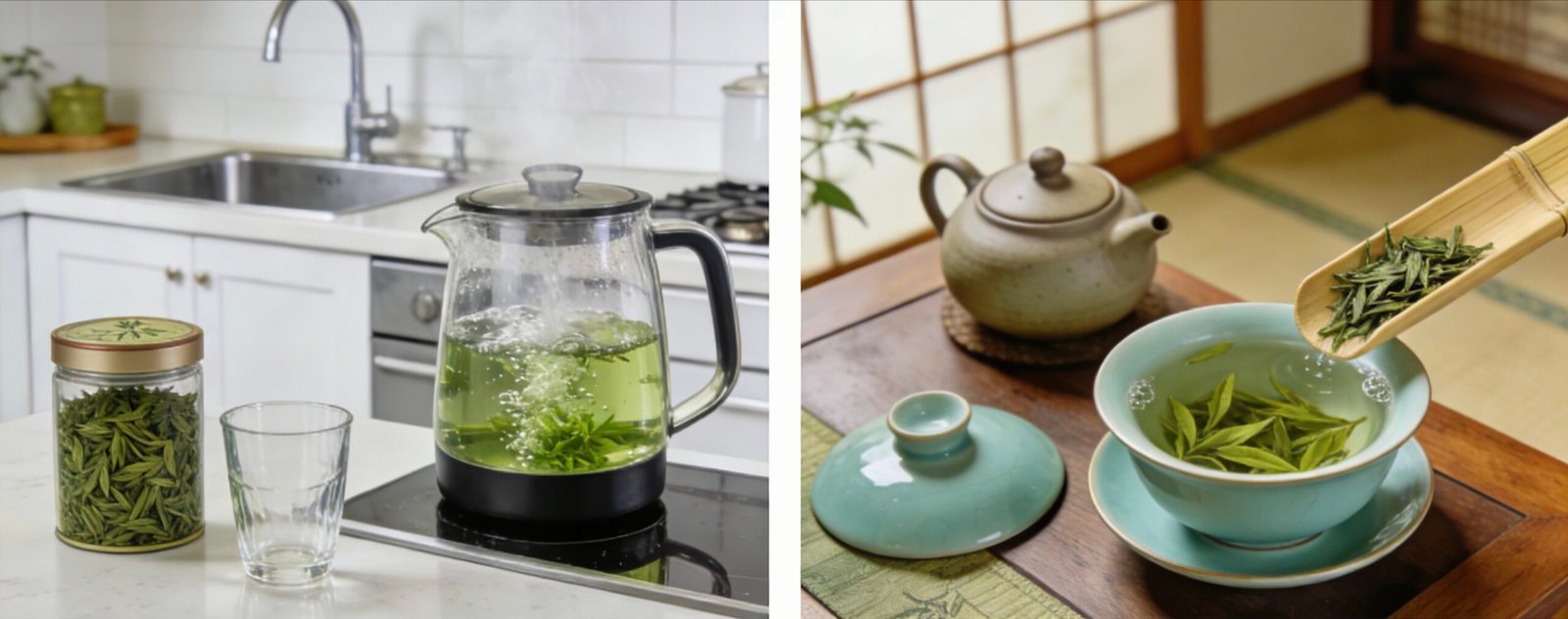
In a Western-style kitchen, you’ll see people boiling the water for all kinds of tea, whether it is herbal, green, or black. It’s an ingrained habit that boils water to get the most flavor out of the tea leaves. In an Eastern tea ceremony you will notice that green tea is brewed using water slightly below boiling. Tea lovers around the world are left wondering: is it better to brew tea with boiling or cooled water?
Why Do Some Think Boiling Water Is Better for Green Tea?
Boiling water is the default method for brewing green tea in many cultures, particularly those of Western origin. This belief is based on two assumptions.
First, boiling the water is considered an “efficient” method of extracting flavor. Some people believe that higher temperatures will dissolve more compounds in the tea, which results in a stronger and more aromatic cup. This is in line with a fast-paced life where convenience is king. Boil the water, add the tea and drink immediately.
There’s also a common misconception that “hotter” is better for health benefits. Some people believe that boiling the water will extract more antioxidants, nutrients and health benefits from the tea leaves. This belief is usually passed on through informal advice or a lack of exposure to Eastern brewing techniques.
These assumptions may seem reasonable on the surface but they ignore a crucial fact: green tea is delicate. The nutrients and flavoring compounds of green tea are sensitive to heat. Boiling water can do more harm than good. Let’s look at the science.
Scientific Perspective: Boiling Water Does More Harm Than Good
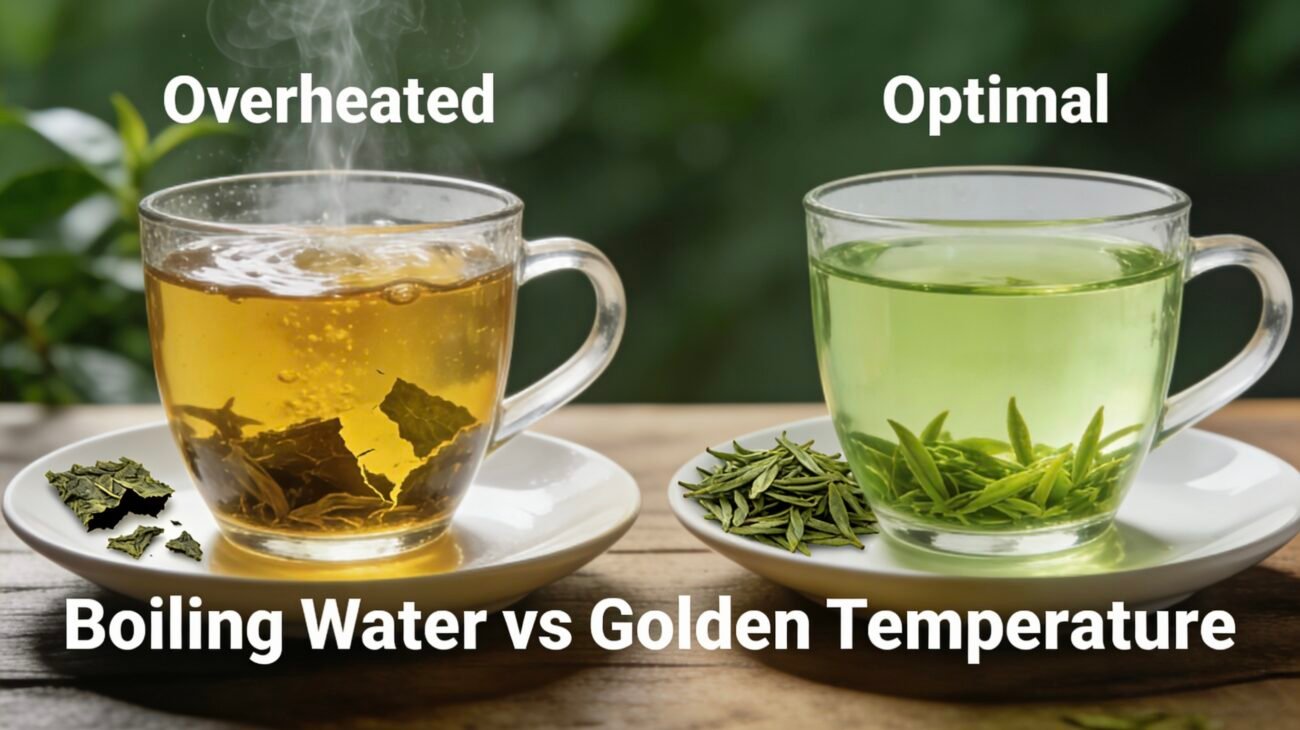
Is it better to make green tea using boiling water? When we examine the science, it is clear that “No” is the answer. The delicate balance of green tea’s nutrients and flavors is disrupted in three ways by boiling water (100degC/212degF).
1.Heat Sensitive Nutrients Loss
Green tea contains a variety of valuable compounds, including vitamin C, catechins and amino acids. These all contribute to the health and antioxidant benefits of green tea. These compounds are sensitive to heat. According to research, boiling water can break down vitamin C. This water-soluble vitamin oxidizes at high temperatures. EGCG, one of the most potent antioxidants in green tea, becomes unstable at 100degC, and loses its activity. Lower temperatures (around 185degF/85degC) will preserve these nutrients and allow you to enjoy the full benefits of green tea.
2.Unbalanced flavor and bitterness
The green tea’s appeal lies in its crisp, fresh taste with floral or vegetal undertones. This taste profile is a result of a balance between amino acids, which add sweetness, and polyphenols, which contribute mild astringency. This balance is upset by boiling water, which accelerates the release of bitter compounds such as caffeine and polyphenols. This results in a tea that is bitter, astringent or “burnt”, masking its natural freshness. High temperatures also break down the chlorophyll in the tea, turning it from a vibrant, clear green into a dull, yellowish color. This takes away the visual appeal of green tea.
3.Tea leaves damaged by a delicate tea leaf
Green tea is usually made with young, tender leaves and buds.The delicate leaves can be “scalded”, which damages the cell structure, by boiling water.The leaves release compounds in an uneven manner when they are “scalded” by boiling water. Bitter substances are released immediately into the water, while more desirable flavors or nutrients are destroyed or washed out. The leaves are not only destroyed, but their ability to be re-steeped is also reduced.
The Right Answer: The “Golden Water Temperature” for Green Tea
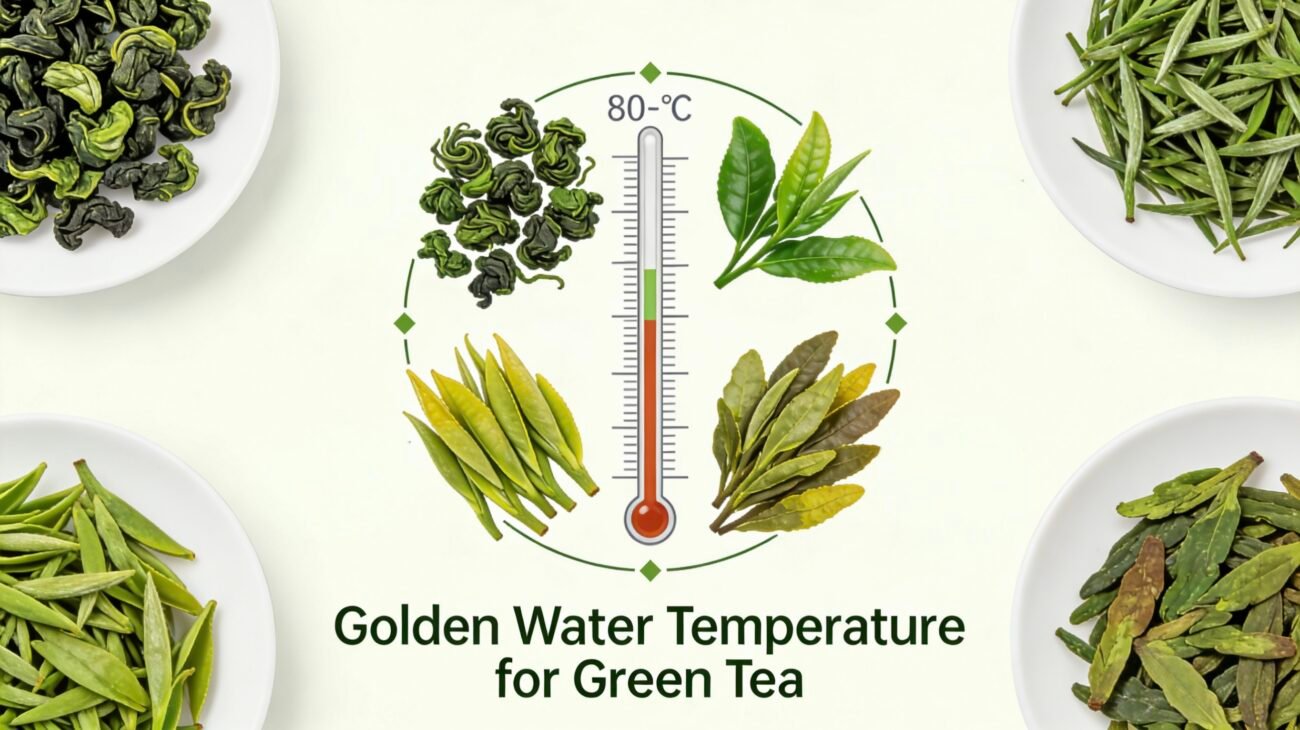
What is the ideal temperature to brew green tea now that boiling water has been proven not to be beneficial? Answer: The “golden zone” is between 80degC and 85degC, or 176degF and 185degF. This temperature balances flavor release with nutrient retention.
1. Why 80degC to 85degC works
The temperature range is low enough to protect heat-sensitive nutrients in green tea. The vitamin C is stable for an hour at 80degC, and the catechins are extracted without degradation. It’s also hot enough to release tea’s sweet amino acids and natural aromas, making it a delicious, nutritious, and well-rounded drink.
2. The Temperature Adjustments of Different Green Teas
The optimal brewing temperature of green teas varies depending on the leaf’s tenderness and how it was processed.
- To protect delicate, bud-rich Teas such as Biluochun (Green Snail Spring), or Longjing(Dragon Well), keep them at 75degC to 80degC (167degF to 176degF).
- Anji White Tea, a medium-bodied green tea: 80degC to 82degC. (176degF to 180degF). This will balance the flavor and nutrients released.
- To fully extract the rich, mellow flavor of teas with thicker leaves, like Liu’an Guapian, you should heat them to 85degC to 90degC (184degF-194degF).
3. How to control water temperature easily
It’s not necessary to have expensive equipment in order to get the right temperature. Here are two easy methods:
- Allow boiling water to cool for 2 minutes. This will naturally drop the temperature down to 85degC.
- Water at 80degC to 85degC will have small, gentle bubbles. If there are no bubbles, the water is boiling.
Electric kettles that have temperature settings can be a good investment for those who are looking for precision. They will ensure you get the right temperature each time.
Reference
1、Does Boiling Water Destroy Green Tea Benefits? The Science of a Perfect Brew- Nutri
https://nutri.it.com/does-boiling-water-destroy-green-tea-benefits-the-science-of-a-perfect-brew
2、Why you should never use boiling water for green tea- The Tea Curator
https://theteacurator.co.nz/blogs/news/why-you-should-never-use-boiling-water-for-green-tea