

Understanding the Energy Within Tea
Tea is one of the world’s most cherished beverages — a daily ritual that brings calm, clarity, and comfort. Yet beyond its soothing aroma and elegant flavor, tea also provides a gentle source of energy, thanks to caffeine. Among the many varieties, black and green teas are often compared for their caffeine content and effects. Understanding their differences can help tea drinkers choose the perfect cup for every mood and moment.

How Caffeine Works in Tea
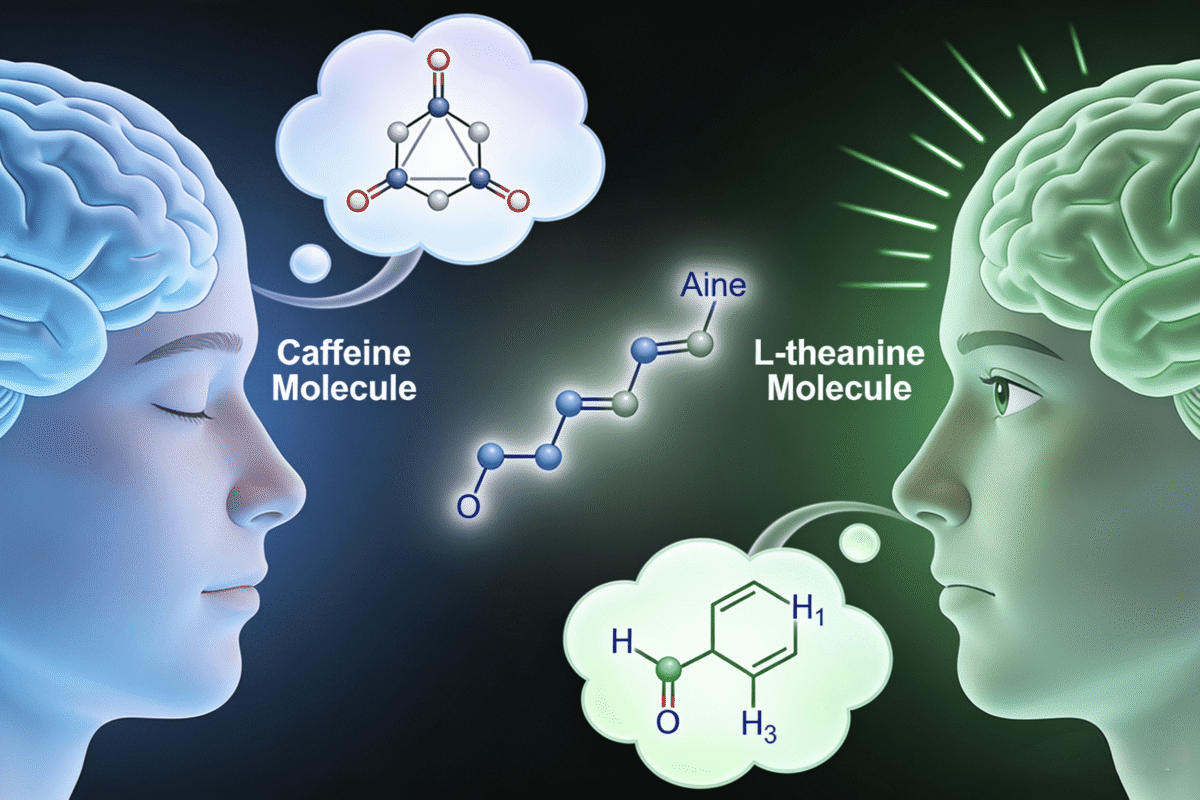
Caffeine is a natural compound that stimulates the central nervous system, helping to reduce fatigue and improve focus [1]. In tea, caffeine is accompanied by L-theanine, an amino acid that promotes relaxation without drowsiness [2]. This unique pairing makes tea’s energy gentler and longer-lasting than that from coffee or energy drinks.
Caffeine Content: Black Tea vs. Green Tea
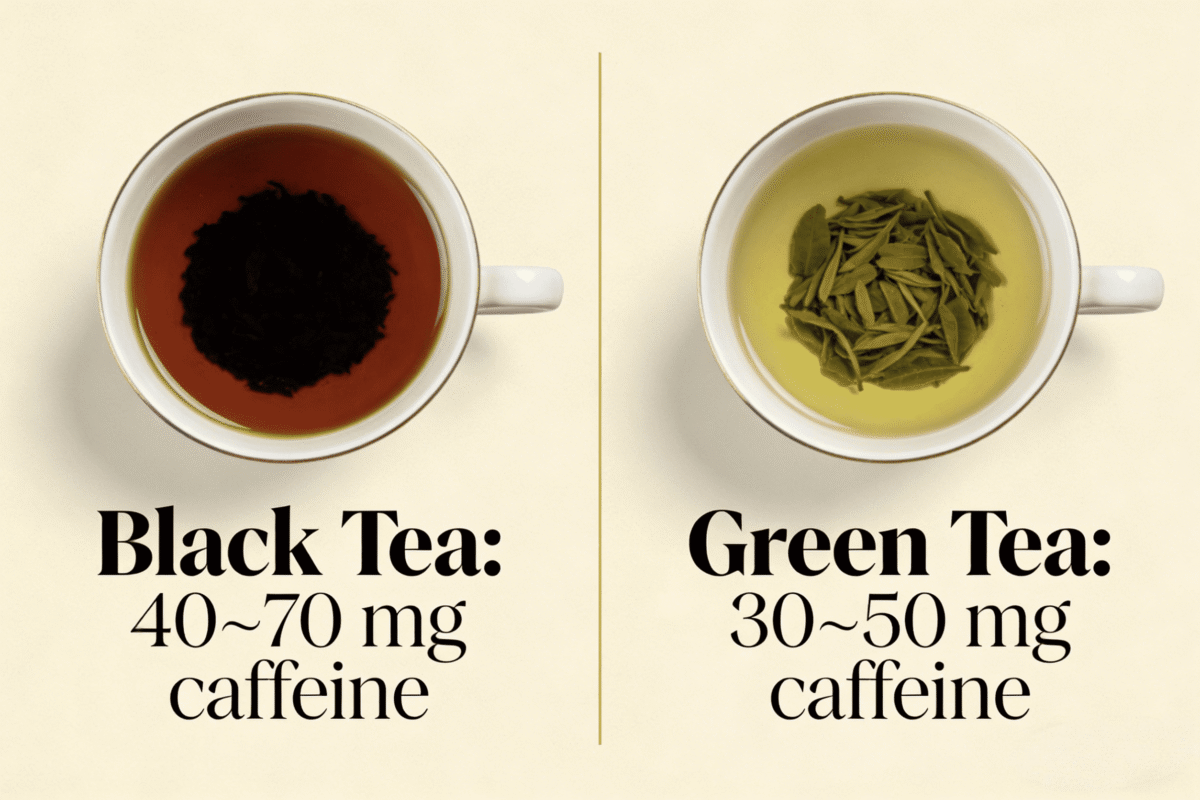
While both black and green teas come from the same plant — *Camellia sinensis* — their caffeine levels differ due to processing methods, leaf oxidation, and brewing styles [3]. Generally:
• **Black tea**: 40–70 mg of caffeine per 8-ounce (230 ml) cup
• **Green tea**: 30–50 mg per 8-ounce (230 ml) cup
The higher caffeine content in black tea is mainly due to its longer oxidation and fermentation process, which enhances the flavor and increases caffeine extraction during brewing [4].
Other Factors That Influence Caffeine Levels
Several factors affect the amount of caffeine released into your cup:
• **Leaf type and size** — Younger tea buds contain more caffeine than mature leaves.
• **Brewing time and temperature** — Hotter water and longer steeping extract more caffeine.
• **Form of tea** — Finely crushed tea bags tend to release more caffeine than loose-leaf teas.
• **Powdered teas** — Matcha, a powdered green tea, delivers higher caffeine because the entire leaf is consumed [5].

Comparing Tea to Coffee
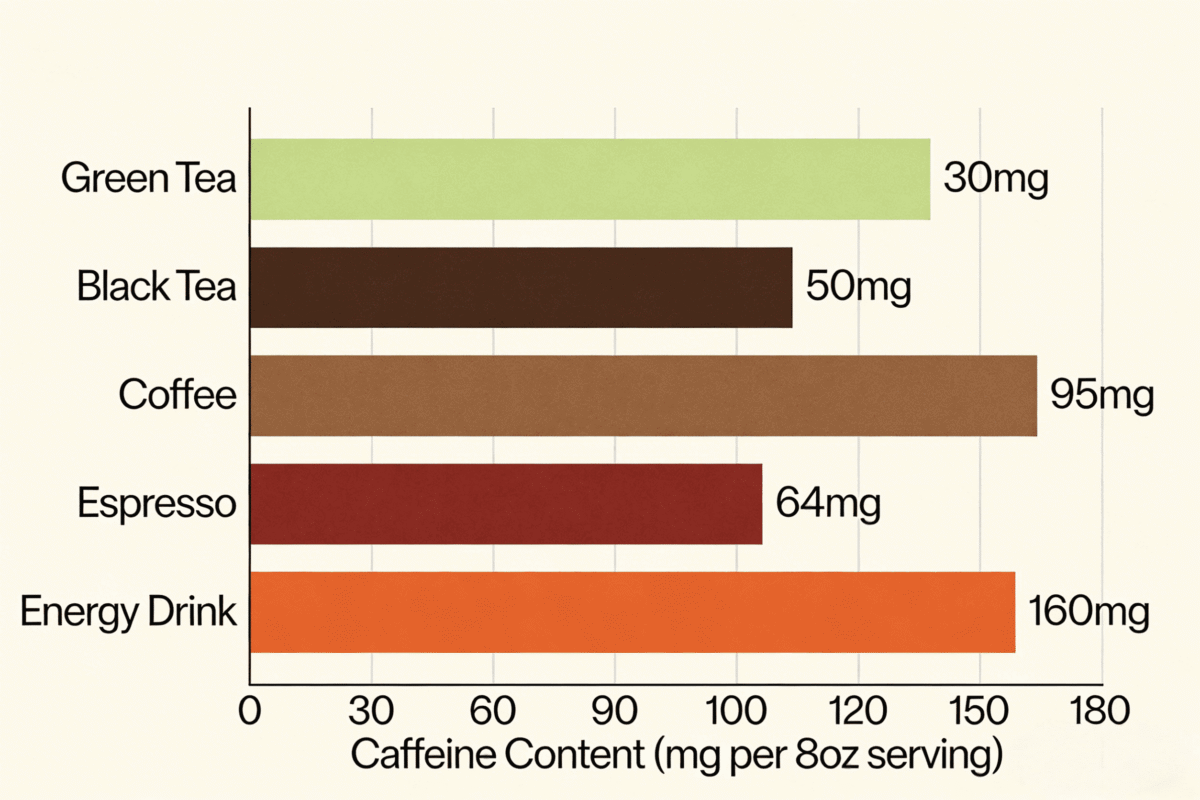
To put things in perspective, here’s how tea compares with coffee and other common beverages [6]:
• Green tea: 30–50 mg
• Black tea: 40–70 mg
• Coffee: 100–200 mg
• Espresso: 240–720 mg
• Energy drinks: 70–80 mg
This means that even the strongest cup of black tea generally has less than half the caffeine found in a typical cup of coffee.
The Balance of Energy and Calm
Tea’s unique combination of caffeine and L-theanine delivers what many describe as a state of ‘calm alertness.’ It sharpens concentration while maintaining composure — a quality valued in traditional tea ceremonies and mindful lifestyles alike [7].
Those seeking a smoother lift may prefer green tea, while those desiring a stronger awakening might enjoy black tea’s deeper character. Both offer their own refined energy and comfort.
The Bottom Line
Both black and green teas provide a natural and elegant source of energy. Black tea generally contains slightly more caffeine, offering a richer and more robust flavor, while green tea delivers a lighter, cleaner taste with a gentler boost. Whichever you choose, each cup invites you to slow down, focus, and appreciate the beauty of balance.
References
[1] U.S. National Library of Medicine. Caffeine Overview. (2022).
[2] Food Chemistry. Interaction Between Caffeine and L-Theanine in Tea. (2020).
[3] Tea Research Journal. Processing Methods and Their Impact on Caffeine. (2019).
[4] Healthline. Does Black or Green Tea Have More Caffeine? (2023).
[5] Food Research International. Caffeine Extraction in Tea Forms. (2021).
[6] Mayo Clinic. Caffeine: How Much Is Too Much? (2023).
[7] Journal of Nutritional Neuroscience. Effects of L-Theanine on Mood and Cognition. (2020).