
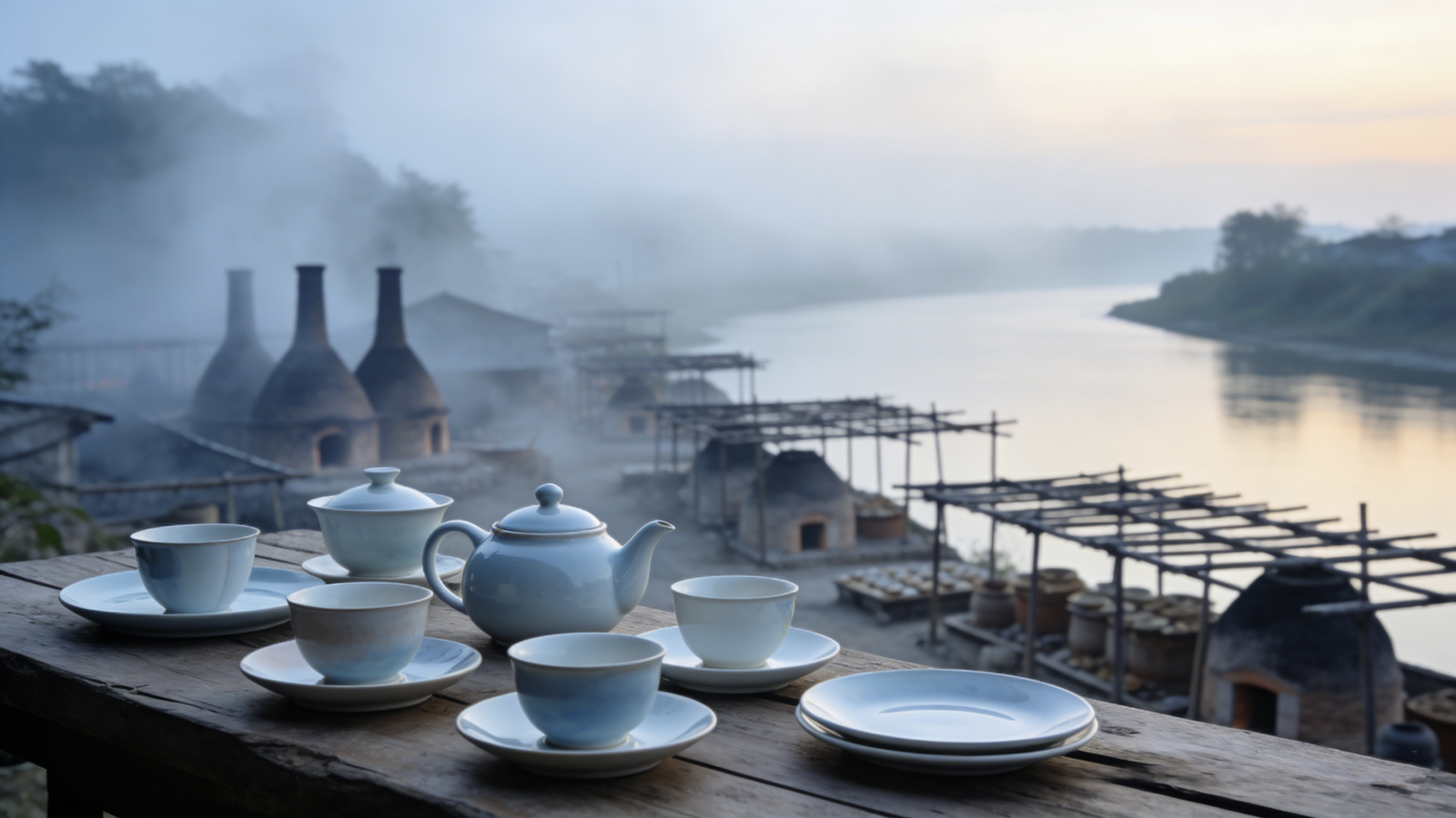
Explore the art and science behind China’s Porcelain Capital—how nature, materials, and human skill create ceramic masterpieces, including the finest Chinese tea set.
Overview: The Natural Advantage of the Porcelain Capital
Imagine a city that has produced the world’s most exquisite ceramics for over a thousand years, supplying emperors and international markets with everything from grand vases to delicate tea cup sets. This city is Jingdezhen, in Jiangxi Province, China, known as the “Porcelain Capital.”
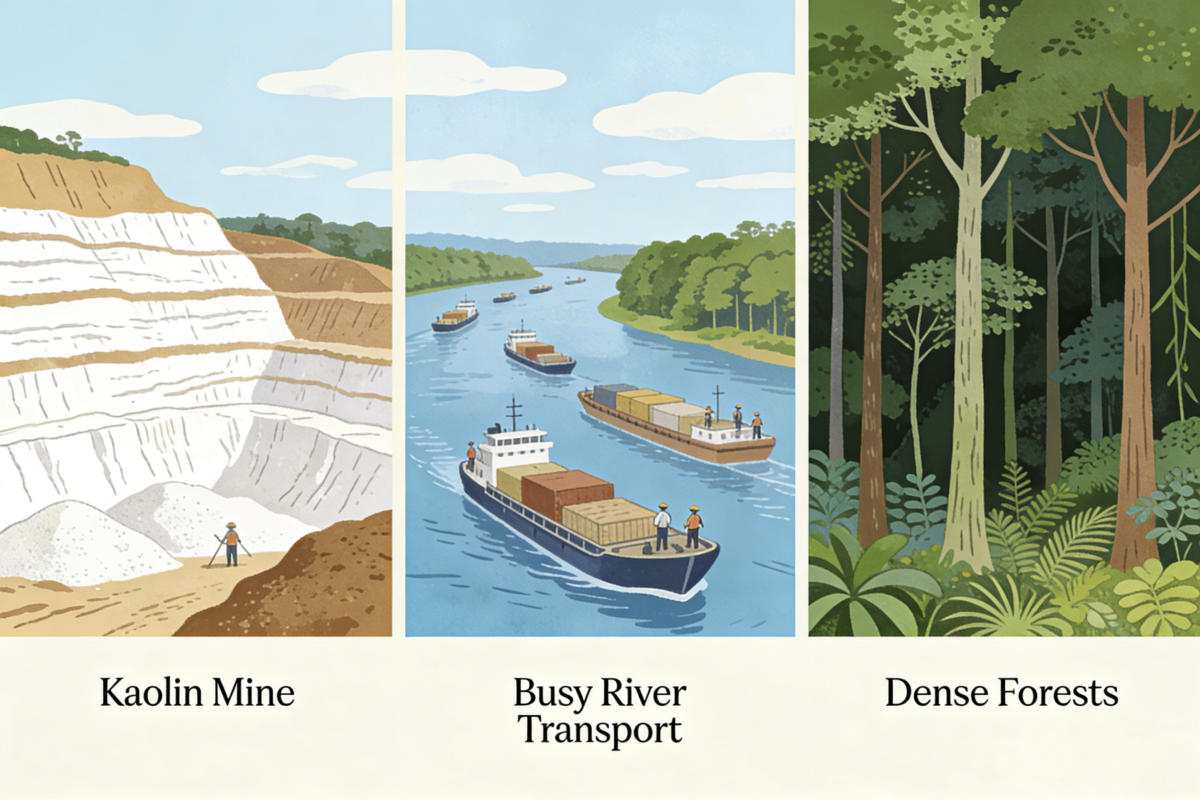
Jingdezhen’s enduring success is no accident; it stems from a rare combination of geographical blessings: high-quality kaolin and porcelain stone, accessible rivers for transport, and abundant fuel (forests). This unique ecosystem fostered an unparalleled ceramic industry.
The Core Materials: The “Skeleton” and “Soul” of Porcelain
Making porcelain is essentially about creating a super-high-temperature glass composite. Jingdezhen’s secret lies in two magical materials:
1. Kaolin – The Porcelain’s “Skeleton”
·Origin: This fine, white aluminosilicate clay gets its name from “Gaoling” (High Ridge), a local area near Jingdezhen.
·Scientific Role: It forms the structural core of the porcelain body. Because of its high purity, kaolin provides the strength needed for the ceramic to hold its shape during ultra-high-temperature firing (above between 1250℃), and it gives the porcelain its signature
brilliant whiteness.
·Analogy: Think of kaolin as the strong “bones” of the porcelain.

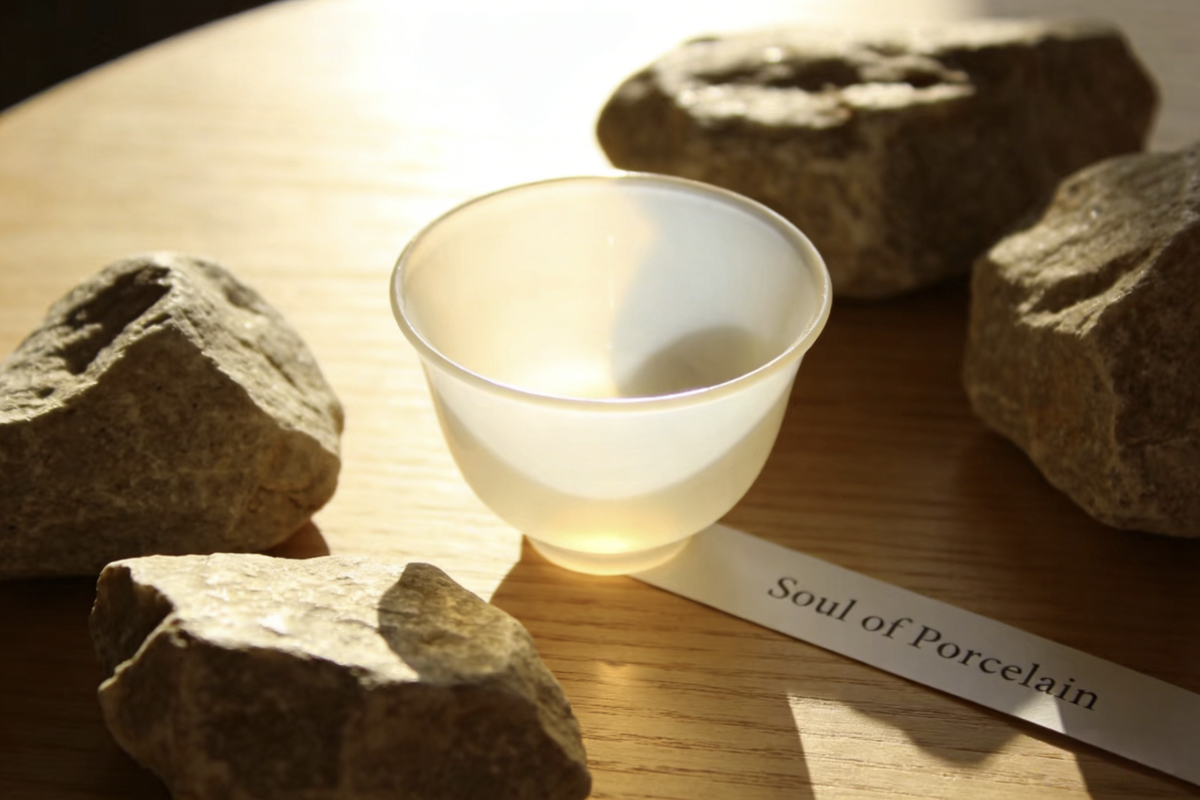
2. Porcelain Stone (Petuntse) – The Porcelain’s “Soul”
·Composition: This feldspathic rock is composed of minerals like silica, feldspar, and mica.
·Scientific Role: It acts as a flux. During firing (between 1250℃ and1330℃), the porcelain stone partially melts, forming a glassy matrix that binds all the kaolin particles together—a process called vitrification.
·The Result: This fusion process gives the porcelain its crucial properties: density, smoothness, and subtle translucency (the ability to let light pass through thin sections), making it ideal for a fine Porcelain tea set.
·Analogy: Porcelain stone is the smooth “skin” and translucent “soul” of the ceramic.
The Artisan’s Recipe: The Art of Balance
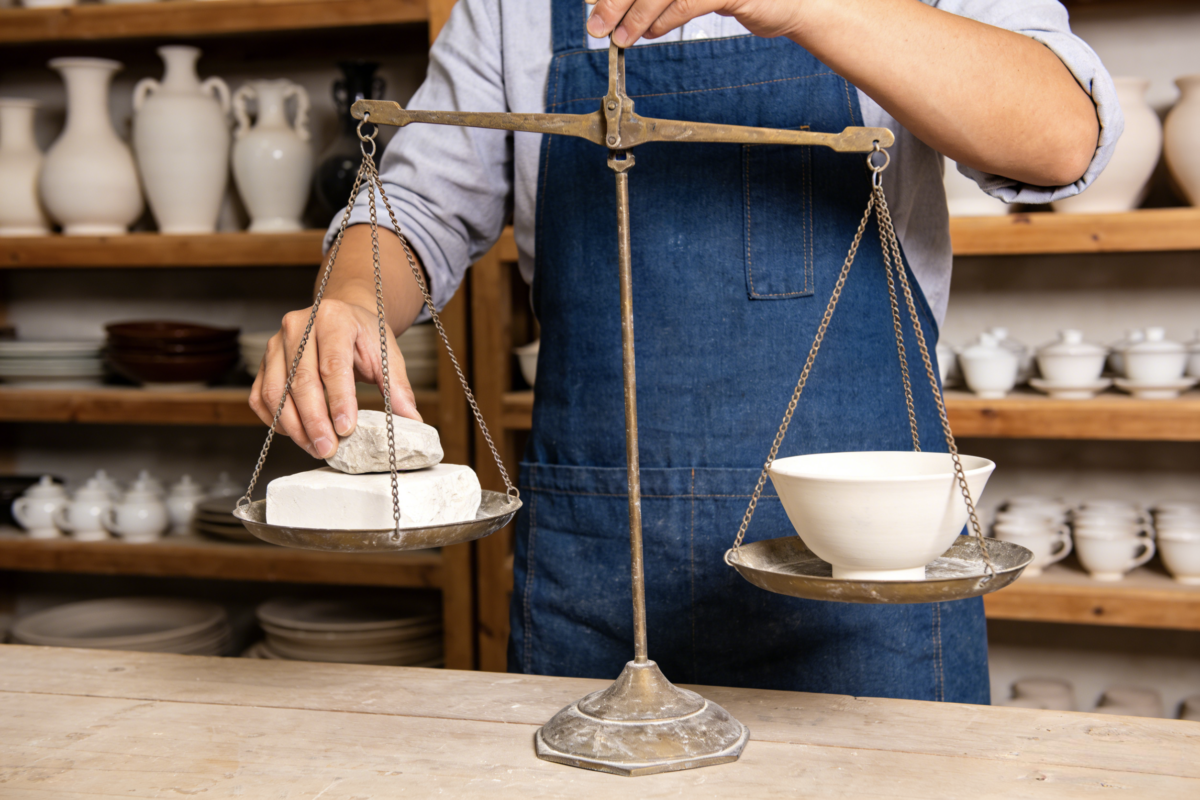
Jingdezhen’s masters are essentially material scientists, balancing the two main components:
·More Kaolin: The body becomes stronger and whiter, but less likely to fuse (melt).
·More Porcelain Stone: The body achieves greater translucency and better vitrification, but it can be slightly less stable during firing (more prone to warping).
For specialized wares—whether it’s the classic blue-and-white patterns, jade-like celadon, or the vibrant Famille Rose—artisans meticulously adjust this ratio and tailor the firing curves to ensure a perfect finished product, be it a large vase or a delicate Chinese tea set.
Fire and Glaze: The Magic Surface
The beauty of Jingdezhen porcelain is completed by its surface—the glaze.
·Glaze Formula: Traditional glazes blend porcelain stone, plant ash, and feldspar.
·Color Chemistry: Color depends heavily on the kiln atmosphere:
·Cobalt Blue: Requires an “oxidation” atmosphere at high temperatures.
·Copper Red: Demands a delicate “reduction” (oxygen-starved) atmosphere.
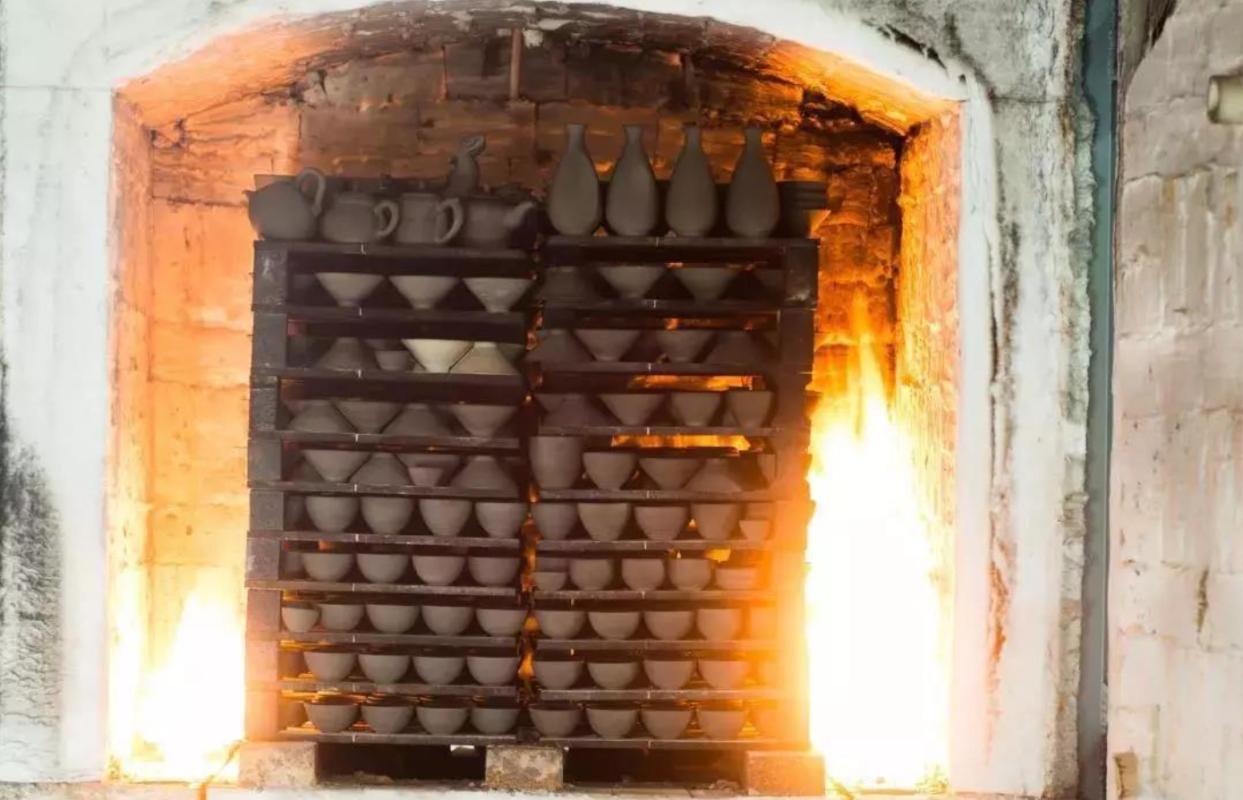
·Kiln Technology: From the long Dragon Kilns to the uniform Mantou (Egg-shaped) Kilns, the design is crucial for managing temperature and atmosphere to ensure the clay mixture behaves predictably, minimizing cracking and optimizing the desired glaze effects.
Evaluating Quality: Indica tors of Fine Porcelain
When assessing a piece of true Jingdezhen porcelain, such as a tea cup set, you can look for these signs of quality:
1.Body & Whiteness: The body should be fine-grained, dense, and uniformly white.
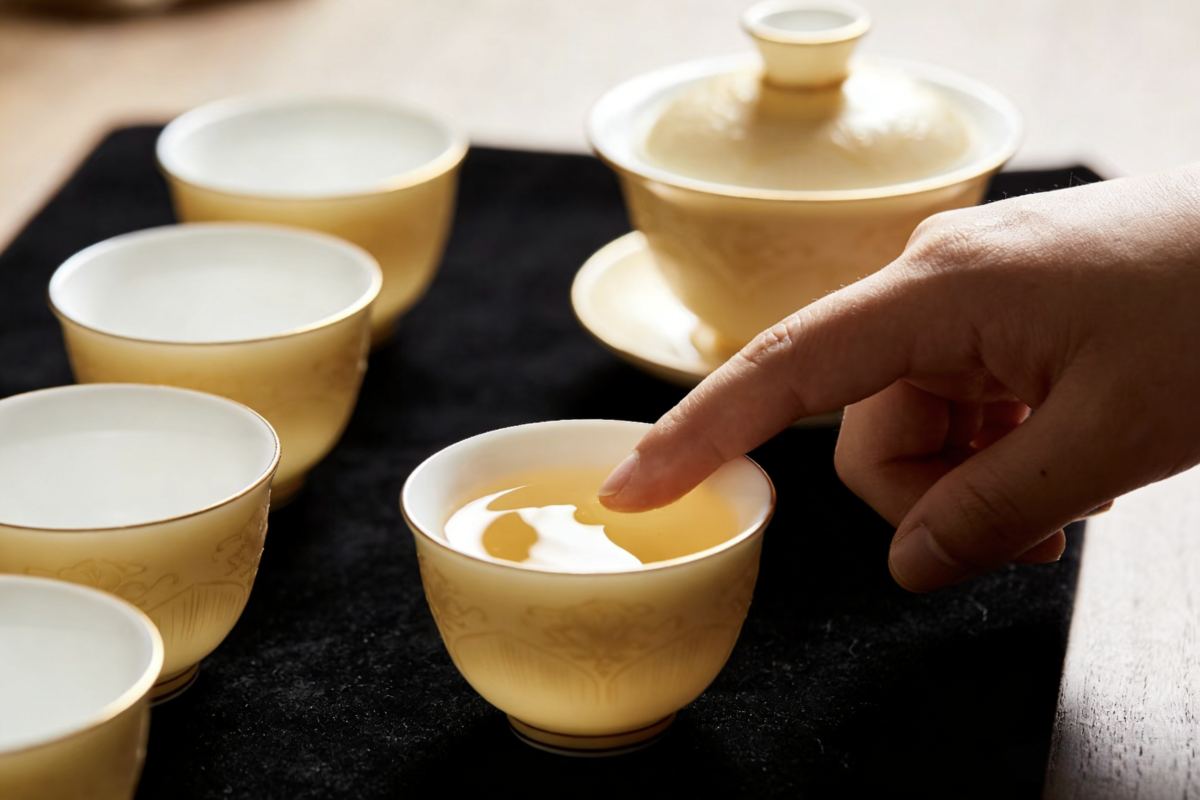
2.Sound: A gentle tap should produce a clear, ringing tone, indicating complete and excellent vitrification.
3.Translucency: Hold a thin section up to the light; if light passes through evenly, it is a hallmark of fine quality.
4.Glaze Fusion: The surface should be smooth, bubble-free, and perfectly fused to the body.
Conclusion: A Dialogue of Matter, Fire, and Craft
Jingdezhen porcelain is more than decoration; it is a profound dialogue between earth, fire, and human intuition. From the purity of kaolin to the melting point of feldspar, every piece, especially a complete Porcelain tea set, embodies centuries of refined materials science and dedicated craftsmanship.